

The fall run is one of the most exciting times of the year, especially for the surf-fishing angler. As we enter November, the temperature will continue to drop and the days will become ever shorter, triggering a great deal of urgency among the local marine life to complete their autumn migration. As the sand runs out of the hourglass, chaos can erupt on the beach in the blink of an eye. We all know the major players in this game of survival—striped bass, bluefish, weakfish and albies—but who makes up the supporting cast?
Mullet

The energy sources fueling this impressive run are the countless numbers of baitfish that flood from the protection of the bays into the open ocean. One of the first baitfish to make this treacherous journey is the mullet. Mullet will swim in tight schools and are often observed grazing on the bottom, on the surface of vegetation, and even at the surface of the water. Mullet feed primarily on zooplankton and detritus. In the Northeast, it is possible to find two species of mullet—striped and white. Although they can get fairly large in the southern part of their range, with white mullet reaching 15 inches and striped mullet reaching 36 inches, we rarely see mullet in our area larger than the length of a finger—hence the name finger mullet.
Sand Eel

Another major player fueling the fall run is the sand eel. Arriving during the late spring as larvae, sand eels spend the entire summer in the protection of the bay feeding on zooplankton. Measuring approximately four inches by the fall, the eels form dense schools of tens of thousands of fish. If the strategy of safety in numbers does not help them in evading predators, they are capable of darting into the sand on the ocean floor. This escape plan is evident when catching striped bass with bloody lips. As the sand eels dive into the sand for safety, striped bass will mouth through the sand to catch them.

Atlantic Menhaden

The Atlantic menhaden is also involved in this autumn melee at the beach. An oily fish, it is a member of the herring family and is a crucial link in the food chain. By feeding on plankton, menhaden transfer the energy produced by plankton (primary producers) to organisms higher on the food chain. This role makes them one of the most important forage fish on the East Coast, fed upon not only by bass, bluefish and weakfish, but also by sharks, tuna, countless species of birds, dolphins, and even whales.
Juvenile Gamefish
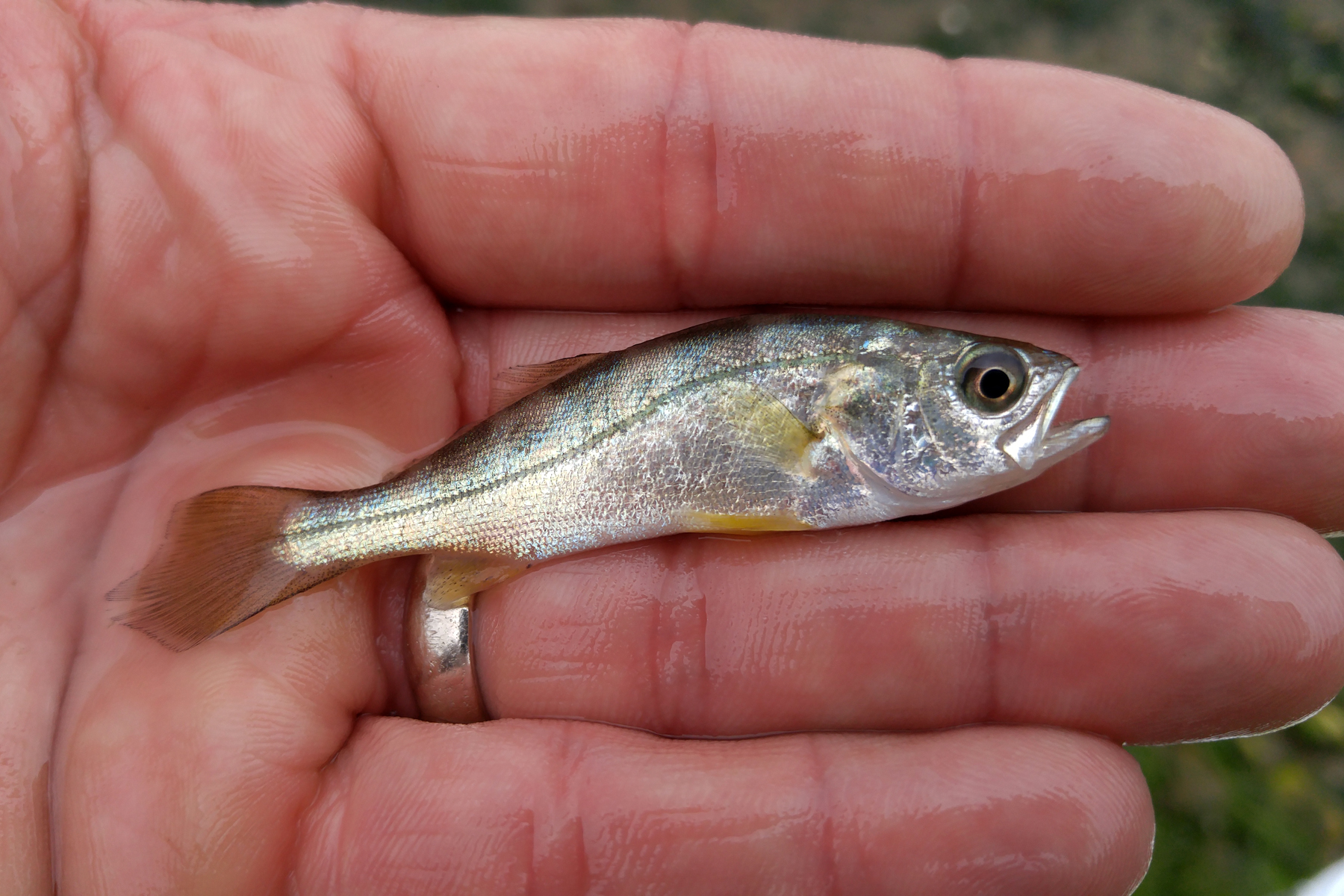
At this time of year, many young-of-the-year fish species must also leave the shelter of the bays. In doing so, they too become part of the fall-run menu. Even though a juvenile weakfish or bluefish can grow into a voracious predator, at a couple of inches long they are an easy meal for larger members of the same species. In addition to weakfish and bluefish, in past years I have found juvenile sea robins, porgies, sea bass, and even blowfish in the gut of fish caught in the surf.
The Birds

Heading down to the beach, it is impossible not to notice the flocks of birds that are just as excited as we are to see schools of busting fish along the beach. Several of our local gull and tern species are about to begin a long migration to their wintering grounds, and for many, this will be their first time making such a voyage. Completing this migration requires a large amount of energy and these birds will frantically feed on the schools of baitfish that are pushed to the surface by larger predators below.

Not all birds are leaving our area, though. Some are returning from their breeding grounds in northern Canada. The arrival of the northern gannet marks a “second” fall run as they have been following schools of Atlantic herring as they migrate south along the coast. Watching a flock of gannets feed is an amazing spectacle—they feed by plunging into the water from heights of up to 100 feet. Once in the water, they are capable of diving an additional 70 feet to catch their prey.
Bio
With a degree in marine biology from LIU/Southampton, Chris Paparo is the manager of Stony Brook University’s Marine Sciences Center. Additionally, he is a member of the Outdoor Writers Association of America and the NYS Outdoor Writers Association. You can follow Paparo on Facebook, Instagram, YouTube and Twitter @fishguyphotos