
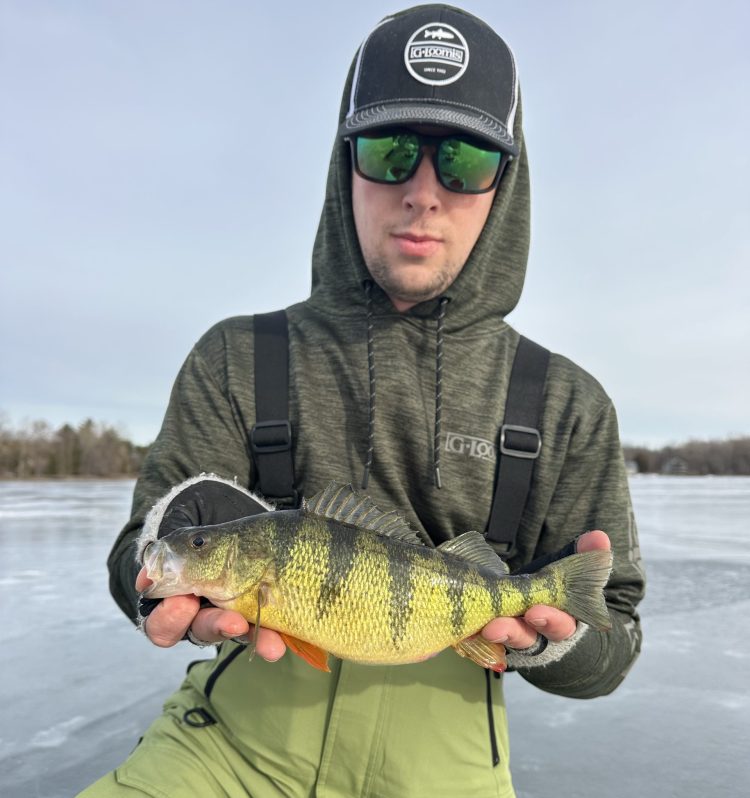
February might be the hardest month of the ice season.
Panfish that were aggressive in early ice suddenly turn cautious. They suspend. They inspect your jig and drift away. Spots that produced limits in
December feel lifeless. It’s easy to blame fishing pressure, but that’s only part of the story.
What’s really happening beneath the ice is biological.
As winter deepens, dissolved oxygen levels begin to drop. Ice seals the water from the atmosphere. Snow cover blocks sunlight. Aquatic vegetation that once produced oxygen begins to die. At the same time, decomposition and bottom sediments consume what remains.
For panfish, this changes everything.
Cold water has already slowed their metabolism. By mid-winter, lower oxygen compounds the effect. Fish become less aggressive, more selective, and less willing to chase. In extreme cases, hypoxia can even cause fish kills.
No wonder February gets a bad reputation.
But mid-winter panfish aren’t impossible, they’re just different. With a few adjustments, you can still have a productive day on the ice.
To keep things simple, I’ll focus on electronics, location, and presentation.

Electronics: The Edge in Mid-Winter
I’ve fished with a finder since 2003, and I would feel blind jigging without one. Knowing if fish are present, what depth they’re holding, and how they react to your presentation transforms efficiency on the ice.
Being able to distinguish bottom composition — vegetation, rock, soft sediment — helps complete the puzzle. Mapping capability is a bonus for dissecting a water body and pinpointing specific spots.
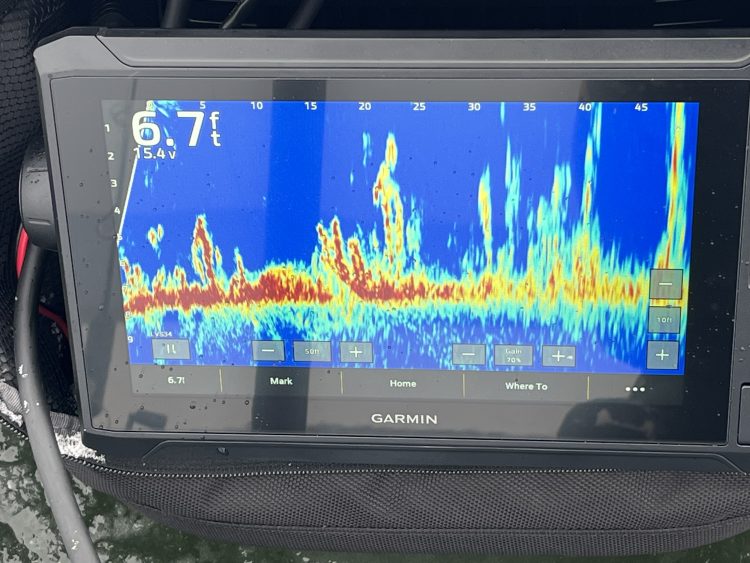
Until this winter, I relied on flashers and traditional 2D sonar. Then came live sonar. Since Garmin introduced Panoptix LiveScope in 2018, and Humminbird and Lowrance followed, anglers can now see fish and lures move in real time.
I added a Garmin LiveScope Plus bundle in December, and it has been transformational. The amount I’ve learned in a couple months compared to decades using 2D and flashers is staggering. Studying fish behavior is as satisfying as getting a bite, and LiveScope offers incredible insight into mood and tendencies.
You can watch fish reposition before striking. See them approach, stall, or drift away. I especially enjoy watching fish scoot along the bottom toward a jig.
Forward-facing mode helps me decide how long to stay in a hole, watching for fish that show interest and begin moving in.
Regardless of technology — flasher, 2D, or live sonar — electronics are especially valuable during a tough mid-winter bite.

Location: Move When the Fish Move
Mid-winter panfishing often suffers because anglers don’t relocate when fish do. We stay in shallow vegetation that produced during early ice and hesitate to change.
If vegetation has collapsed and turned brown, there’s a good chance fish have shifted.
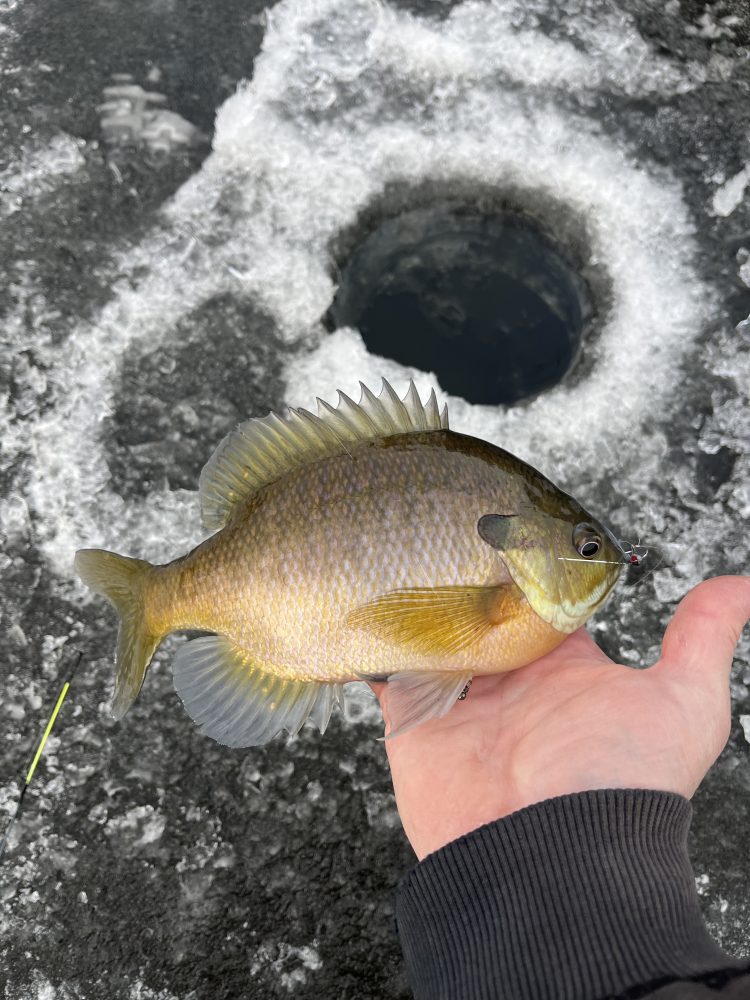
Fortunately, they usually don’t move far. Start slightly deeper on points, drop-offs, and inside turns closest to early-season weeds. Humps in deeper basins or rock piles can produce, especially for larger bluegill.
Mid-depth flats (7–16 feet) with soft bottoms rich in insect larvae are high-percentage areas.
In basins, perch and bluegill often hold near bottom, while crappies are more likely suspended.
Another option is switching water bodies, particularly to those with less vegetation.
Fish isolated areas away from heavy traffic, snowmobiles, and ATVs. One positive aspect of mid-winter is that panfish often school tighter after losing weed cover.
Don’t hesitate to keep moving until you locate fish.
Presentation: Downsize and Pay Attention
Once you’re in the right area, the next challenge is triggering wary fish.
A common mistake is failing to adjust presentation. Mid-winter panfish become more selective and gravitate toward smaller prey. Study how fish react and make subtle corrections when they respond negatively.
Live sonar adds a major advantage here. Instead of simply knowing a fish is present, you can see where it goes after ignoring your jig. Did it sink? Slide to the side? Stop short? Fish sometimes even spook one another, and you can see it.
I downsize everything this time of year.
- 2-pound Berkley Trilene 100% Fluorocarbon Ice
- My most sensitive jig rods
- Lightest jigs
- A single spike or Gulp maggot instead of several
Subtle plastics like Big Bite Baits Ballzy, Custom Jigs and Spins Wedgie, Little Atom Micro-Nuggies, and Clam Spiiki pair well with small jigs.
Tungsten hair jigs shine now. Favorites include Kenders Shrimp, Eagle Claw Pixy, VMC Fly Jig and Bullfly, and Custom Jigs and Spins JaJe. Compact mormyshka-style jigs are also excellent for minimizing profile.
Make sure jigs don’t spin as that can immediately turn fish off. Use a snell knot on jigs that don’t have a 90-degree line tie, tie a small barrel swivel between the mainline and leader, or use a fly-style reel.

Adjust Cadence and Keep Options Ready
Start with a subtle, tepid jigging approach to create a constant quivering that imitates aquatic insects. Raise slowly if fish show interest.
If that fails, drop below them, sometimes to bottom, then bring the jig back just above the fish. Other days, a few quick hops followed by a pause works better.
Vary cadence throughout the day. Bite windows can be short, so keep multiple rods rigged and don’t hesitate to change quickly.
This is not reaction-bite season. Drop slowly. A 1/32-ounce Kiptail Jig sinks tantalizingly and excels for neutral fish.
Fish high in the column to attract attention, then lower as needed. Use slow, smooth hooksets to avoid spooking the school.
When Fish Disappear: Call Them Back
Aggressive spoons like Kastmasters, Tinglers, Slender Spoons, or similar options can call fish in when your screen goes empty. Pounding bottom stirs sediment and draws attention.
Sometimes the opposite works.
A deadstick with a small jig tipped with a spike set at mid-depth can ignite an empty screen. Fish often rise from bottom to inspect an easy meal.
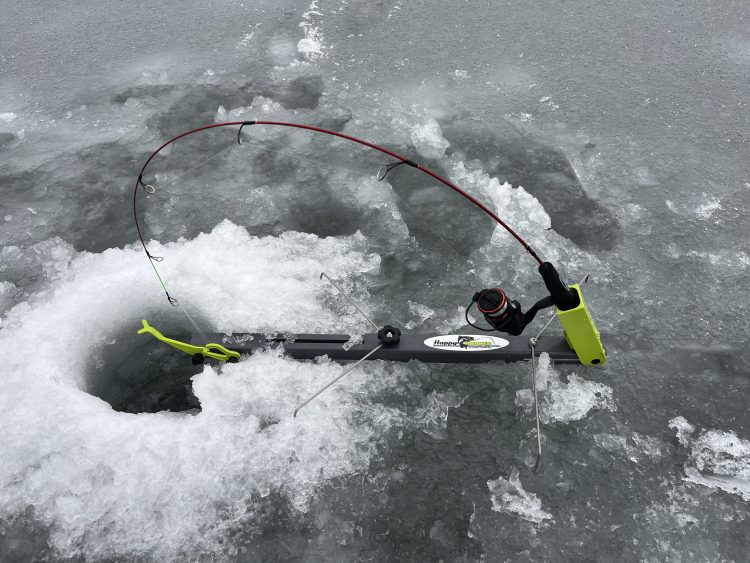
Auto-hook-setting devices allow you to spread out rods. Longer, softer rods help maintain tension and reduce lost fish.
Drill Early and Stay Quiet
Mid-winter panfish are spooky.
Drill multiple holes before fishing so you don’t scatter fish once they arrive. Keep noise to a minimum. I’ve watched fish scatter on sonar when holes are drilled directly over them or someone runs across the ice.
February presents challenges, but it also rewards anglers willing to adjust. Mid-winter panfish aren’t gone. They’ve just changed.
Be safe and harvest responsibly.