


More commonly known as wrasses, the family Labridae is one of the largest families of marine fish in the world, containing over 500 species. Although a majority of the wrasses are found in tropic regions, several species can be found locally, with one in particular currently on the mind of many anglers.
Wrasses are a diverse group of fish, filling many ecological niches. Individual species might feed on plankton, seaweed, crustaceans, mollusks, fish, corals, and even parasites. Consuming such a wide range of prey organisms, wrasses have evolved many unique physical and behavioral characteristics. For example, the long slender snout of a bird wrasse enables it to probe deep into narrow crevices searching for crabs. Feeding on parasites, the bright color and swimming behavior of a cleaner wrasse is used to attract other fish, sharks, rays and even sea turtles into their territory that is known as a cleaning station. When a “customer” enters the cleaning station, they let all their defenses down. The cleaner wrasse is not only allowed to pluck parasites from their customer’s body, they are granted permission to enter the fish’s gills and mouth without fear of being eaten.
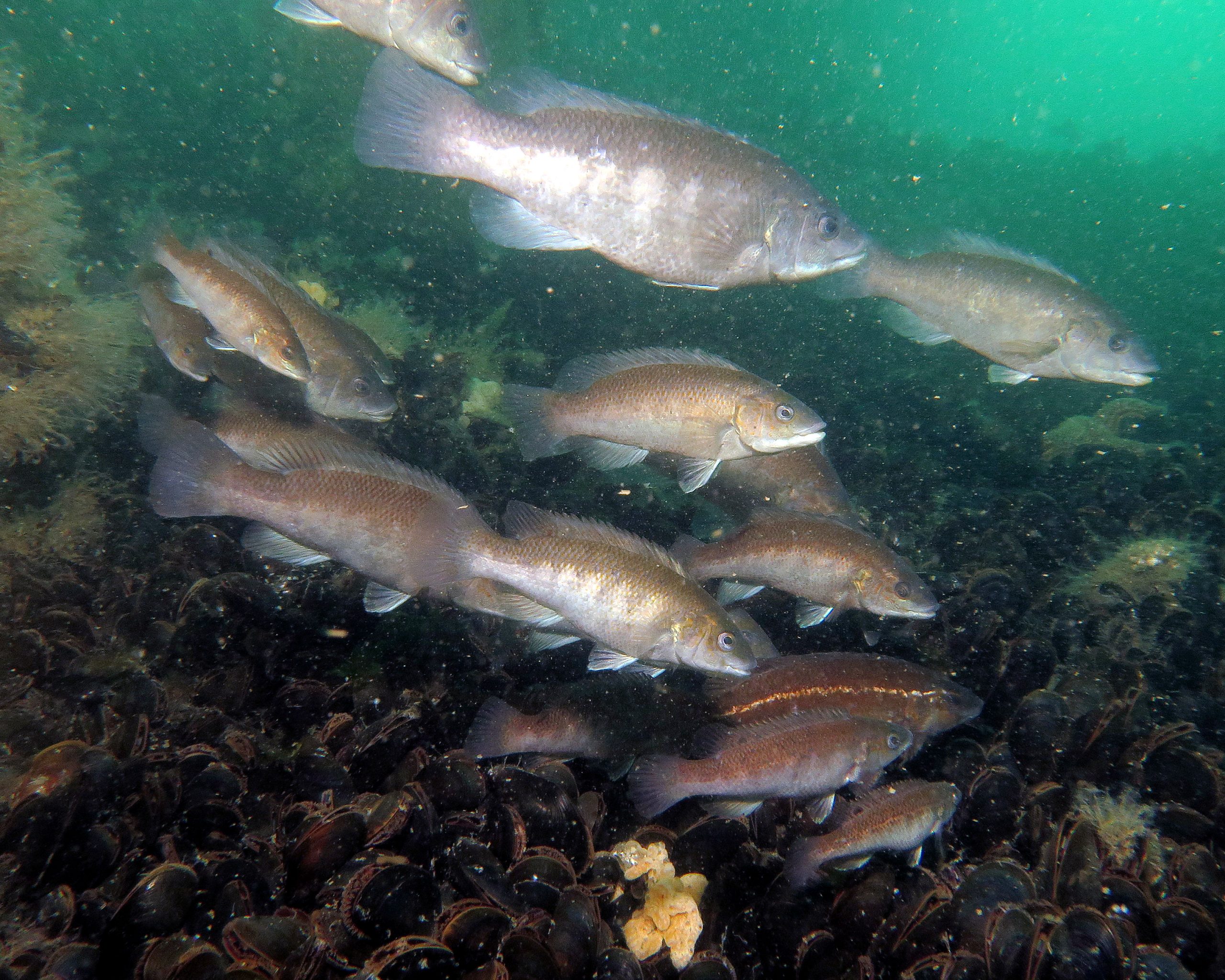
Even though individual species can be quite different from one another, they share a few common characteristics that place them in the family Labridae. For starters, they have a terminal mouth type (one that is located at the anterior end of the fishes head). Protecting their mouth is a pair of large lips. In fact, the name Labridae is derived from the Latin word Labrus, meaning “lips.” Their swimming style differs from most fish we are familiar with. For locomotion, a fish such as a striped bass will move their caudal fin (tail) back and forth, thrusting themselves through the water. In order to propel themselves along, wrasses flap their pectoral fins (a pair of fins that are located on each side of their body, just behind their gills) and use their caudal fin as a rudder. Wrasses will use their caudal fin in instances where they need a burst of speed, such as when trying to escape from a predator.
As water temperatures drop, anglers break out their heavier wreck fishing gear to target a local prized member of the labridae family, the blackfish. Going by many names such as tautog, tog, and white chin, this bruiser can grow to lengths of 36 inches and weigh 28 pounds. In the early stages of a blackfish’s life, they seek shelter among eelgrass meadows and patches of seaweed in the back bays. Their color is highly variable (shades of green, red and brown), which allows them to camouflage with their surrounding environment. As they mature, they leave the protection of the sea grasses and search out sea bottoms consisting of hard structure such as rocks, wrecks and pilings.
Adults and juveniles alike feed on an assortment of crustaceans and mollusks. Scanning their surroundings for food while patrolling their territory, they pluck small prey items such as blue mussels from the rocks and swallow them whole. Larger mussels are crushed with pharyngeal teeth that are located in their throat.

As visual predators, they remain active during daylight hours, quickly retreating to the shelter of the structure as the sun begins to set. Once settled in, they will sleep until sunrise the next morning. It is because of this behavior that we do not target blackfish at night, as we do other species of fish.
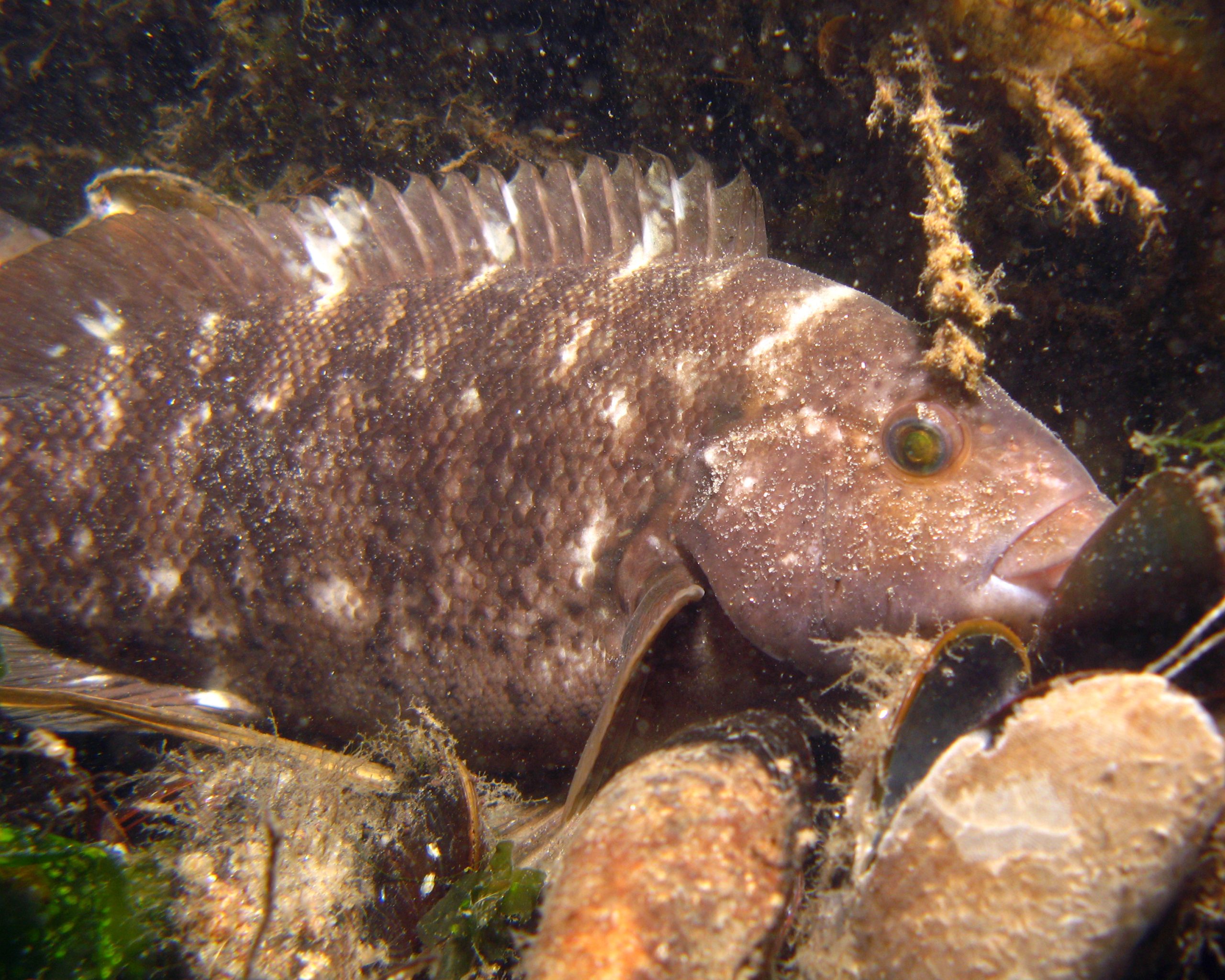
If you have ever fished for blackfish, I am sure you have caught another of our local wrasse species, the bergall. Considered a pest by most anglers for their cunning ability to steal your bait from your hook, they also go by the name of cunner. Although they can grow to approximately 15 inches in length and weigh up to 2 pounds, it is rare to catch one greater then 10 inches, especially while fishing inshore waters. They too spend their juvenile years living among eelgrass and seaweed communities. Identifying a young blackfish from a bergall can be difficult as their color also varies depending on their surroundings. However, unlike a blackfish, bergalls have a false eyespot on their dorsal fin. As they mature, this false eyespot vanishes. With maturity bergalls, like blackfish, move to deeper water that will consist of hard bottom structures. Although they are considered a trash fish, their flesh is very good, if you can catch some of the larger ones.
In addition to blackfish and bergalls, I have collected a couple of tropical wrasse species that drifted in on the Gulf Stream during summer months. The pearly razorfish, green razorfish and the slippery dick have the potential to arrive to our local waters by early July, but unfortunately by this time of year, they have all succumbed to the cold temperatures.
Although our local wrasses might not be as brightly colored or uniquely shaped as their tropical cousins, they rival many of them when it comes to fighting ability and table fare. So bundle up for the cold and get out on the water to match wits with our local Labrids.

Bio
With a degree in marine biology from LIU/Southampton, Chris Paparo is the manager of Stony Brook Southampton’s Marine Sciences Center. Additionally he is a member of the Outdoor Writers Association of America and the NYS Outdoor Writers Association. You can follow Paparo on Facebook and Instagram @fishguyphotos