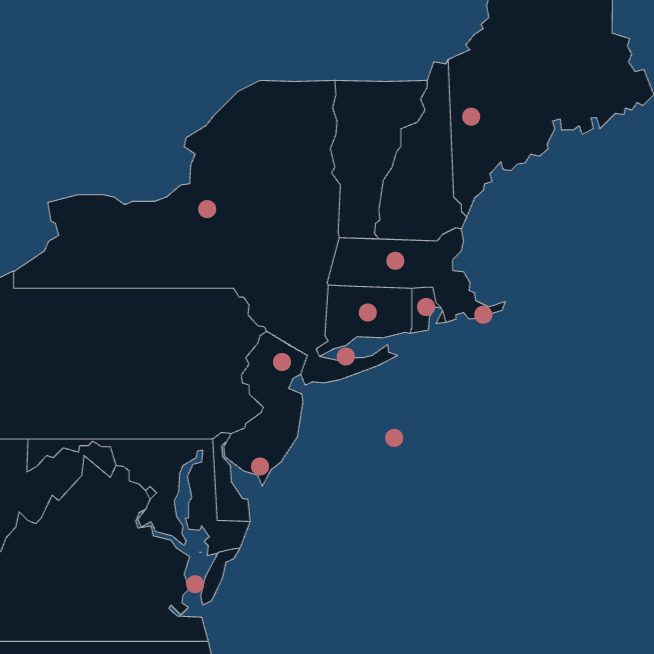

Rob Taylor doesn’t need convincing that offshore fishing is physical. As the owner and operator of Newport Sport Fishing Charters, running out of Newport, Rhode Island, he’s spent hundreds of days on the water, including tuna season runs that put him at the helm for five hours straight.
What’s changed for Taylor isn’t the distance or the conditions. It’s what’s underneath him.
A Season That Doesn’t Let Up
If you’ve spent any real time running offshore in the Northeast, you know how fast things change. A flat calm morning can turn into a bone-jarring afternoon before you’ve even reached the grounds. And every one of those hits gets absorbed somewhere. For most captains, that somewhere is their body.
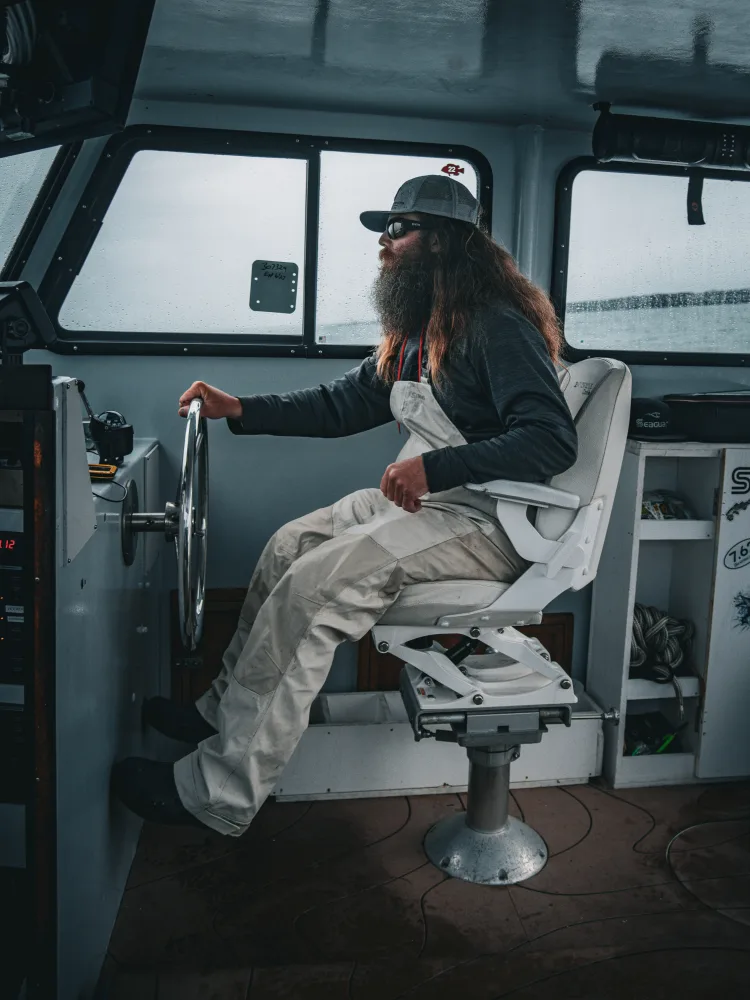
Taylor runs Newport Sport Fishing Charters out of Newport, Rhode Island, logging more than 300 charters a season, sometimes 40 to 50 days in a row without a break. During tuna season, a single trip can mean a 2.5-hour run out and 2.5 hours back, putting him in the helm seat for five hours or more in a single day.
“When we’re running all the time offshore and you’re getting bounced around, that is fatigue,” Taylor said. “And fatigue is just one of those things that can affect you and your decision-making.”
Comfort That Doesn’t Get Talked About Enough
That’s the piece that doesn’t get talked about enough. Comfort at the helm isn’t just about a sore back at the end of the day. It’s about staying sharp for the entire trip. Taylor points to the difference directly: less impact absorbed by his body means more focus left over for reading the water, managing his boat, and running his charter.
The Technology Behind the Ride
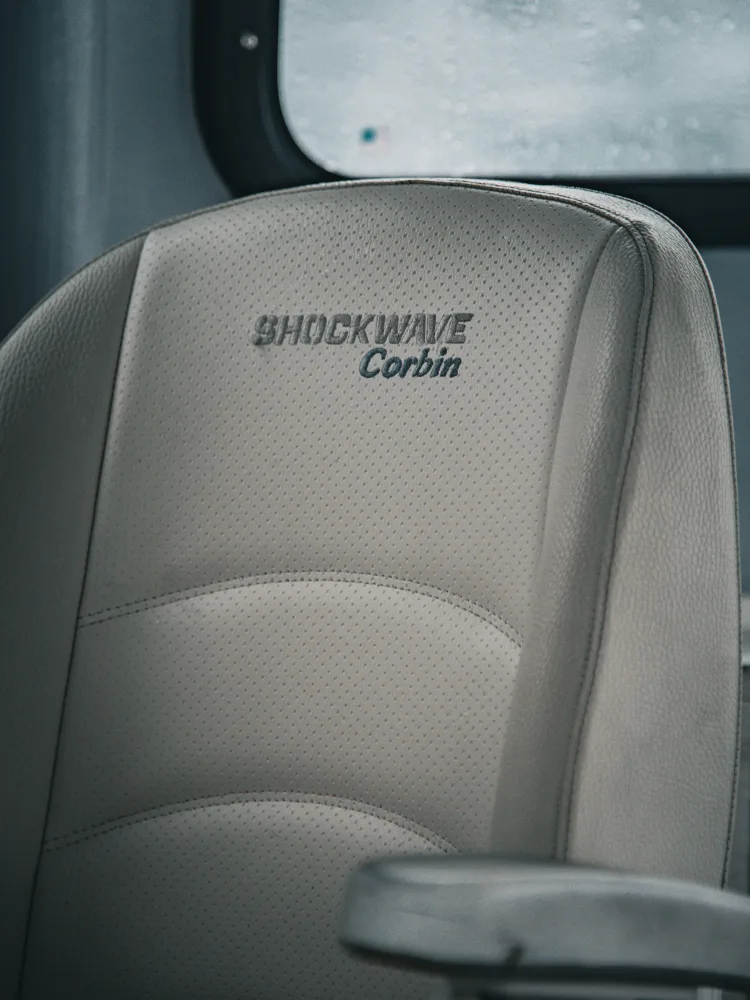
The technology behind that difference is the Shockwave S5 Suspension Module, a marine suspension system built on the same technology Shockwave spent years developing and testing for military clients before bringing it to recreational and commercial boats. Instead of a fixed pedestal transferring every wave impact straight into the captain’s spine, the S5 uses a shock-absorbing suspension system that isolates the seat from the boat’s motion.
For Taylor, the practical appeal was how easily it fit into what he already had. “This is just my existing pedestal, what I used to have,” he said, noting the S5 module mounts into setups boats are already running. The suspension itself is also adjustable, so captains can tune the module to match conditions, dialing it in differently for a flat-calm run versus a sloppy chop.
Built for the Long Haul
Over a 5-hour day, that adjustability adds up. “You can really ramp it up as the sea state changes,” Taylor said. “You can tune it to the conditions you have at hand.”
For a captain running back-to-back charters through a full tuna season, that’s not a luxury add-on. It’s the difference between finishing a trip drained and finishing it ready for the next one. As Taylor put it, comparing the ride to a top-of-the-line vehicle seat built for long highway hauls: “This is like the equivalent of your Denali — your top-of-the-line comfy seat in your car for those long commutes. It’s what you want.”