

Summer Fishing is Trending Up
As my kids get older, I find that the early part of the fishing season is jampacked with extracurricular activities as the school year and sports wrap up. It’s not until July and August that I can get into a predictable routine and rhythm. For the past few years, midsummer fishing has changed from slow doldrums to some fine fishing, though with a mixed bag of opportunities. I haven’t had to resign to fishing live bait or going out only at night. There’s been steady fishing off the beaches and ledges for bass, and the bluefish have made their way back to southern Maine. Sharking is as good as it ever was, along with great tuna fishing.
Striped bass fishing will shift as the water warms and bait drops out of the rivers. Bass start to move into areas where they can use structure to ambush unsuspecting prey. Rock piles, bowls along beachfronts, and underwater ledges are all prime areas to focus on. Anglers fishing during the day will have better luck in the early morning hours using artificial lures. A slowly worked spook, metal-lip swimmer, or weightless soft plastic will elicit strikes from bass on the feed. Use the current to your advantage and allow the lure to sweep across the structure and past the fish.
As the day progresses, switch to live bait. Live-lined mackerel, pogies, and pollock are all good options. Focus on structure where bass will be lurking. They are opportunistic feeders, so while they may not be actively feeding, they will rarely pass up an easy meal, like a struggling baitfish in an area where it shouldn’t be. That said, there are days where a bass will make only halfhearted attempt to eat the bait. This usually happens on bright, cloudless, humid days. If you find yourself in this situation, try switching from a live bait to a chunk; often, a small chunk will be effective.
You can also give vertical jigging a shot. There are more fish than I ever realized sitting in deeper water. I haven’t quite figured out what they’re doing there, but my best guess is they are staying cool and possibly staging until the sun goes down. Regardless of why they’re in deeper water, that’s where they are, and they will eat if an easy meal is put in front of them. I have been using a 9- to 13-inch soft plastic rigged on the lightest jighead that will stay vertical without scoping out too much. The technique has a very subtle motion, more a quiver than a snap-jigging motion. This method has put more fish on the boat after sunup.
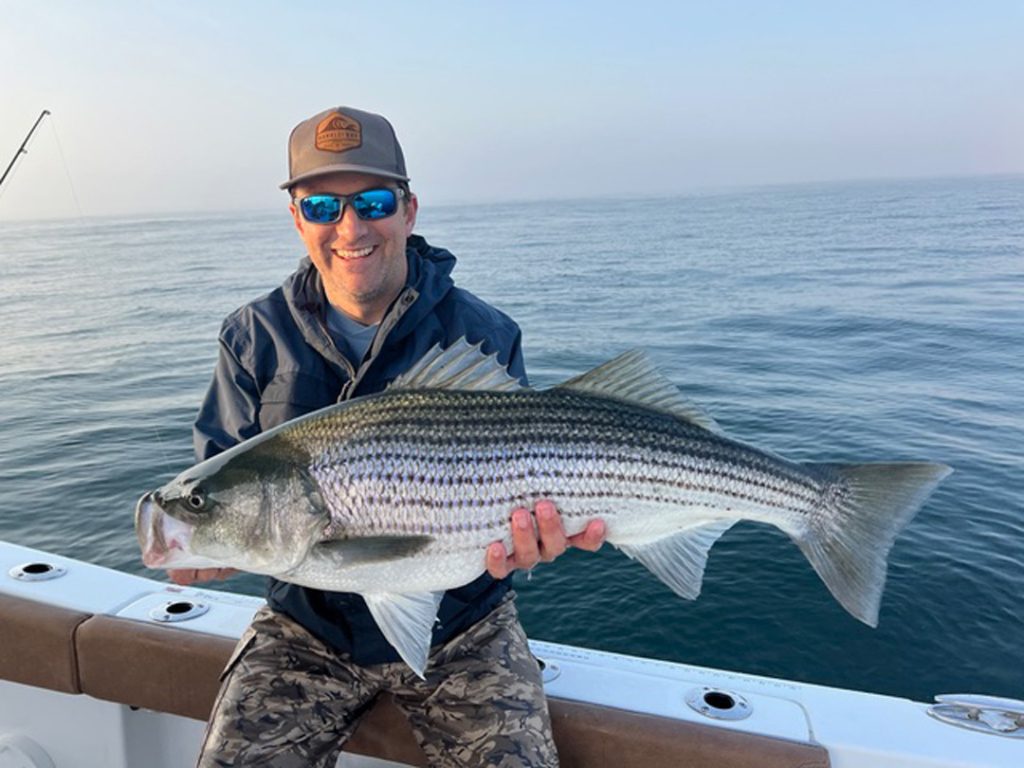
Obviously, the night bite is still the best option, especially if you are after trophy-sized bass. Whether from boat or shore, a live eel is going to be your bread and butter. Work the same areas as during the day, but stay mobile, quiet, and allow the eel to do most of the work. If you are fishing from a boat, you can attempt to deep-drop an eel on a three-way rig, but chances are you are going to donate gear to a lobster pot.

If you are not willing to deal with live eels, or just prefer to use artificial lures, you can’t go wrong with a Gravity Tackle eel. My go-to colors are Au’ Natural and Midnight Calamari. Fish these the same as you would a rigged eel, and be ready. Other must-haves in your nighttime arsenal are needlefish and darters. If you carry a combination of those three artificial lures in your bag, you will succeed at night with striped bass.
Chunking can also be an effective tactic. Using the freshest bait possible while chunking yields the best results, and as little weight as possible aids in hook-up ratio.
As I said earlier, we have seen bluefish come back for the last three years with some good consistency and numbers all the way from Kittery up to the Midcoast area. They typically show up around the second or third week of July and have been sticking around through September. Most of the bluefish have been off the beaches and in the bays, and while I’ve seen some surface blitzing, most of the time, the fish are either holding 10 to 20 feet below the surface, or you can see them finning on the surface. Either way, they are not shy about eating, but each scenario requires a little different approach.
For the blues holding deep, look for slick water. You will also notice them on your sounder. These fish seem to have no problem coming to the surface to hit a topwater plug, but often it is easier to troll one up while looking for the school. I have been using loaded Cotton Cordell Pencil Poppers because they are durable, obnoxious, and once loaded, cast well and cover a ton of territory. While trolling, I use Rapala CDs; if I am feeling nostalgic, I may break out a Storm Big Mac.
If you encounter bluefish finning on the surface, I hope it was while you were moving slowly and saw them from a distance. If that’s the case, it’s go time. Throw a topwater or fly around the edge of the school, and you’ll have a great time. If you are running full-tilt and blow the school up, throttle back and keep eyes on where the school was. More times than not, they will regroup in the same general area. Once you spot them, take it slow and work the edges, making sure to not get too close with the boat.
As long as the trends hold, we should see another fun summer with some consistent fishing. No matter what you chase or how you plan to do it, have fun, respect the fishery and the other fishermen out there, and everyone will have a good time.