
Surfcasting for Summer Stripers
The dog days of summer have arrived, and with that comes new challenges for saltwater anglers in Rhode Island. When water temperatures reach their peak, the fishing can get tough. As shallow waters of Narragansett Bay climb into the mid-70s, many of the areas that were consistent producers in late spring become devoid of activity. The large baitfish of the spring, like river herring and adult bunker, have vacated the area while juvenile menhaden (peanuts) likely aren’t large or plentiful enough to be on the menu yet. The tactical transition to make is to become structure oriented. The days of large, obvious blitzes have passed us by, so it’s time to zone in on productive structure.
We are blessed in Rhode Island to have access to the deep, cool waters at the mouth of Narragansett Bay. The ledges of Narragansett, Jamestown, and Newport provide a refuge for resident bass trying to beat the heat. These beautiful and dramatic sections of the coastline are ideal for surfcasters looking to connect with cow stripers during the summer. Some of these ledges have access to almost 100 feet of water just a cast from shore. The steep, jagged terrain may be intimidating, and for good reason. Having the right gear and practicing sound judgement is essential for staying safe in these areas.
Standard surfcasting gear applies, but with a special emphasis on footwear. Perhaps more important than anything else is the footwear’s traction. Studded, felt wading boots or Korkers RockTrax are essential. If you are wearing waders, make sure your wading belt is cinched tight. Wearing a wetsuit is an even better idea, as it helps keep you cool during warm summer nights and the added buoyancy may give you peace of mind if you happen to take a spill.
Abrasion resistance is a particular concern when selecting line and terminal tackle. Fifty-pound-test braid is standard when trying to pull big fish out of the rocks and white water. Leader material of 50 to 80 pounds is a good idea for the same reason. Extended leaders of at least 4 feet help safely land fish on the rocks.
These areas can be overwhelming due to the sheer volume of water and the amount of good-looking structure. The first step is to look at depth charts and build an understanding of the ledges, humps, and boulders that make up a particular area. Breaking down large areas of rocky coastline into smaller spots will help you succeed more consistently, especially if the target is large fish. With so much good real estate to choose from, bass relate to areas with favorable tidal currents and wave action. These variables are constantly changing through the tide cycle and shifting wind patterns, so being effective means learning to read these currents and pinpoint high-percentage areas.
Many novice surfcasters falsely assume that they need to make booming casts to get to the big fish. The reality is that stripers are often happily hanging out in white water just feet from shore. Finding consistent patterns in resident fish is a real possibility this time of year if you put the time in and log your outings.
Most of the fish in these areas are “grubbing,” actively looking down in the rocks and ledges for lobsters, crabs, and fish. Fishing tight to structure is often a necessity, even deep into the night, and there is no better tool for the job than the mighty bucktail. There is a learning curve for effectively bucktailing around ledges and rocks, but the results are worth the effort. Maintaining a tight line through the entire retrieve is essential because it keeps the hook point up and prevents repeated snagging. Once your bucktail hits the water, let it free-spool down for just a second before locking your bail and coming tight to the bait. Begin a very slow retrieve until you contact the bottom. Begin to speed up your retrieve, working the bucktail just above the structure while adding in a sharp rod twitch every few turns of the reel. This is an excellent way to cover a lot of water and find active fish. A sensitive rod helps get the most information about the structure. Bringing an assortment of bucktails is a good idea so you can adjust to water depth and current; and, most everyone is bound to hang up a few bucktails while learning. Stout hooks are essential to avoid disaster when horsing a big bass away from the rocks.
Throwing live eels is by far the best way to connect with cow bass any time of year, but this is especially true in the height of summer. With a moderate-action rod, you can lob eels a good distance without pulling the hook out on the cast. You won’t be able to sling an eel nearly as far as a bucktail, so it becomes even more important to break down large areas into smaller spots. Slow-reeling a live eel through these hot spots is the way to find larger fish that aren’t in the mood to chase a plug.
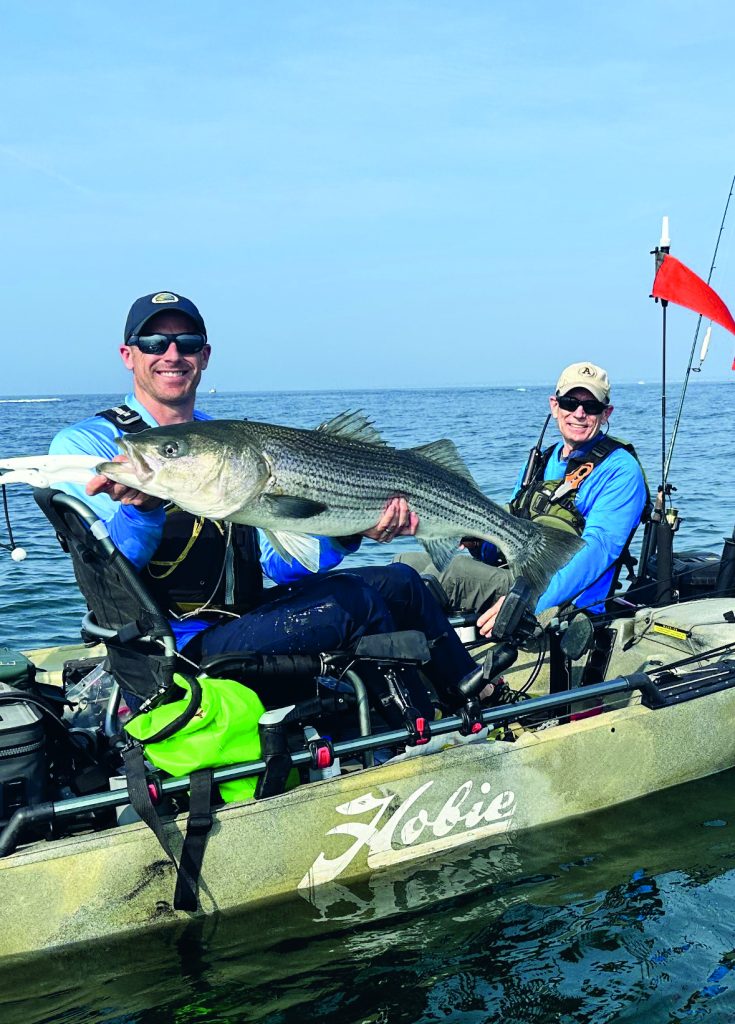
Before you begin fishing, look around and find a safe landing zone. Plan on how you will fight and land a big fish given the structure and rocks around you. This is easy to overlook, but you don’t want to have a 30-pound fish on your line with no way to safely land it.
Rhode Island’s coastline can have a steep learning curve for anyone who has never fished them before. The beauty is that these areas give us a legitimate shot at big fish when most other spots have dried up. So, put on your studded boots and explore the ledges this summer; you might be surprised at the results.