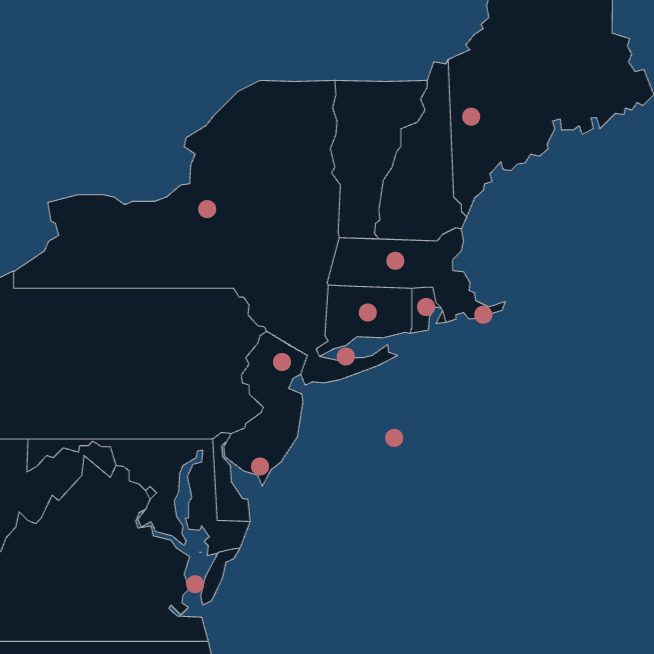

There’s no time like summer on Long Island. One might argue that it’s the perfect place to be, and as a fisherman, I agree. Even in the “dog days” of July and August, when it comes to staying cool, the place to be is on the water. Actually, that’s just another excuse to go fishing (as if I needed one).
This is a great time of year to be a fisherman, but it doesn’t mean I’m free from struggles. Like many people, I’m indecisive. I have a hard time making choices in almost all aspects of life. But I struggle the most with especially important decisions: the fishing-related ones. Right now, there are just so many options to choose from—which species to pursue, light-tackle or fly, oceanfront or back bay—that it can be overwhelming. Depending on what the day’s conditions bring, I might have to choose whether to spend my time sight-fishing for stripers, heading offshore with a friend (if I get an invite), or going in search of inshore pelagics like Spanish mackerel during the second half of August. When the mood strikes, I may even feel the need to drop the Jon boat in a lake for some big largemouth bass. These are not easy decisions to make, especially when the right conditions align all at the same time; however, this is a good problem to have.
When we flip the calendars over to July, a lot of striper diehards begin to utter the words “summer doldrums”. In my experience, there isn’t such a thing. Sure, you may need to switch up your strategies a bit regarding technique, timing, and location, but you can still catch plenty of summertime resident stripers on the island. On both shores, you’ll probably have to head east to find reliable action. If I drew a north-south line down the island’s center, I’d spend most of my time looking for bass on the east side of that line because of slightly cooler water temperatures and a rich summer forage base.
I’m primarily a fly/light-tackle guy when it comes to stripers. In the South Shore bays and in Long Island Sound, many schoolie to slot-size stripers will hang around all summer long. These fish are super fun on the light stuff, and even more so when I can sight-fish for them on the flats. In the bays where I fish, I usually focus my efforts on the second half of the incoming tide and perhaps the first hour or two of the outgoing. If I don’t have that tide window, I plan to do some other type of fishing instead. Stripers like to feed in cool, clean water at this time of year, which is generally found on the flood tide close to an inlet. If you don’t have the right time of day and/or calm enough conditions for sight-fishing on the flats, try blind-casting around conducive structure or current breaks with flies and topwater plugs during the first couple of hours after dawn.
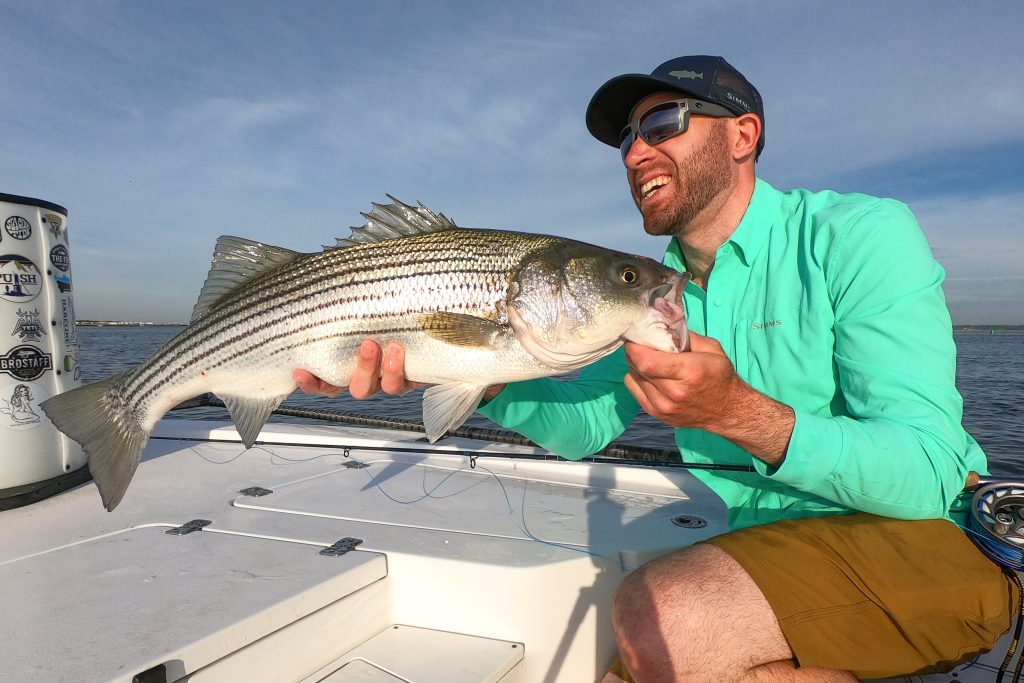
The further east you go on the island’s North and South forks, the better the striper fishing becomes. Hopping between bunker pods is a very effective way to catch large fish via boat during the daytime. But, as the month rolls on, you will probably have to switch over to the night shift if you want to catch (and release) big stripers. As August approaches, the majority of action on the bunker pods will come from sharks (which can also be a fun summertime target).
Fishing live bait is also productive at night, though nighttime bait fishing usually involves drifting over structure in the rips with a 3-way rig fished near the bottom. This technique is ideal for South Shore inlets and some of the deep rips along the rocky points of the North and South forks. Montauk should have big bass in the rips this summer, as the rips do almost every year. Use some of those live bunker you caught while pod hopping, but live eels and keeper-size porgies work well too.
Fishing with live bait is great from the boat, but surfcasters will be on the hunt for big bass with live bait. For surf guys, throwing live eels (or rigged dead eels) in boulder fields can result in some of the biggest fish of the season. If you don’t like dealing with these slimy things, lures work as well. You’ll be able to pick away at fish from the shore in most of the usual spots on Eastern Long Island. Again, you’d be wise to focus on finding cool, clean water right now. Inlets are always places that comes to mind. The farther east you go, the better, especially once you get to “the point”, where prime shallow striper structure is adjacent to the coolest, deepest, bass-holding waters on the island. Boulder fields are prime real estate for big stripers at night. Put the effort in when everybody else isn’t, and you’ll eventually be rewarded.
Stripers are often the center of attention, but we can’t forget about “the other bass” that dwell in our coastal waters. Black sea bass season is now open. For the first half of the summer season, you should be able to pick away at these fish on your local reefs and wrecks. However, as the popular wrecks start to get overfished, be clever and shift your attention to some of the lesser-known wrecks and reefs to catch more keepers.
Fishing for these tasty bottom fish can be as simple as you want it to be. Drop down a baited rig or a jig. A basic high-low rig with 2/0 to 4/0 baitholder hooks and salted clam is perfect. For more experienced anglers, jigging can be a lot more fun, and will pull in some bigger fish. Whether you employ the good old diamond jig or a fancy slow-pitch jig is up to you.

While on the subject of bottom dwellers, fluke season on the South Shore is still going strong, though in the coming months, ocean fluking usually gets the most attention. If you can’t make it out there, bucktailing in the South Shore bays will still be an effective way to get some flatties for the dinner table. In the ocean, fishing can be good anytime, anywhere, but many boats tend to focus on drifting areas around reefs. If you really want to go for doormats, Montauk is the place to be. Whether it means chartering a local boat, walking onto a party boat, or running your own boat out there, the opportunity for double-digit fluke is very real. Many of the spots along the south side hold them. And, not far from Montauk proper are the windmills off Block Island, another amazing area to fish.
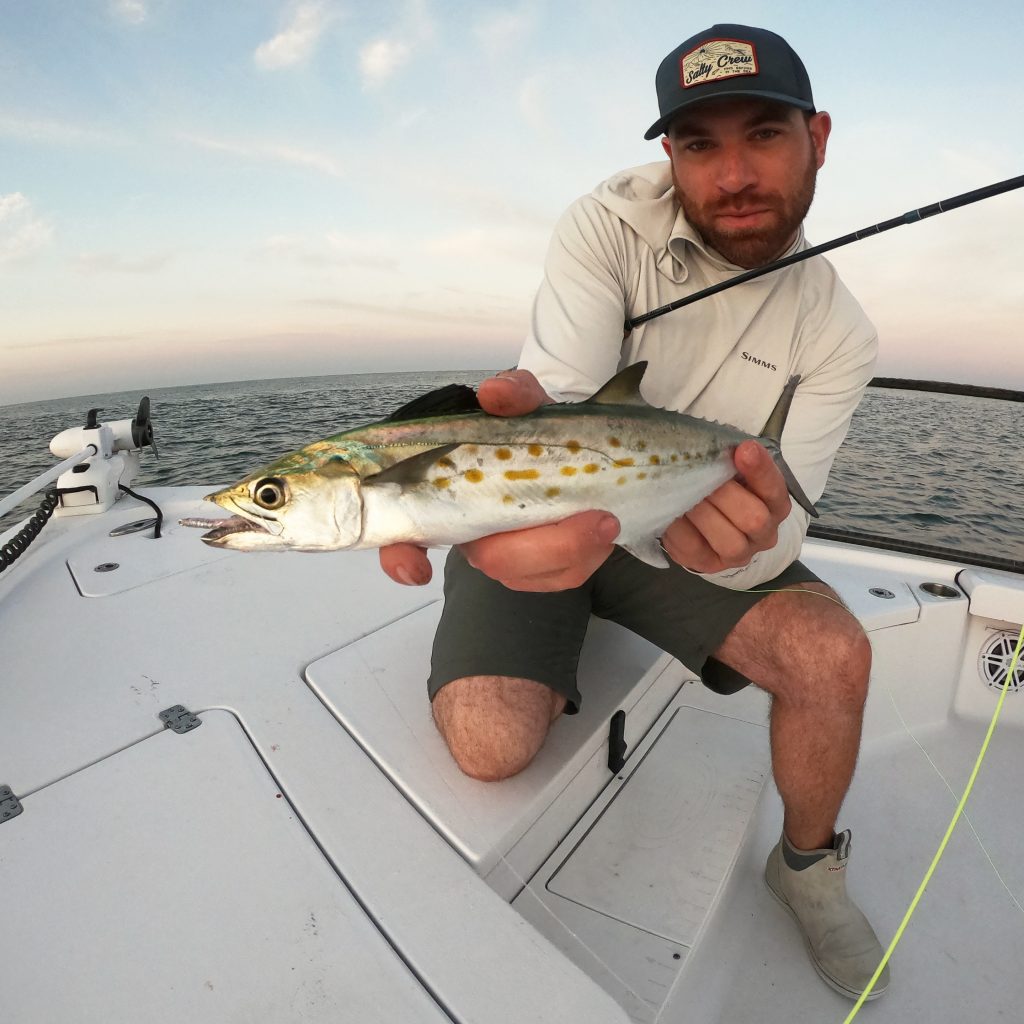
If you’re out fishing the ocean, especially around Montauk, the South Shore inlets, or on the North Shore in the Sound, be on the lookout for early-arriving inshore pelagics. During the summer months, there is a good chance of seeing bonito or Spanish mackerel. These fish usually make their presence known when they’re feeding. Look for signs of birds working and fish slashing the surface. Keep a lighter spinning rod ready to cast with a Deadly Dick, epoxy jig, or small spearing imitation. As we move toward the end of August, the possibility of seeing the first few false albacore improves as well, so be ready. If you’re out in the ocean, always have a true tuna plugging rod ready, too. These days, you just never know.
While some wait for pelagics to show in inshore waters, others go long for the larger variety a little further from home. As the strong bluefin run continues along the South Shore in close range (which is anywhere from 10 to 40 miles), you may see yellowfin tuna mixing in to add to the fun. July marks the beginning of prime jigging season for these fish. Not only is catching them on jigging tackle a blast, but it is much more productive than trolling right now because the fish are starting to set up deep and feed on sand eels. Your best bet is to run around temperature breaks and drop jigs in areas that have a lot of life—which could be whales feeding, cownose rays cruising, birds diving, or obvious tuna marks on the sounder. However, it’s also worth having one or two spinning rods rigged and ready to go with a popper or stickbait. If you see porpoises, cast as close to them as possible. Often, yellowfin tuna won’t be far behind them.
For those who really enjoy going the distance in bigger boats, fishing on the edge in the canyons is an option. Yellowfin and bigeye tuna always seem to get the most attention out there, though July and August are also the perfect time to target billfish. And, white and blue marlin are filtering in on the Gulf Stream eddies at this very moment. If the tuna game is getting boring for you, marlin are extremely fun (and rewarding) to catch. There is nothing like seeing a lit-up marlin in the spread, stalking lures and teasers, then airing out in the fight when finally hooked. Keep your eyes on the spread. When trolling, you can put out a spread of marlin lures, or at the very least, mix some in among your spreader bars and standard tuna offerings.
There are almost too many fishing options for the indecisive angler right now. So, why not add a few more? If you fish out east, Peconic Bay has amazing summer weakfish potential. In 2023, they were so abundant that people were catching them while porgy fishing. Last year we saw a good run, but not to the degree of 2023. They should make a strong showing again this year.
Taking some kids fishing? Late-summer snapper blues are the ideal introduction to get them hooked on the sport. It’s simple fishing and full of action. You can fish from shore, local docks, or at many of the public-access fishing piers on both shores of the island. There is plenty to do for anglers of all walks during the summer months. Get out there on the water, keep cool, and stay on the fish.
Related Content
Rock Hopping 101: Surfcasting from the Outer Rocks