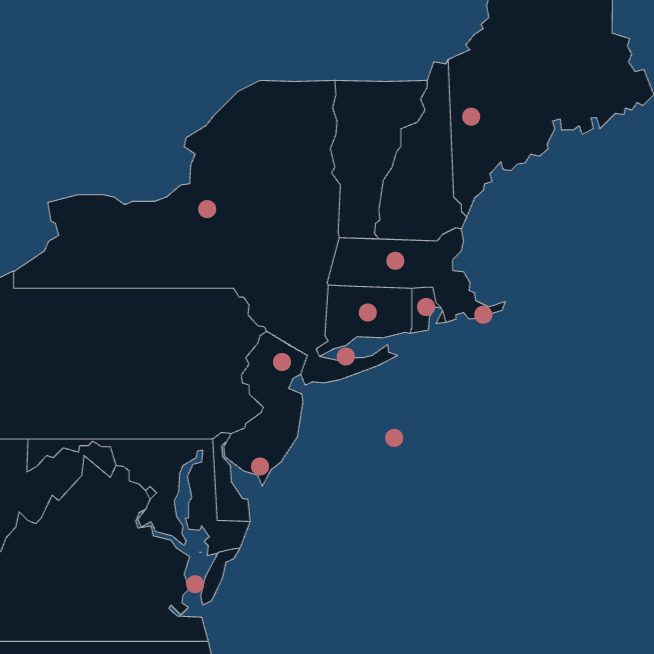

Last week, the Center for Coastal Studies in Provincetown shared a video to their Instagram account that showed a large number of squid chasing baitfish and beaching themselves in the process. Within 24 hours, more videos began to emerge of dead squid washed up on Cape Cod beaches, prompting questions about why squid were beaching themselves by the thousands.
View this post on Instagram
Theories ranged from the meteor that fragmented and landed in Cape Cod Bay to climate change to the squid’s lifecycle. The media at large ran with the explanation posited by the Provincetown Harbormaster, who said this was spawning behavior of the Atlantic longfin squid, which was incorrect for two reasons. One, the squid were shortfin squid (Illex illecebrosus); and two, the squid weren’t spawning.
Shortfin squid usually live out their short lifespans (less than a year) over depths of 500 to 1,000 feet over the continental shelf. Some years, however, massive schools of these squid appear inshore, possibly due to Gulf Stream currents. The squid sometimes end up inside Cape Cod Bay, which can function as a massive, natural fish weir. It’s common for marine life to end up trapped and stranded in the Bay, and it happens regularly to sea turtles, dolphins, and even thresher sharks.
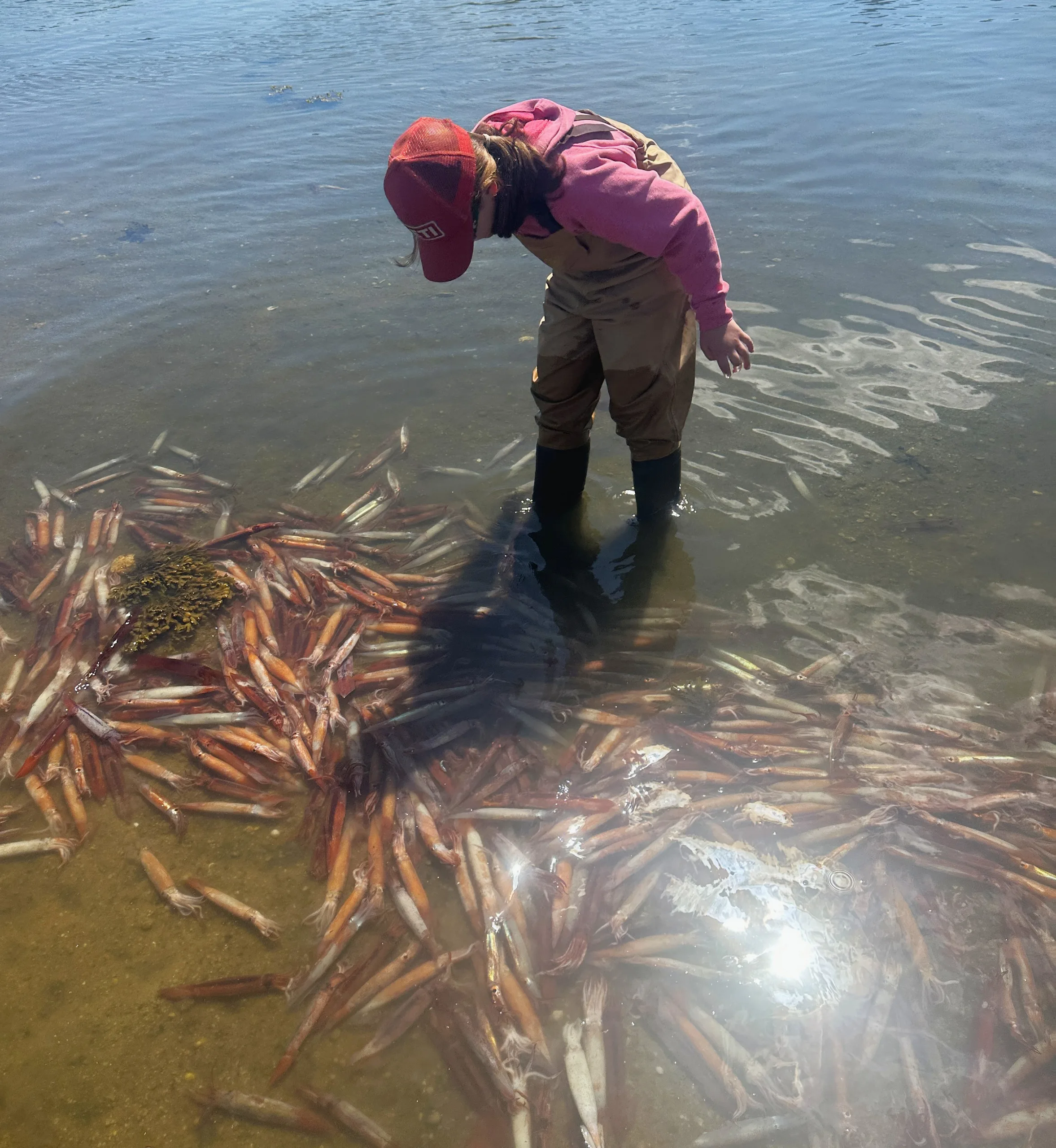
Scientists don’t actually know why shortfin squid strand themselves in such massive numbers, but there are records of it happening as far back as the 1800s.
We know relatively little about the shortfin squid and their migratory patterns. Some years, they appear inshore in immense numbers during the late spring or early summer, right around the time that big schools of striped bass are migrating through the area. While the shortfin squid are aggressive predators, they are poorly equipped to evade species like stripers, bluefish, and bluefin tuna. And, in the days since the squid’s arrival, the stripers have gone crazy for them, chasing them around Cape Cod Bay, feasting on the hapless squid, usually right at the surface.
In their attempts to escape many of the squid become stranded on the sand or in the rocks. Used to swimming over hundreds of feet of water, the squid cannot maneuver well in shallow water and around structure, and once they hit the shore, they become hopelessly stuck.
As far as we can tell, this is a natural phenomenon, and nothing to be concerned about. As a fast-growing, short-lived species, Illex squid can weather these mortality events without threatening the population at large. The last time shortfin squid ended up in Cape Cod Bay was 2018 and 2019.
Scientists are currently working to determine what weather and gulf stream conditions lead to the nearshore abundance of shortfin squid. There is a commecial fishery for them (with the squid used domestically for bait and exported for bait and food), but the landings fluctuate wildly based on when the squid are available.