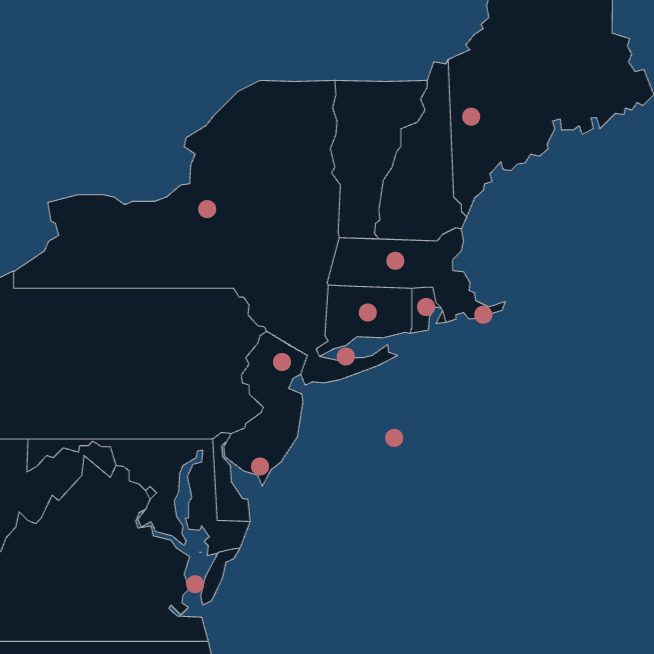

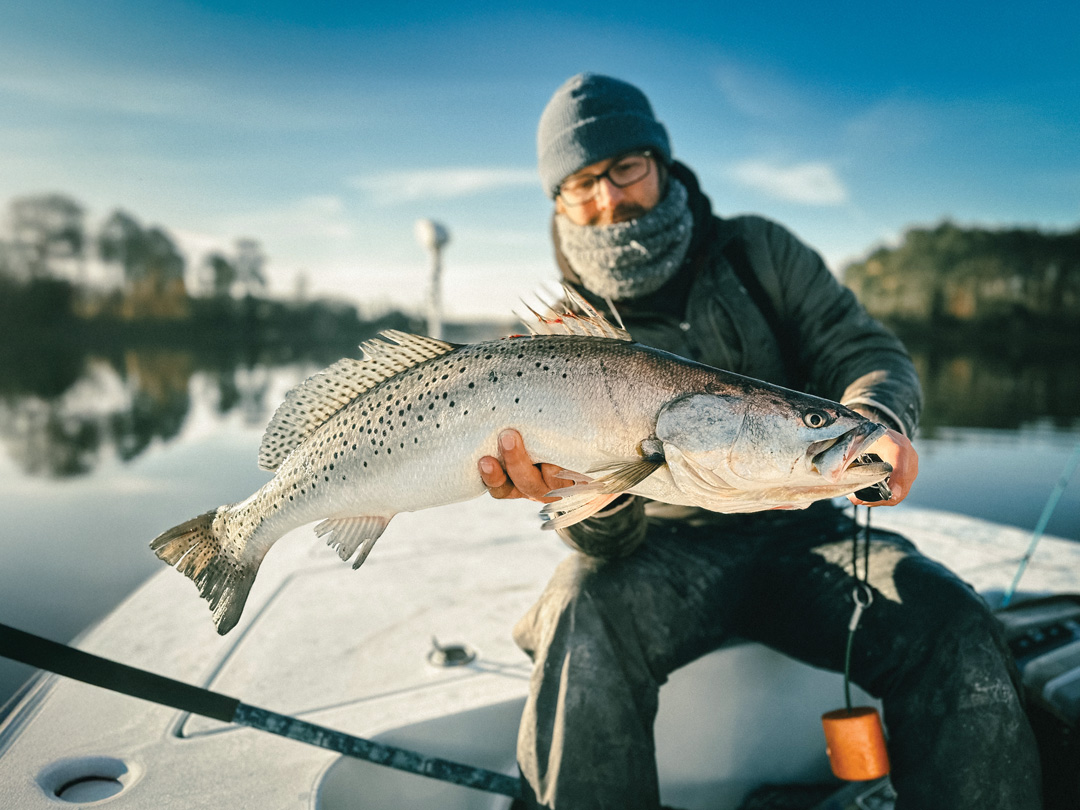
“Why speckled trout?” That’s an admittedly broad question for a broad topic. Given the breadth of territory trout occupy, it’s not surprising anglers in different regions have differing opinions on them. One of the most prolific saltwater gamefish in America, their range spans nearly the entire eastern seaboard, from south Texas all the way into New Jersey. Throughout much of this range, they’re viewed as somewhat of a “beginner” fish: easy to catch in numbers, decent table fare, and not particularly strong on the end of your line. While this diminished view of speckled trout, or “specks” as they’re often called, is shared by many, there are three special regions where speckled trout grow bigger, meaner, and stronger than anywhere else: the Laguna Madre in south Texas, the Indian River Lagoon system on Florida’s east coast, and the Chesapeake Bay in Virginia. In these trout meccas, a trophy “gator” speck is held in the highest regard, a top-tier gamefish worthy of praise from the upper echelon of angling nobility.
While there are trout afficionados all over, these areas breed a special kind of obsession, a certain strain of angling psychosis reserved only for those who’ve tasted it and can never go back—anglers who’ve stood at the toothy butter-mouth of madness, watching as it swallows their lure whole in a flush of roiling aggression. To these anglers, the experience unlocks something. The gateway has been opened, the abyss is calling, and it must be fed a topwater plug.
The manner of contraction for this madness varies, but the symptoms are always the same: a poor sleep schedule, a growing collection of multicolored lures that resemble an explosion of confetti across your boat deck (or garage, or kitchen, or living room), and an obsession with moon phases that would make a werewolf blush. Once stricken by the big trout bug, many anglers refuse to return to simpler pursuits. Giant trout are an enigma, a puzzle box that can never truly be unlocked and leaves an angler fumbling at the edges, so close to solving it that he can’t put it down, and never quite revealing the full secret of the contents.
Charlie Church and the Trout Pool
To better understand this speckled trout madness, I sat down with one of the lower Chesapeake Bay’s foremost big trout junkies, Charlie Church. Since 2018, Church has run one of Virginia’s most competitive and well-regarded trout tournaments, the Virginia Trout Pool. An invite-only online tournament, the Trout Pool ran through the prime months for chasing big specks, starting in September and ending in late December. I say ran, because Church opted to shut the Pool down this year, citing a variety of reasons, but mainly relating to the fact that it was just getting too large for him to manage. Originally consisting of only a handful of local trout sharpies, the Pool had grown to well over 100 participants and garnered sponsorship from some of the biggest brands in speckled trout angling nationwide.
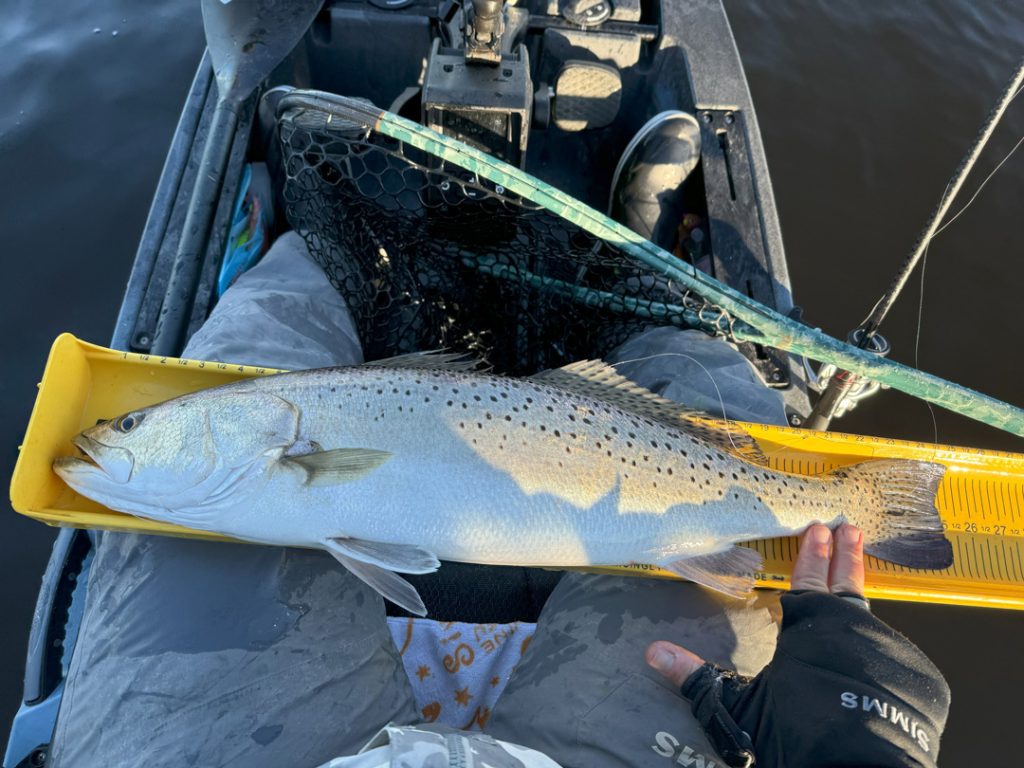
Despite its growth and changing format over the years, one thing remained consistent throughout the life of the Pool: longest fish wins, and you needed to catch a giant to have any hope. To casual trout anglers who aren’t familiar with the Chesapeake Bay speckled trout fishery, the eye-popping numbers routinely put up in the tournament might seem almost fake. Trout over 27 inches were common, with a fish needing to be over 30 inches to have any hope of winning. In 2024, angler Donald Rogers won with a fish listed at 32* inches. Why the asterisk? The certified bump board was only 32 inches long, and the fish was spilling over the edge. For some perspective, the Virginia Trophy Citation size for a speckled trout is 24 inches. In other words, a fish that most people would consider a trophy would barely register with Charlie and the rest of the trout-obsessed anglers trying to win the Pool.
The Trout Pool may be no more, but the fishery that it highlighted remains. The consistency of massive fish put up during its run is a testament to the incredible speckled trout fishing that the Chesapeake Bay offers, with those targeting them being some of the most dialed-in trout anglers anywhere.
So, what makes the Chesapeake so special, and what does it take to put up a true trophy gator trout? According to Charlie and a few other local speckled trout addicts, there are some key factors to consider if you’re trying to jump into the jumbo trout game.
Seasons Come, Seasons Go … But Big Trout Remain
One important thing to remember about Chesapeake Bay is that it’s incredibly seasonal in comparison to more traditional speckled trout fisheries. It sits at a latitude far above the other notable trout fisheries in the country, making the movement and patterns of trout there significantly more variable. This seasonality results in a dramatic shift in trout location and feeding patterns, particularly when compared to more traditional southern trout fisheries.

So, what season is the best? Well, that depends on who you ask, but the fall and early winter are generally regarded as prime time to target big specks in numbers. Starting around mid-September, as the days grow shorter and a series of cold fronts begin sweeping across the Mid-Atlantic, speckled trout begin their migration south. These fish spend their summer roaming the shallow grass flats and bays throughout the Chesapeake, but as the weather cools, it triggers them to move south in search of deeper water with more consistent temperatures. As this migration begins, they start to group into large schools and begin feeding heavily. This pattern can result in some phenomenal fishing if timed right. Focus on obvious feeding stations like grassy points, rocky edges next to deep drop-offs, and structure like oyster bars located in or around heavy current. It’s also a good idea to be on the lookout for traditional signifiers of fish activity, such as birds and scattering bait. While most people don’t think of trout as blitzing fish, this time of year they can put on quite a show while chasing peanut bunker or finger mullet around grassy edges and structure.
As fall progresses into early winter, the fish become more concentrated. They begin seeking out their winter haunts, typically deep-water tributaries with muddy bottoms that stay warm throughout the colder months. The southern Chesapeake is unique in this regard, with plenty of deep systems and areas for trout to winter over. While most people think of fishing for trout in shallow water, it’s not uncommon to come across schools of big fish sitting at 30- to 40-foot depths during the winter.
Depending on the severity of the winter, trout typically begin moving back out into the Bay proper in March or April. This can be another ideal time to target them, although they may not be as healthy or aggressive, particularly if the winter was harsh.
Moving into summer, the fish begin to scatter back into the shallow grass flats they prefer and start to spawn. Spawning typically begins around April and can last through early summer, usually ending around June. Although the fish are more spread out, these months can be some of the most fun to target them. They begin feeding heavily again and become especially prone to vicious topwater strikes. Charlie prefers late July for chasing big fish since they’ve finished spawning and are focused primarily on hunting.
All that said, while there are certainly peak seasons, it’s good to remember that there are always giant trout in the Bay. If you put in the effort and learn where, it’s possible to find trophy specks nearly year-round.
Top o’ the Mornin’… or Evenin’
The draw of chasing trophy trout varies from angler to angler, but there’s one aspect to it that all big trout enthusiasts agree on: absolutely brutal strikes, often on topwater. Those who haven’t felt the hit of a true gator trout may be surprised at this since smaller trout aren’t known for their power, but to those who’ve felt the thump, there’s no comparison. Put simply, once a trout reaches trophy size (over 23 inches, roughly), everything about them changes, starting with their attitude. While smaller trout feed on a range of forage that includes invertebrates and easy-access prey, big trout prefer to focus on one thing: killing other fish. This shift in feeding habits results in a hit that rivals the most powerful drugs in its potency, with no better way to experience it than a topwater plug.

Trout will eat a variety of baitfish, but mullet are probably their favorite, and the bigger the better. Nothing draws in fish that are feeding on mullet quite like a large topwater plug, making it one of the most tried-and-true lures for pulling the biggest trout in a zone. Everyone has their favorites, with the classic Heddon Spook and Rapala Skitterwalk being particularly popular. Whichever plug you choose, try varying up the retrieve speed and cadence. An erratic twitch followed by long pauses can often be the trick for drawing strikes from wary alpha trout.
Another major factor to consider when going after trout on topwater is time of day, or more specifically, lighting. Trout are low-light predators, feeding heavily at night and during the early hours of dawn or dusk. These windows offer your best chance at getting large trout to fully commit to blasting a topwater into the ether. Additionally, while dawn and dusk are always a good bet, overcast weather and low-light conditions can lead to excellent topwater bites all day long.
Moon Magic … or Madness
I alluded to it earlier, but there’s one factor that most trophy trout anglers focus on, albeit to varying degrees: the moon. While there’s rarely a consensus on how important it is, there’s no denying that it holds an inordinate amount of sway over speckled trout behavior.
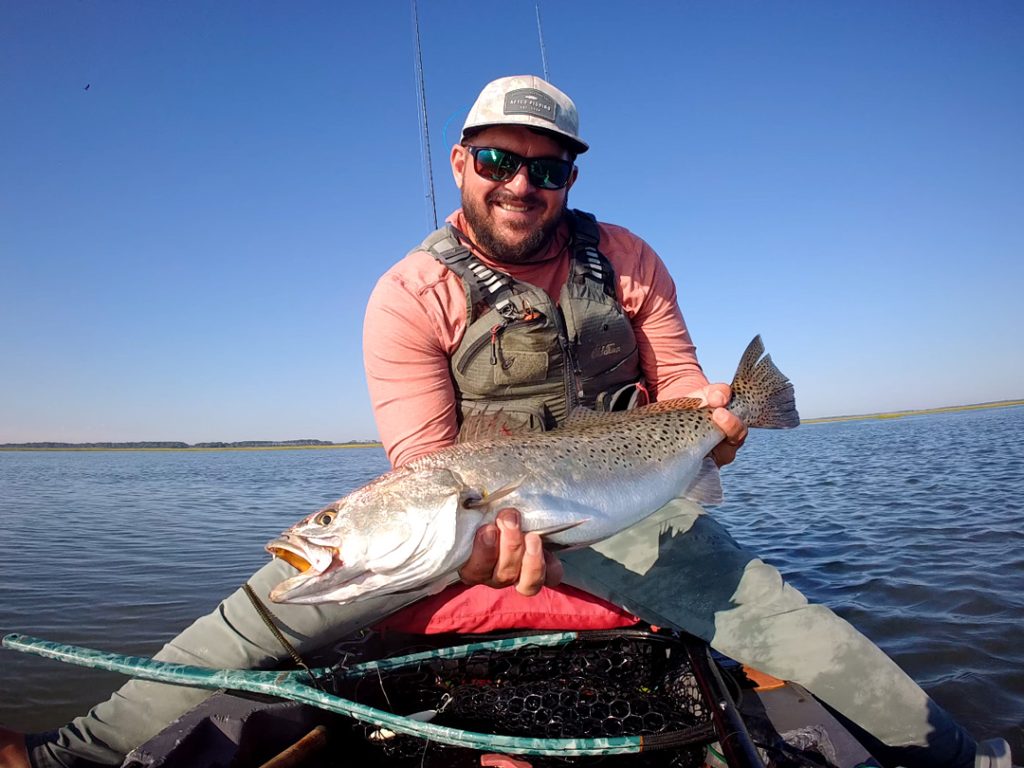
Most saltwater anglers understand the connection between the moon and tides, which is obviously an important factor to learn in any tidal fishing situation. Tides pull bait in and out, push dirty water around, and essentially dictate every important element of saltwater fishing. Sure, these are all critical factors in understanding when and where to target fish, but this is basic saltwater knowledge, and trophy speckled trout are anything but basic.
No, the connection between trophy trout and the moon is nothing so simple as a tide chart. The bond is more nebulous, with anglers often going down a rabbit hole trying to predict the best moon phases and the exact hour when it will trigger the biggest fish to feed. Savvy anglers will fish around the Major (when the moon is directly overhead or beneath your position on Earth) or Minor (when the moon is at a 90-degree angle to your position) windows. These are well-known fish triggers in other angling areas, particularly muskie fishing, but the exact reason for their influence is still up for debate. Regardless, many trophy trout hunters swear by them as the best times to stick a giant.
I asked Charlie about this, and his opinion was more nuanced. While he acknowledged the importance of moon phases and positioning, his take was that things like Major and Minor windows play a bigger factor in areas with less tidal influence. Places like the Laguna Madre in Texas and Mosquito Lagoon in Florida have little to no tide, particularly when compared to somewhere like the lower Chesapeake Bay. In these areas, it makes sense that any change in moon positioning would have a higher-than-average impact on water movement, thus impacting speckled trout behavior to a larger degree.
Majors and minors aside, Charlie certainly considers the phases of the moon and its impact on tides as critically important to understanding trout feeding patterns. His opinion is that big fish feed best in the few days leading up to or following a new or full moon, and that their feeding patterns shift depending on the strength of the tides in these windows. For instance, a big moon will result in a bigger tide swing and heavier current, and the result is that trout may prefer to feed during the shoulder of these tide swings when current isn’t so strong and food is easier to zero in on. On the flip side, a weaker tide swing may make the fish rely on the heaviest flow to funnel food through their feeding zones, shifting the bite to mid-tide.
Whether or not you believe trout are aquatic werewolves that transform into feeding machines at the beck and call of our lunar neighbor, there’s no denying that learning the phases of the moon and tides will go a long way in helping you dial in a trophy trout bite. There’s no word on whether doing a ritualistic dance in the moonlight while shaking a tambourine crafted of broken MirrOlures will help, though (but it can’t hurt).
Gear and Rigging
Targeting trophy speckled trout may be a complicated task, though the gear needed to do so is anything but. Part of the appeal of trout fishing is the simplicity of the tackle. The standard setup is a light to medium spinning rod or baitcasting outfit, usually 7 to 7.5 feet, light braid in the 8- to 15-pound-test range, and a 12- to 20-pound fluorocarbon leader. While lighter leader is recommended to draw more strikes, I prefer to run 20-pound in case of a redfish or striper bycatch. The Chesapeake is a diverse fishery, and there’s always a chance that a giant drum or bass will show up when you’re trout fishing.
Lure selection options are both endless yet basic. Endless, because trout anglers love making simple gear fancy, but basic because they all boil down to a few key presentations. The standard trout lure assortment consists of a topwater plug, subsurface twitchbait or jerkbait, and a soft plastic on a jighead. The endless options appear when it comes to color selection and things like dressed hooks, with custom twitchbaits and painted plugs being nearly as prized as the fish themselves. Common paint schemes and popular patterns tend to lean into the vibrant category, with neon pinks, chartreuse, purple, and orange elements eing exceptionally popular.
Whether you invest in hand-painted twitchbaits or off-the-shelf patterns, confidence is key. The color selections usually matter far less than the size and profile of the presentation and the way it’s retrieved. Trout love to ambush prey from beneath, making shallow-running, twitch-and-glide baits some of the best options for drawing strikes. When the fish are deeper or more lethargic in cooler water, a soft-plastic fluke or swimbait on a jighead is as reliable as it gets. Whatever you’re throwing, remember to try varying your retrieval style if you aren’t getting bit. Sometimes, the difference between getting skunked and whacking fish every cast is as simple as slowing down your presentation.
The Perfect Day
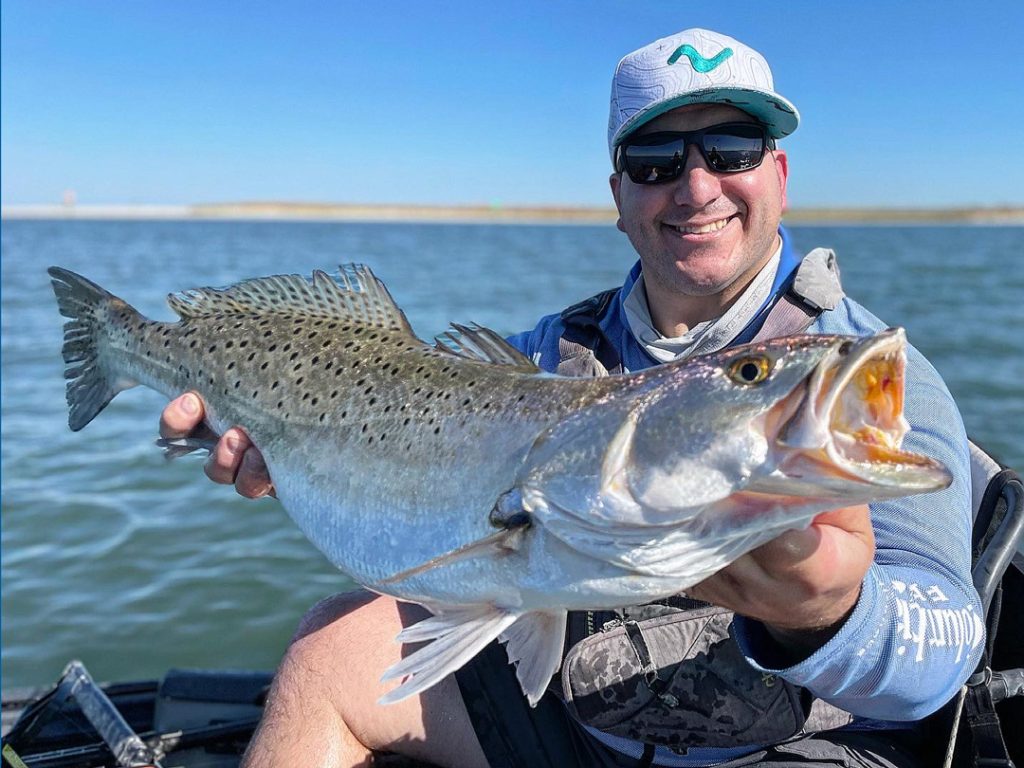
Big trout can be caught just about any time, but if you really want to go after giants, it can help to know when the best windows are. No particular element may guarantee a gator trout, but as Charlie puts it, you want as many factors working in your favor as possible. For him, a perfect day would consist of a few key things: water temps in the low 60s, fishing a few days before a big moon, a light rain or overcast conditions, a cold front earlier in the week after which temps have had time to stabilize, and an early morning high or low tide where you focus on fishing the first or last hour of movement. Any one of these factors will help a trout bite, but if you combine them all, you set yourself up for the best possible day.
Another simple tip that Charlie emphasizes is that biomass is everything. While all these environmental factors are helpful, their influence just about goes out the window when the fish are stacked in numbers with plentiful bait. If you’re lucky enough to find this situation, fish it hard. In fact, if you take one tip from this article, let it be this: fish near bait. Simple, I know, but surprisingly easy to overlook and shockingly important. You can have all the right conditions, but if there’s no food around, the big trout won’t be either.
Everything in This Article May Be Wrong
One last thing: it’s entirely possible that you catch the biggest trout of your life doing nothing mentioned in this article. That’s what makes trophy speckled trout so special—they don’t play by anyone’s rules. One of the most impressive trout I’ve witnessed came during a session where every single factor suggested a terrible trout bite. I had a fishing buddy visiting from the Midwest, with very minimal speckled trout angling experience. We had bluebird skies at midday and a weak low tide; the bite was non-existent. He tied on a giant swimbait with an underspin hook, ostensibly to dredge for a big redfish but mostly just for fun. A few casts in, I heard him call for a net, and I proceeded to watch him lift the prettiest trout I’ve ever seen into his kayak. It was a shiny metallic behemoth pushing into 30-inch territory that appeared from nowhere, as if the portal to the realm of giant specks opened for a split second to allow this one fish to escape. It made no sense, and it was magical.
Final Thoughts
Throughout the last few years of chasing trophy specks, I’ve struggled with answering that initial question, “Why speckled trout?” There are plenty of simple answers, all of which contribute to the addiction. Maybe it’s that they’re the king of the Chesapeake flats, pushing puppy drum around and eating anything they want. Perhaps it’s because they’re complex fish and learning their patterns is exciting, allowing you to get out of them the effort you put in. It certainly doesn’t hurt that they’re friendly to the working angler, with the best bites being at sunrise and sunset.
Sure, all these things help make fishing for giant speckled trout so special, but they still don’t quite explain why these fish cast such a spell on so many anglers. So, after much consideration, I’ve come to this conclusion. When it comes to asking, “Why speckled trout?” I believe the question IS the answer. The journey is the destination. There is no final piece of the puzzle, and the act of putting it together is the draw. Put simply, if the question had an answer, it wouldn’t be worth asking.


Great story ! Speckled trout are a Top-notch game fish.. Sounds like an excellent area to fish for them. A 30″ speckled Trout is a fish of a lifetime here in Cape May. I have been fishing NW Florida for years in the winter. A 24″ speckled trout in that area is a tournament winner . 150 well known anglers from all over couldn’t hit 24″ at the last tournament that I I fished. I can’t wait to try the chesapeake Bay area for specs.