
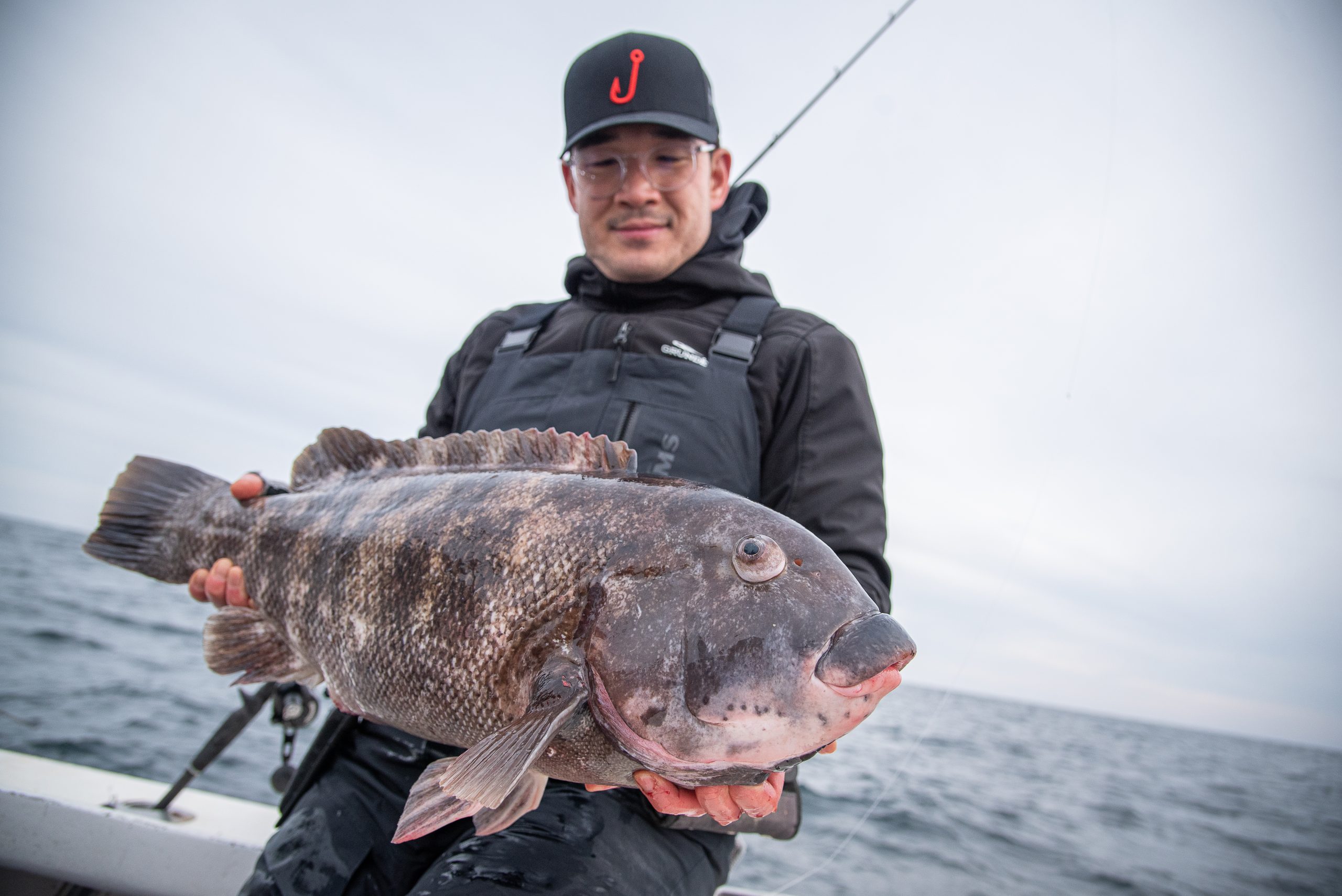
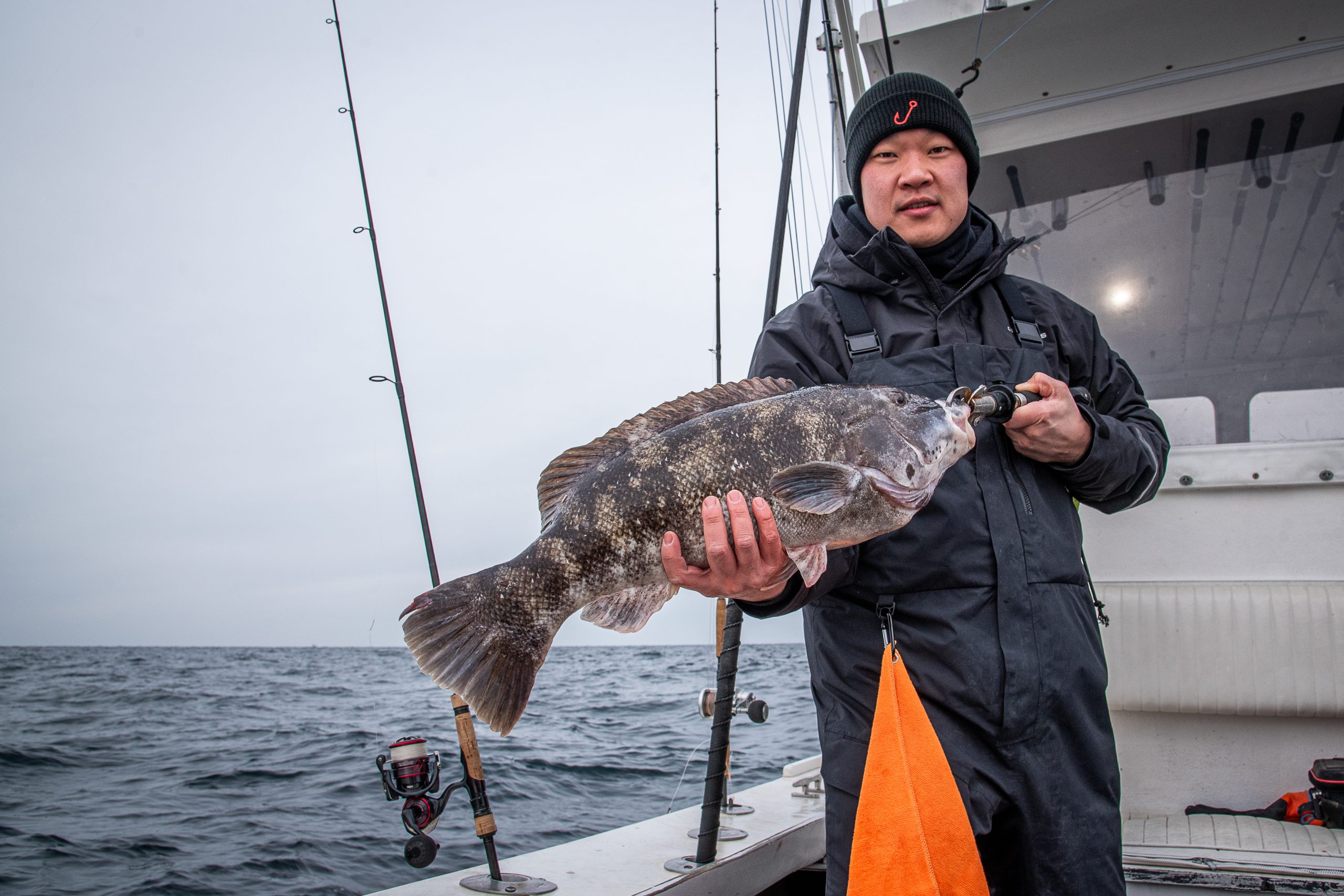
Above: Mike Kim with a 14-pound blackfish caught off Cape May on 1/3/26.
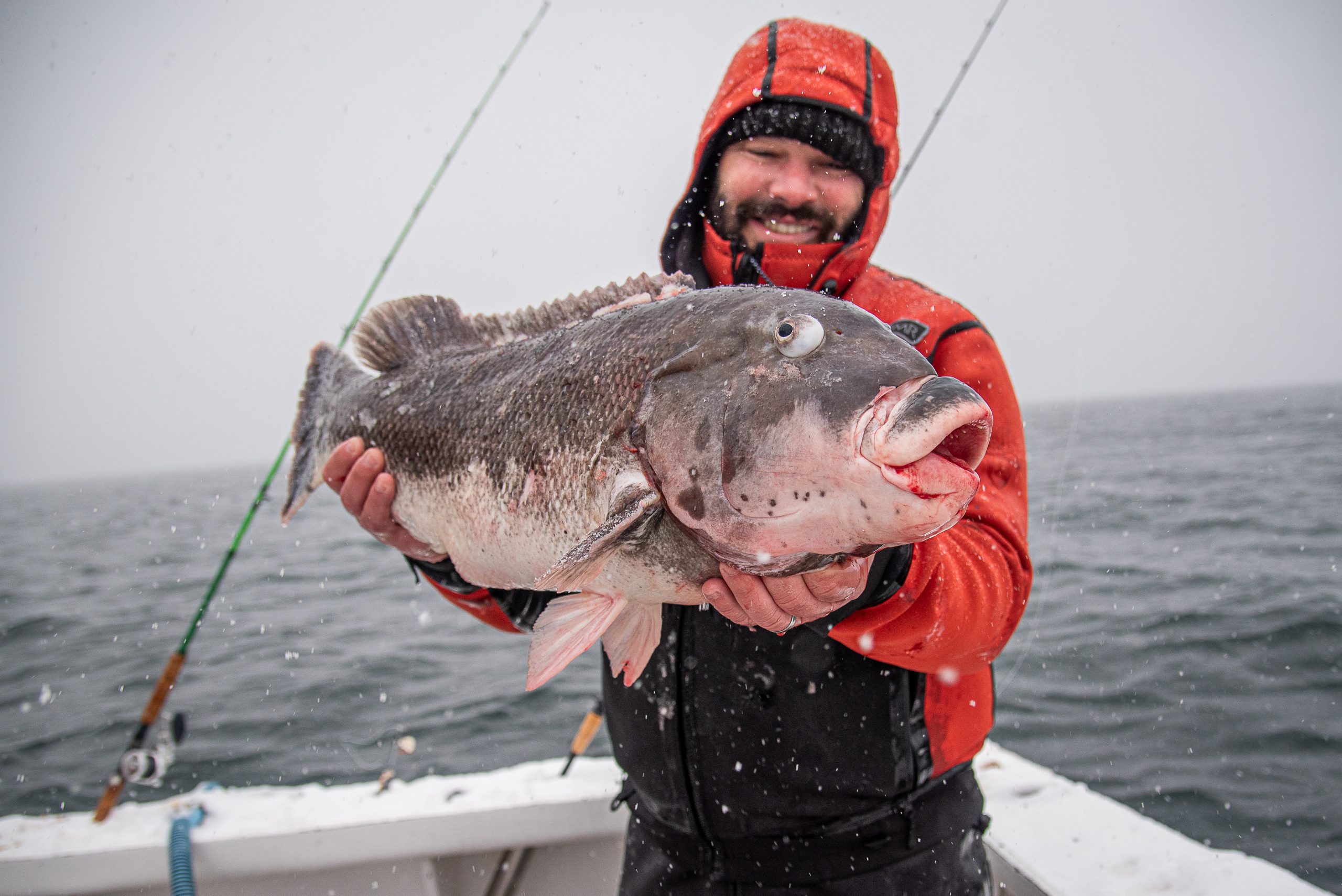
Last weekend, I had the rare opportunity to spend two consecutive days tog fishing with one of New Jersey’s most sought after captains, Tom Daffin of Fishin’ Fever Sportfishing. On Tom’s boat, a 38-foot Calvin Beal, the New Jersey record has been set two different times, once in 2015 and again in 2022. Last year, I fished with Tom in a snowstorm, which limited where we could fish, and we still managed to put tog to 14 pounds in the boat.
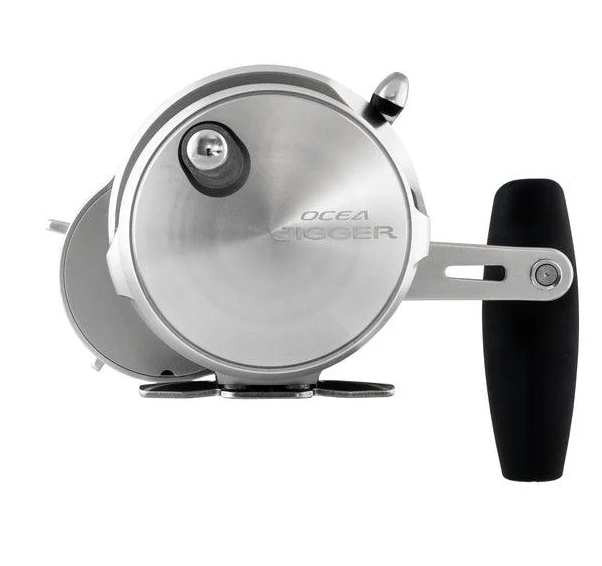
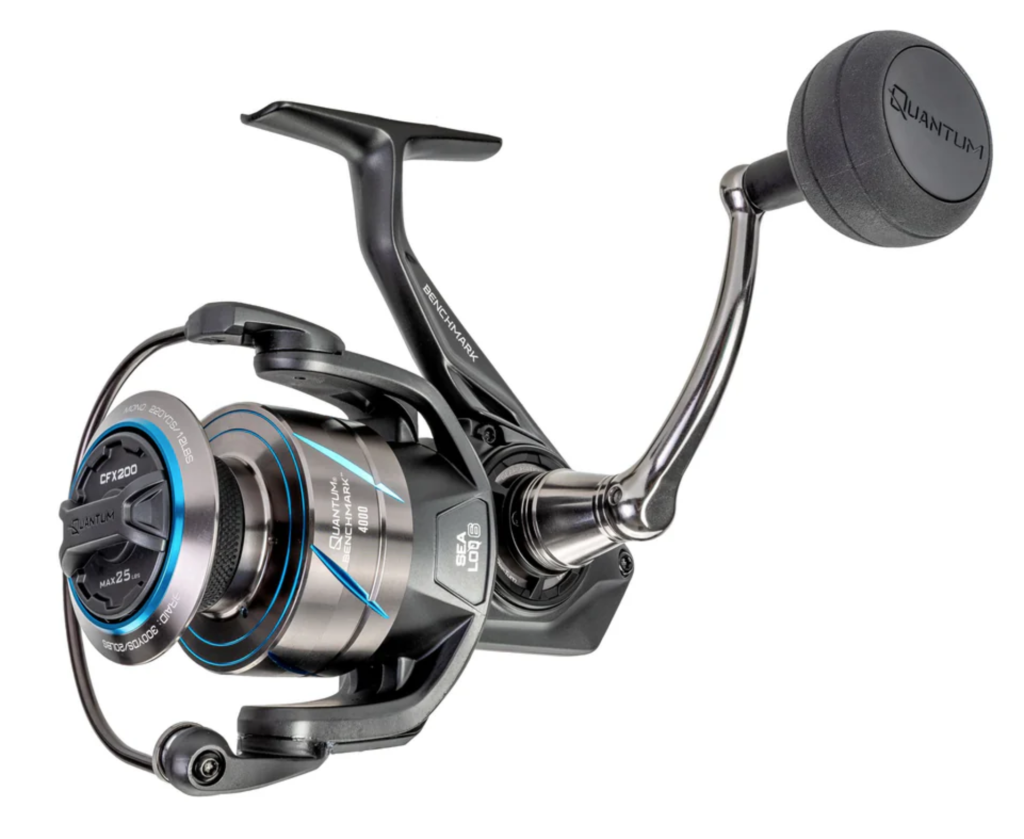
The trip was organized by Mike Kim, Director of Operations at Jigging World, and a fanatical tog fisherman. Mike’s top tog is a 22-pounder caught with Tom in April 2024, and if that wasn’t impressive enough, he caught it on a jig, using 15-pound-test braided line, a size 3000 Shimano Stella, and a Jigging World Night Ranger rod of his own design.
The other anglers included Bharo Chang, accounts manager at Jigging World, Captain Kevin Albohn of Blueline Charters, Captain Rob Taylor of Newport Sportfishing Charters, and my coworker, Anthony DeiCiccihi.
Night Before Rigging, Record Dreaming, and Poker
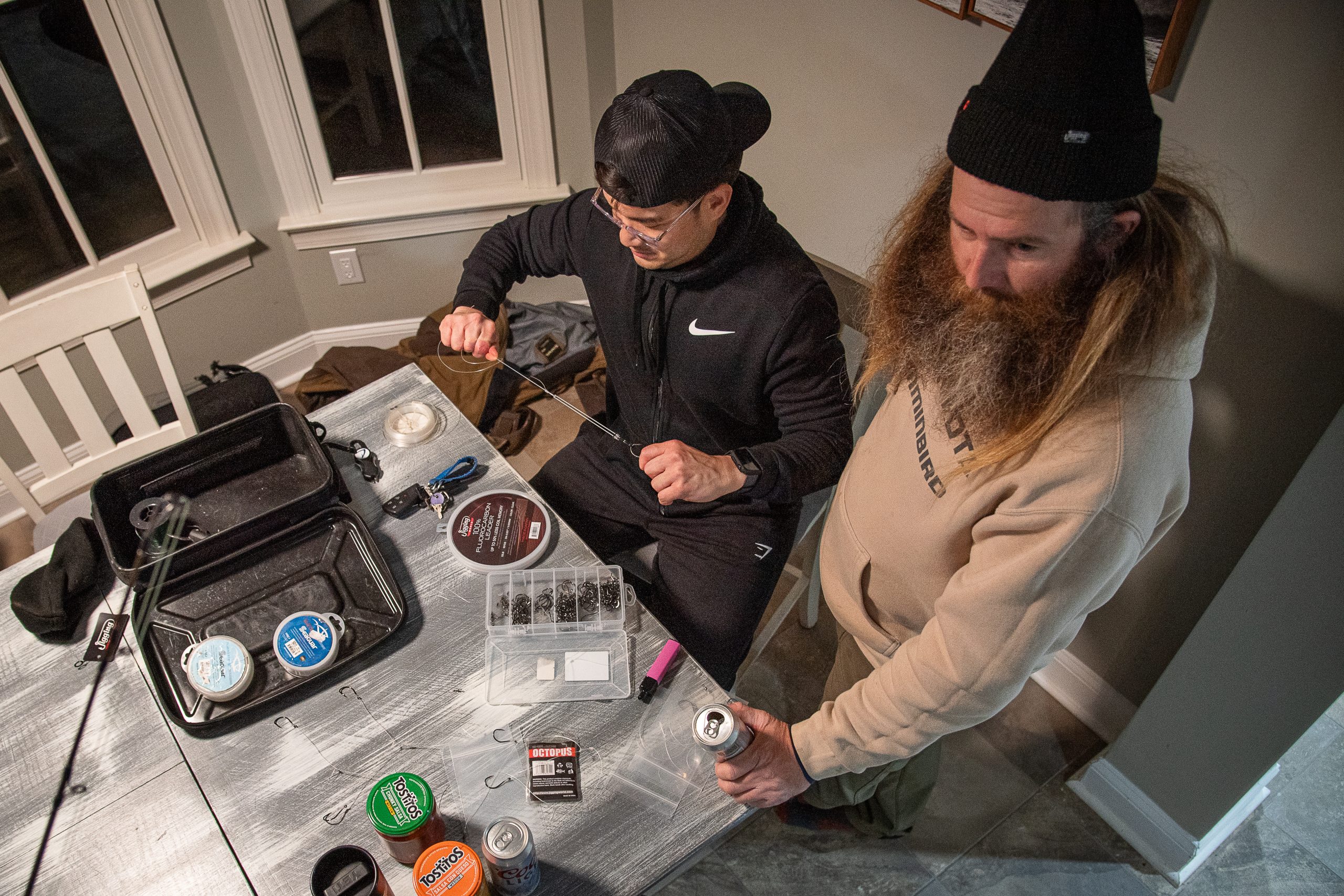
We arrived at our Cape May AirBnb around 8, and before I could toss my duffel bag into my room, the kitchen table had turned into a full-on rigging station. Anthony and I added fresh leaders with FG Knots, while Rob and Mike spun up some tog rigs.
When targeting big tog with larger white-legger crabs, most anglers opt for two-hook rigs. The easiest to tie is the slider rig, which has two hooks on the same leader with the top hook simply threaded on to the line, where it is free to slide up and down. While this rig is very effective, Tom later said he doesn’t like it as much as a Snafu because he sees too many fish break off on the leader.
The Snafu rig has two fixed hooks at either end of a length of fluorocarbon with a dropper loop in-between. Mike then uses an Albright knot to add the snafu to his topshot above the sinker loop.
Besides Tom favoring the Snafu, there was another very good reason to tie on the slider rig. When fishing Cape May for tog between December and April, a 20-pound or larger tog is a real possibility, and a record-breaking blackfish is not out of the question. Tom is convinced that record-size blackfish swim on the wrecks he fishes. However, a blackfish caught on a slider rig would be disqualified as the IGFA All-Tackle World record, because of the second, free-sliding hook. Two fixed hooks, as in the snafu, are fair game.
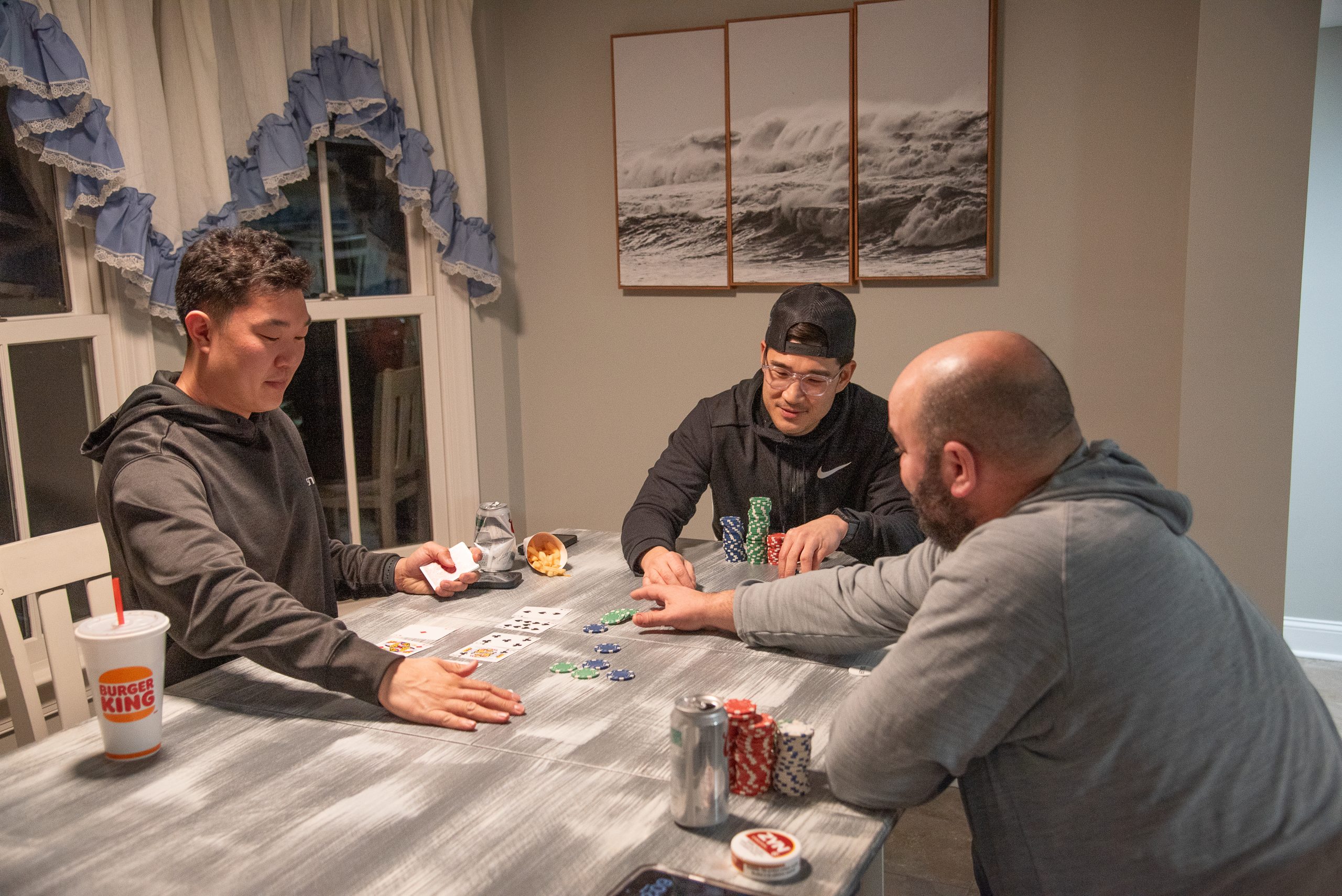
Rigs tied, we had enough time for a little poker before bed. I made it to the final three before going all in on a bad bluff and losing my chips to Mike.
Day One – Going Deep
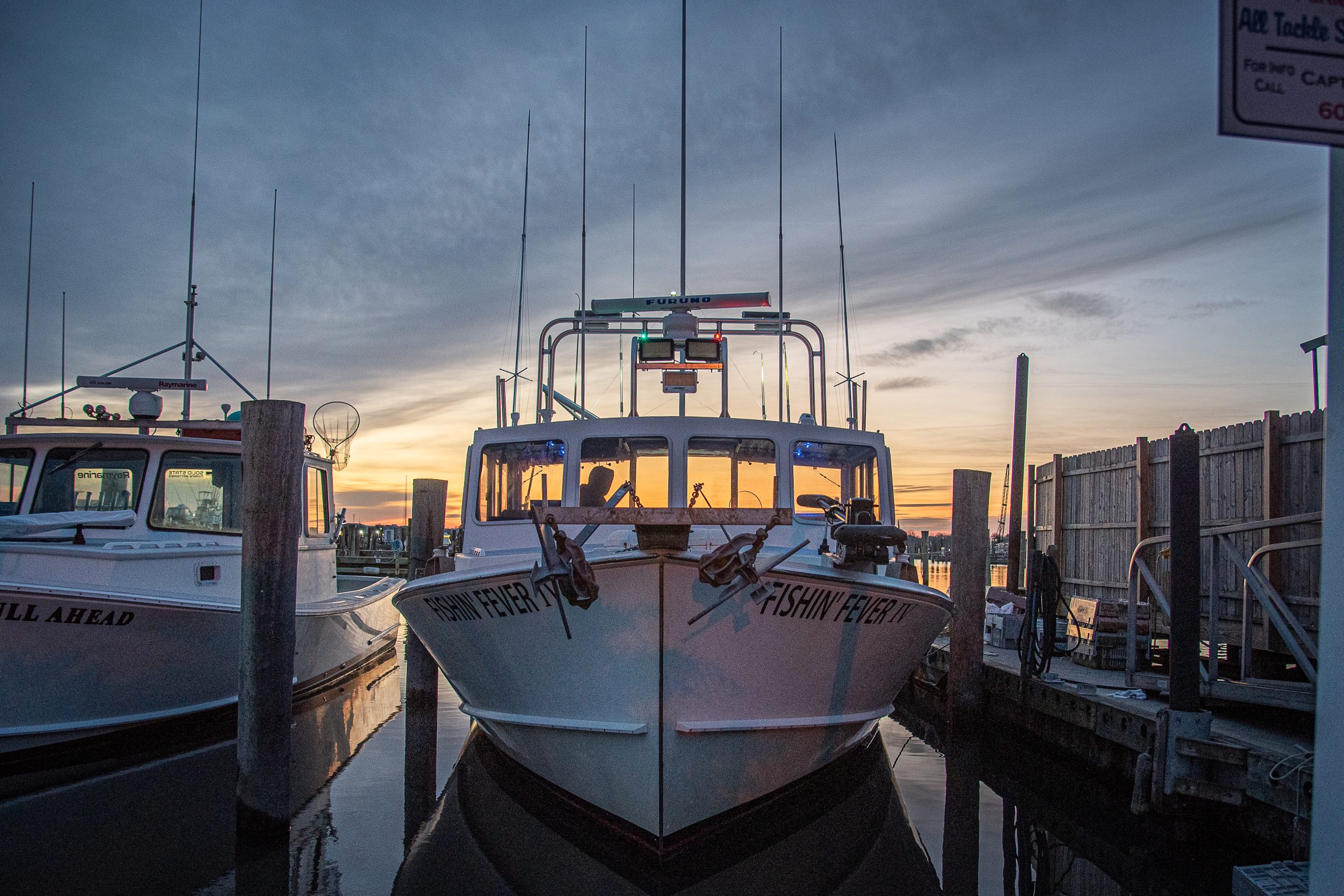
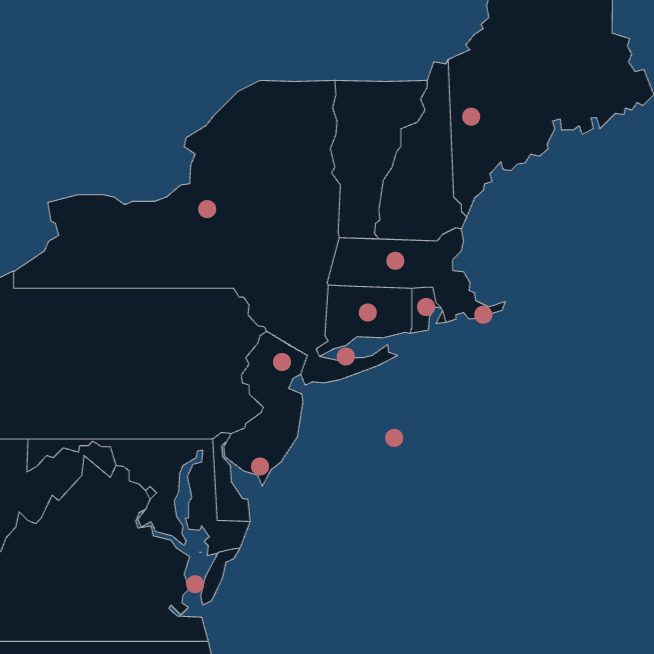
We had pristine conditions for our first scheduled day of fishing. Weather severely limits how often Tom can get out to his deepwater trophy tog spots, but when conditions allow, he runs 20 miles or more to fish depths of more than 100 feet where monster blackfish live.
The fishing was on from the start. Bharo took advantage of the slower tide to send a 1.5-ounce jig down the 120 feet, and on his first few drops, he landed a 9-, 10-, and 12-pound tog. I was also fishing a jig, but missed those first few bites, with my patience for setting the hook at the right time evaporating with each big tog Bharo hooked.
In that first flurry, Mike caught a double-header of six-pounders, and Rob put a couple heavy keepers in the box on snafu rigs. I stuck with the jig, and swung and missed on a few more bites before the current picked up and I was forced to switch to a rig with a 10-ounce flat bank sinker.
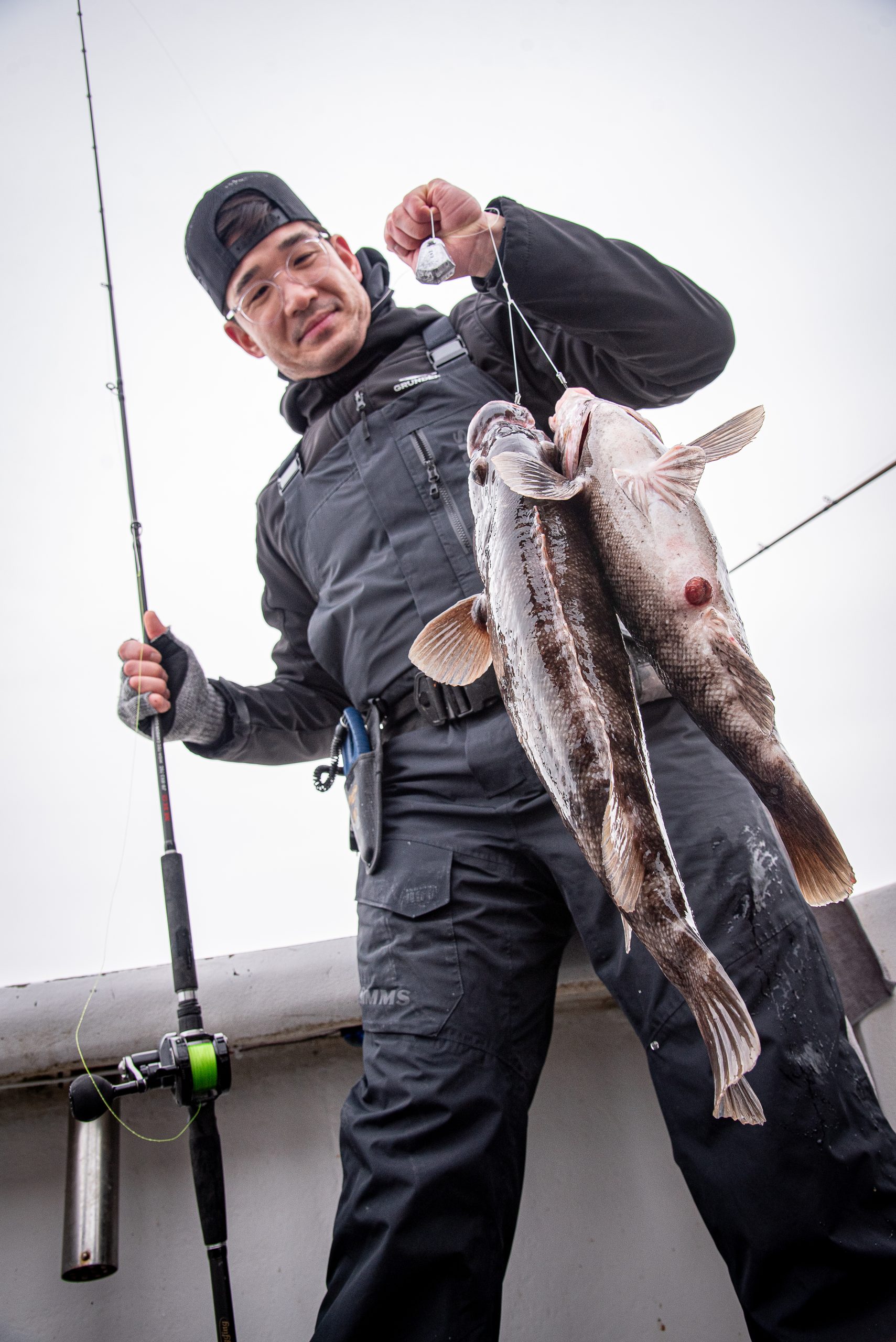
The bite remained steady all day, as Tom moved around to different structures. Three more double-digit fish hit the deck, a 10-pounder for Tom, a 10-pounder for Rob, and a pool-winning 14-pounder for Mike.
On the way in, Tom checked his crab pots to restock on prime tog baits and we returned to the dock just after dark.

Day Two – Watching the Wind
The morning of our second day was even more beautiful than the first, but the wind was forecast to pick up, which would limit our range. We fished some closer-to-shore structure that Tom assured us was full of fish, but that the colder water temperatures inshore had made finicky.

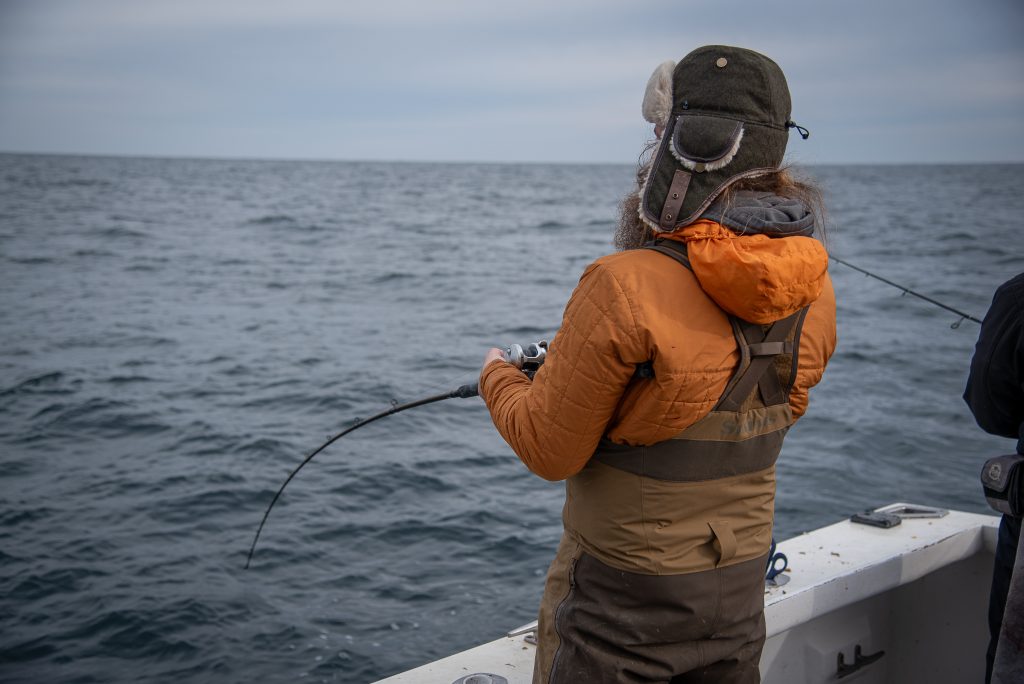
Nevertheless, we went to work catching fish. Today, I had a hot hand, after employing a tip I learned with BJ Silvia and Rob Taylor a few years ago, that when the current is running hard, a single-hook tog rig often presents the crab better. Getting more bites makes up for the lack of insurance of the second hook. Mike once again had the big fish, an 8-pounder.
By 2 p.m., the wind and seas had kicked up enough that it was time to go. Tom pointed the Fishin’ Fever into the waves and made 16 knots on the ride back to Cape May.
Takeaways from the Trip
Don’t be afraid to change your rig. As conditions change, so does the bite. Adjusting your leader length and hook configuration will lead to more bites when the tog are finicky. I was too slow in adjusting my rig when the bite was hot on the first day. By the time I switched, the tog has shut off again.

When the tog are scratching, make your bait easy to eat. Mike trims the top shell off of his white-leggers, and then crushes the crab under his boot before sending it down. In the winter, when cold water has the tog feeding less, Mike said the fish will reject a bait that feels too hard after the initial scratching bite.
Fish with controlled slack. Rob Taylor cautions against keeping the line too tight when waiting for a tog to bite. He and Tom said that sometimes, when a biting tog feels the angler, it will drop the bait and not come back, so they leave just enough slack in the line that the rod isn’t bending under the weight of the sinker. The rod selection can also factor in. A very fast-action rod, while being super sensitive at feeling light bites, is also more easily felt by the tog. A more moderate rod, like the Jigging World Retro that Rob and Tom were using, cushions the bites, and makes the fish less likely to drop the bait before you can set the hook.
It was a great way to start the saltwater season, and as with every tog trip, and I returned home with a batch of fresh tog and some newfound knowledge to finally get me that double-digit tog.
Gear from the Trip


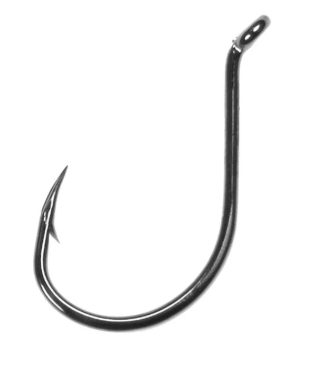
Jigging World Z-Blade Octopus Hooks, 5/0


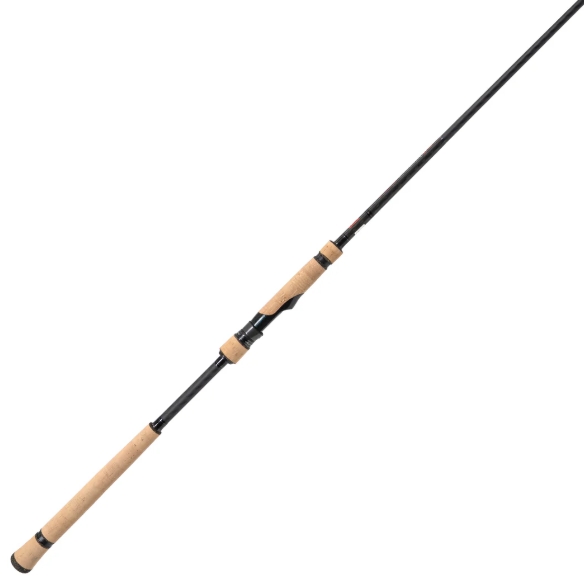
Jigging World Night Ranger Spinning 731S-MH

Jigging World 60-pound-test Fluorocarbon


READ MORE