
The 2025 fishing season on Cape Cod mirrored 2024 in many ways. Striped bass fishing in the rips of Vineyard and Nantucket sounds started strong, then slowly dwindled. Early spring sea bass fishing in Buzzards Bay was mediocre at best. Another prolonged run of bonito kept us busy throughout the summer into fall and, once again, bluefish were mostly missing in action. This isn’t a memoir of seasons past, but sometimes we need to look back in order to look ahead.
Ice Fishing on the Ponds
My fishing season begins on January 1. Regardless of the conditions, I always attempt to catch on the first day of the new year. If our freshwater lakes and ponds are free of ice, fishing for stocked trout keeps me busy right through the winter into early spring, when the local largemouth bite begins to fire up. Last year was the first time in at least 4 or 5 years that Cape Cod anglers had safe ice for more than a couple days at a time, and it helped those of us suffering from cabin fever to get outdoors and bend a rod—even if that rod was a 2-foot-long, medium-light jigging stick. Throughout the winter of 2025, ponds from Bourne to Provincetown were locked up, albeit intermittently, with ice that was safe enough to jig or set traps for black bass, trout, pickerel, and panfish.
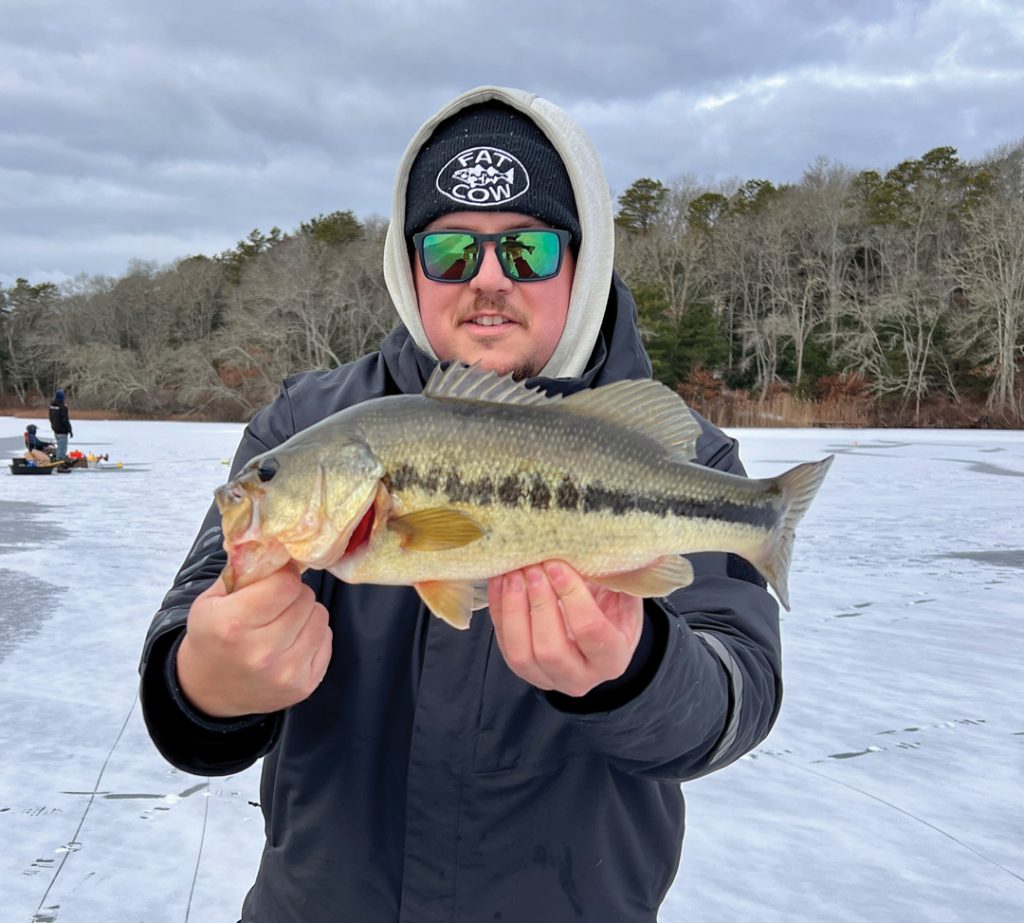
It looks like that may be the case again in 2026. While I prefer to bundle up and wade-fish the ponds until my toes go numb, the Farmers’ Almanac suggests that the Northeast is due for one of its coldest winters in years. Dust off your tip-ups and augers now because it’s very likely we’re in for a longer-than-average ice-fishing season once again.
So, what implications can we derive from a colder winter and longer ice-fishing season? For one, the spring largemouth bite is sure to start closer to April rather than early to mid-March as it did from 2022 to 2024. Once the ponds thaw, it’ll be some time before water temperatures climb enough for bass to build up their spring appetites. For fishermen like me, who get restless and hungry for a good bend in the rod after dark, casting wakebaits and swimbaits in the quiet corners of small ponds as air temperatures approach 50 degrees is an exciting prospect. For those who’d rather ply the ponds while the sun is shining, throwing jigs and suspending jerkbaits around early spring transition areas such as ledges, coves and, of course, herring runs, is a great way to start the open-water fishing season. As April rolls around, check your local herring runs to search for scouts. Their arrival marks the unofficial start to the pre-spawn bass bite, which can produce your biggest largemouth of the year—or better yet, your lifetime. Early alewives and blueback herring also indicate that it’s time to start searching for winter holdover stripers—the fish that call Cape Cod home year-round—in marshy creeks, salt ponds, and estuaries.
River Herring and the First Migratory Stripers
Based on my observations only, last spring’s herring run was a strong one on the upper Cape and I’m anticipating a rerun. However, a healthy presence of river herring doesn’t necessarily equate to great early spring striper fishing. A colder-than-average winter means a longer spring spawning season, which means a later arrival of our beloved bass in Massachusetts waters. Could wintery conditions in 2026 have a positive impact on the spring spawn in Chesapeake Bay and the Hudson River? Perhaps. We’ll have to just wait and see.
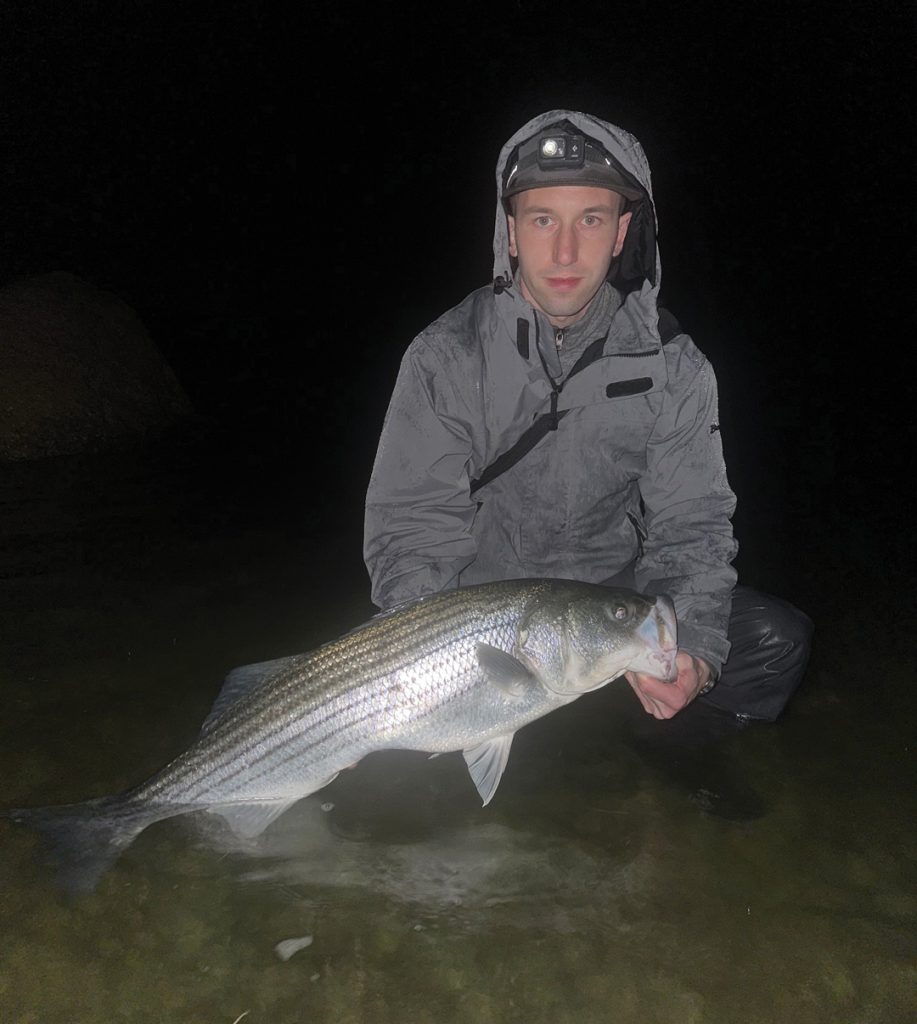
We can still reasonably expect the first wave of migratory bass to hit Martha’s Vineyard around mid-April, but I think the back nine of the month should find migratory fish reaching the south side of the Cape. My guess is their numbers will be far fewer than the initial push we’ve had in previous seasons. The 2025 YOY index reflected yet another year of poor recruitment from the Chesapeake stock. Based on the estimated number of slot-sized fish being removed from the biomass—and the lack of fish following those year-classes that are currently in the slot—I’m expecting a slower-than-average start once again.
Did you notice a lack of schoolies in your reliable spring spots in 2025? Me too. Cinder worms went largely unbothered by bass during their early May spawning shows in the marshes, and except for a few stripers that swiped at metal-lipped swimmers around herring runs, the first few weeks of my striper season were slow. I do attribute some of the poor fishing to a complete lack of silversides—important forage for fresh-arriving schoolies—in many areas that are typically loaded.

Last year’s spring run finally fired up around mid-May, when big bass filed into estuaries from the south side to Cape Cod Bay to feed on river herring and adult bunker. The bunker pods were small, but the fish themselves were large, and shore fishermen who cast Danny plugs and custom-made glidebaits had their shots at some plump over-slot fish in Buzzards Bay before menhaden seemed to vacate the area for the backwaters of Nantucket Sound and Cape Cod Bay. It’s tough to judge what 2026 will bring in terms of bunker numbers, especially because anglers in New York and New Jersey enjoyed weeks of pogie-fueled action last November, but based on the amount being harvested commercially, it’s safe to assume we’ll have another lackluster bunker year around Cape Cod until the fall run.
Big Baits Bring Bigger Bass
It’s not all bad news for striped bass, though. Last year’s squid run was nothing short of excellent, and their abundance brought some stellar, albeit hit-or-miss striper fishing to the rips from Vineyard Sound out to Monomoy Island. At times, many fishermen reported encountering squid from top to bottom in places like Middle Ground and L’Hommedieu Shoal, only to find there were few, if any, stripers on them. Of course, there were also plenty of days when the bass fishing was biblical. The rips, which are typically populated by school- and slot-size fish, gave up their share of squid hounds well over 40 inches as they gorged on galamad. In western Nantucket Sound, the action petered out by mid-June, while those who fished Monomoy Island’s rips enjoyed consistent action through the summer months despite big crowds. If 2025 was any indicator, we’re in for another great squid run this year. Stock up on Albie Snax and pink- and amber-colored topwater plugs while they’re still available during the off-season.
What About Bluefish and Weakfish?
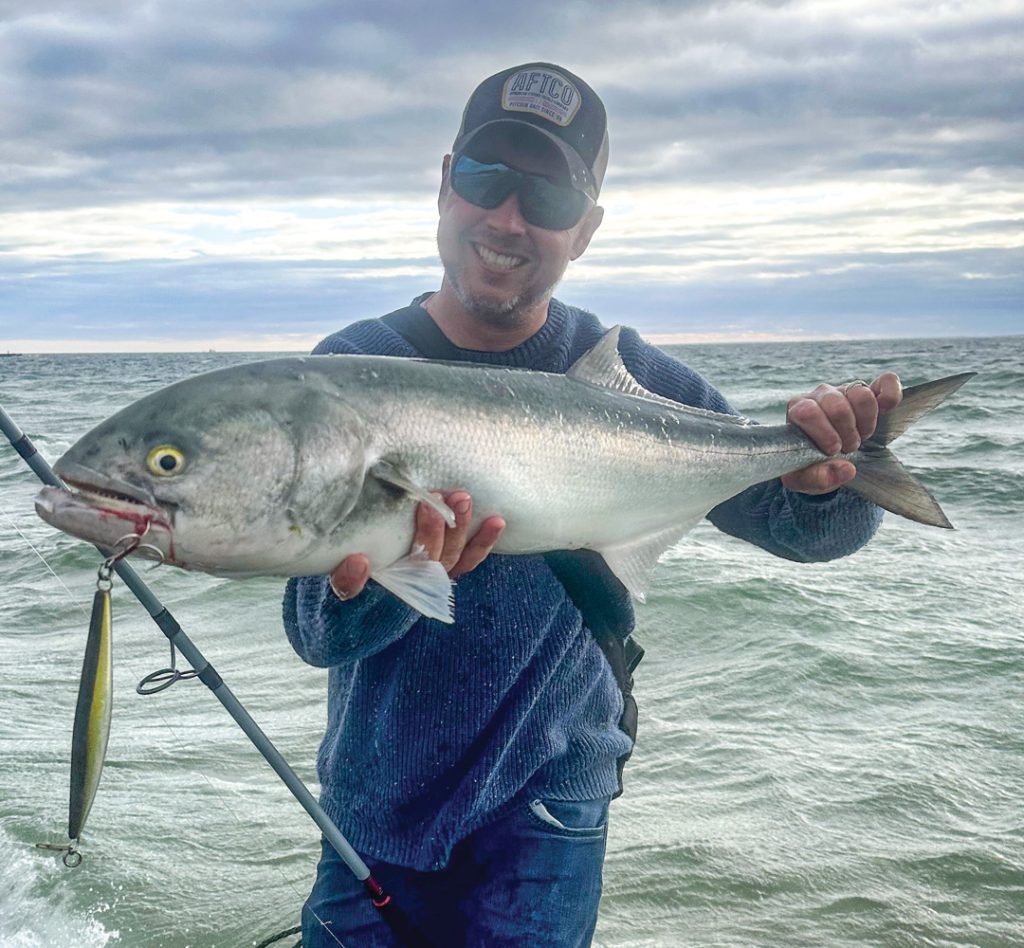
Blues and weakfish are perhaps the toughest inshore species to forecast, but I’m going out on a limb and saying this will be a good year for both. Last season, the gator bluefish of spring seemed to pass right by us once again. The best bluefish bites were off Provincetown and the Outer Cape, where anglers diamond jigging and occasionally, casting topwater plugs, hooked massive blues—many of which tipped scales to 13 pounds or more—throughout the summer. I lucked into a killer bite in early May, when bass and bluefish pinned bunker to the beach in Buzzards Bay, but it’s been a few years since we had a strong run of big blues on the south side. Here’s hoping that another good squid season will find chopper- to gator-size specimens assaulting pencil poppers along the Sound-facing beaches in late May. We’re overdue for such a bite.
While bluefish were very sparse in 2025, a coast-wide resurgence of weakfish quenched the thirst of light-tackle enthusiasts who wondered where the spring schoolies were. The harbors and estuaries on the Cape and mainland sides of Buzzards Bay held squeteague and some 20-plus-inch specimens. I even managed to catch my new personal-best weakfish while striper fishing one late May evening. Weakfish will hit plugs and plastics intended for bass at night, but the best way to target them is pre- and post-work trips to the backwaters. Equip yourself with low-profile flies like Clouser Minnows and Veverka’s Mantis Shrimp (which looks more like a grass shrimp) and pink soft plastics like 1/4-ounce original RonZs or Albie Snax to boost your chances. Don’t forget to loosen up your drag.
Another Big Bonito Year
Did last year top the bonito run of 2024, when the Cape’s waters were littered with bones for the duration of the summer and fall? No. Was it still a remarkable run? Absolutely. Could 2026 bring another banner bonito season to Cape Cod and the Islands? All signs point to yes.
New regulations for bonito and false albacore went into effect during the 2025 season, limiting the number of bonito over 16 inches that can be harvested to 5 per angler per day. These new regulations will undoubtedly benefit recreational fishermen in the long run. I’m going to channel my inner Punxsatawney Phil and optimistically predict nearly 6 months of bonito again in 2026. If the albies stick around half as long, that’s a win.
The Tautog Finale

It wasn’t just bonito that Cape Cod anglers enjoyed catching into November last year. Sure, there were still a few bass trickling out, but I have a different b-word in mind. Blackfish, aka tautog, provided fantastic late-fall fishing opportunities across New England and even in New York and New Jersey. I saw more photos of double-digit tog last fall than ever before, most notably the new Rhode Island state record, one that’s been broken three times in the past five years. My new personal best, a 13-pounder, also came from Rhode Island waters courtesy of Captain Rob Taylor of Newport Sportfishing Charters. Assuming the trend of releasing trophy-class tautog continues, Cape Cod anglers should consider keeping boats in until mid-November in 2026. There’s no shortage of wrecks in our waters, and some of them are bound to harbor a few 10-plus-pound tog.
READ MORE