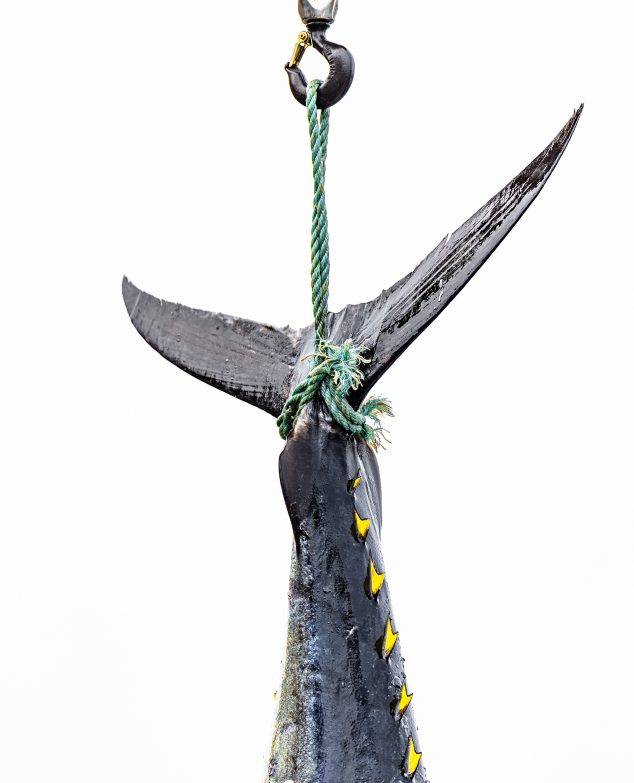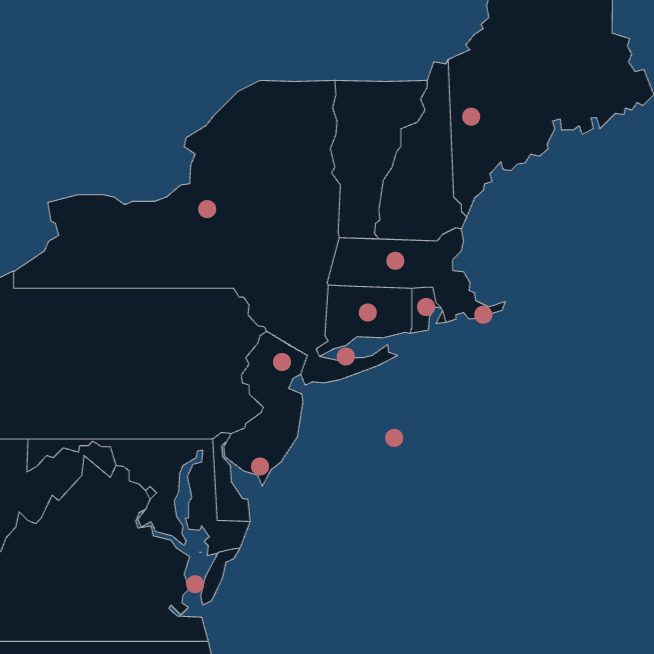

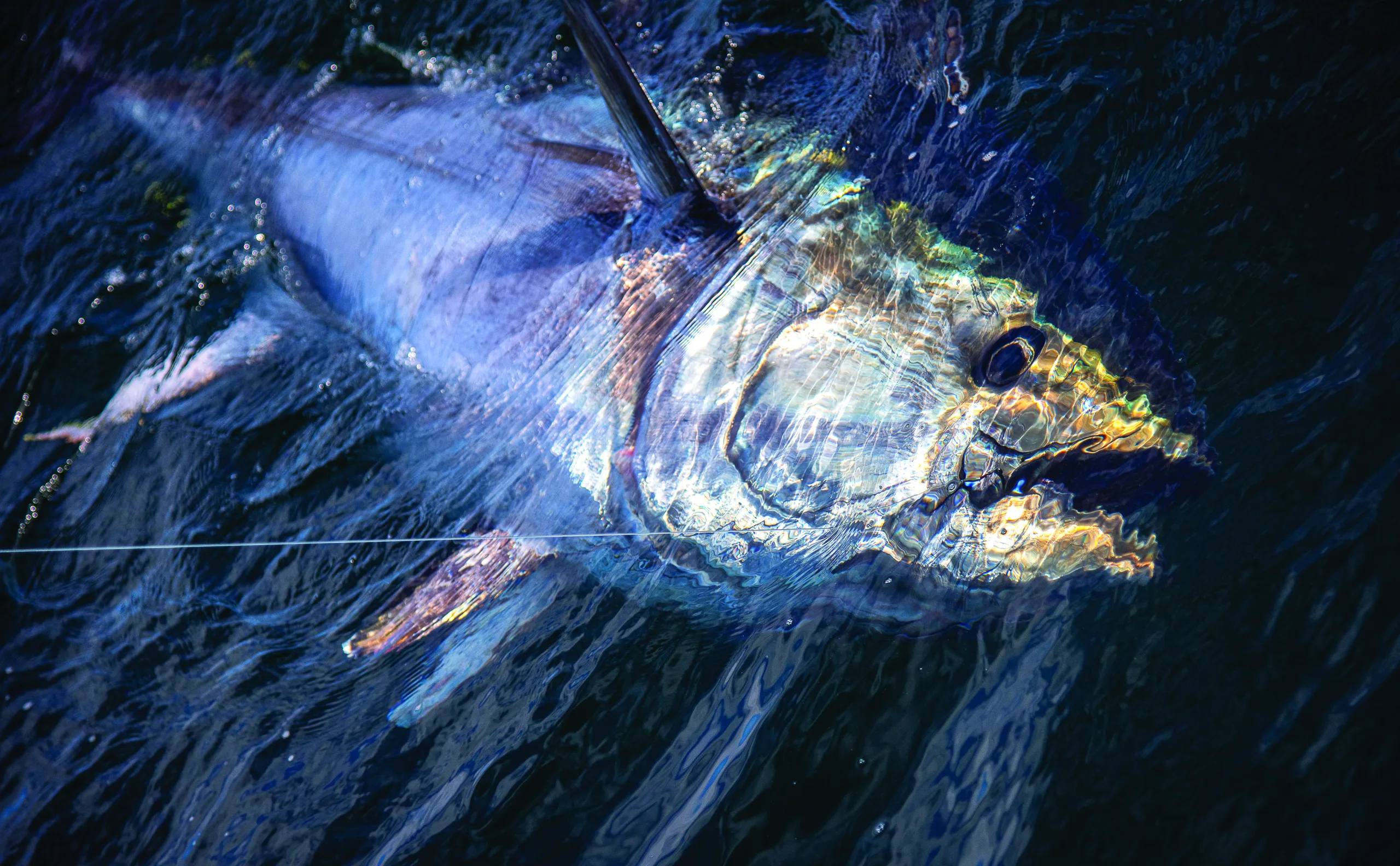
If you fished the bluefin grounds off New Jersey, Long Island, or southern New England the past two seasons, you already know the story. The fishing, which has been steadily improving over the years, hit new highs with school bluefin stacked up in numbers that veteran captains hadn’t seen in decades. It was cause for celebration, but it ended abruptly with a closure notice.
In August 2025, NOAA shut down the entire recreational bluefin fishery through the end of the year. Charter captains scrambled and shifted to other species. Tuna jigs that had been tough to keep in stock filled pegs at local tackle shops. Anglers who had waited years for this kind of bite were left watching from the dock while, offshore, the fish continued to gorge on sand eels among humpback whales.
The official reason wasn’t hard to understand: too many fish caught, too fast. Recreational anglers had blown through the angling category quota by at least 50 percent in 2024. NOAA tightened retention limits for 2025, but another banner bite made that irrelevant. Quota met, fishery closed.
What’s harder to understand is why the quota is what it is in the first place. That answer starts not in Washington, but in the water—in what scientists do and don’t know about where Atlantic bluefin tuna spawn, how many of them exist, and how they move from one side of the Atlantic to the other.
How the System Works
To understand why your season got cut short, you need to understand who’s in charge of managing bluefin. Atlantic bluefin tuna don’t respect borders. A fish you caught off Montauk in September may have spent the winter off the coast of Spain and spawned in the Mediterranean the previous spring. Managing a fish like that requires international cooperation, and that’s the job of ICCAT, the International Commission for the Conservation of Atlantic Tunas. Think of ICCAT as the United Nations of bluefin management: 55 member nations, one shared resource, and a whole lot of competing interests around the table.
Every few years, ICCAT’s scientists assess the health of the eastern and western Atlantic bluefin stocks and recommend a Total Allowable Catch (TAC)—the total weight of fish that all member nations combined are permitted to land. The United States receives a share of the western Atlantic quota, and NOAA then divides our piece of the pie among the various categories of commercial fishermen and recreational anglers. When any one group hits their number, their season ends. There’s no flexibility built in for a banner bite.

That system has worked to improve the quality of the bluefin tuna fishery. Western Atlantic bluefin were in serious trouble by the late 1990s, hammered by decades of commercial overfishing. ICCAT implemented a recovery plan, quotas tightened, and the fish responded. The world-class tuna fishing we’ve enjoyed off our coast is the direct result of managed restraint over more than two decades.
However, the quota our recreational fishery operates under is calculated using stock assessments built on decades-old assumptions about bluefin biology, including where they spawn, how many reach adulthood, and how much the eastern and western stocks mix. And some of the most important assumptions in bluefin science are being challenged right now by researchers whose findings could reshape the way this fishery is managed.
Scientific Revolutions
The science of Atlantic bluefin tuna has been rewritten several times in the last 30 years. The first revolution came from tagging studies.
Beginning in the mid-1990s, Dr. Barbara Block of Stanford University’s Hopkins Marine Station began surgically implanting electronic archival tags in large bluefin that recreational anglers helped her catch and release. The tags recorded depth, temperature, and light levels continuously, and when recovered by fishermen on both sides of the Atlantic, they revealed something that upended four decades of management assumptions. Western Atlantic bluefin weren’t staying put; they were crossing the ocean, feeding alongside their Mediterranean counterparts, and in some cases, swimming to European spawning grounds and back. The mixing between what ICCAT managed as two separate, largely independent stocks was far more extensive than anyone had accounted for. If western-tagged fish were showing up in European nets, then conservative quotas on the American side of the ledger weren’t enough on their own. Managers realized that the recovery of the western stock was partly dependent on what happened in a Mediterranean fishery operating under far more permissive catch limits.
Working in parallel, Dr. Molly Lutcavage of the Large Pelagics Research Center, based in Gloucester, Massachusetts and currently affiliated with UMass Dartmouth’s School for Marine Science and Technology, was asking a different question: not only where the fish travel, but where they spawn. The conventional answer, that western Atlantic bluefin tuna only spawn in the Gulf of Mexico (renamed the Gulf of America within the United States), had been the foundation of western stock assessments since the 1970s. In 1999, Lutcavage published a challenge to that assumption, proposing that, based on pop-up satellite tag data, bluefin might also be spawning in the central and northwestern Atlantic. It was, as she later described it, a bold hypothesis, as she had the location histories of tagged fish, but not direct biological proof.
Her theory met significant skepticism, but, the data kept pointing in the same direction. Lutcavage and her team continued tagging fish, collecting reproductive samples, and building the case that the western Atlantic spawning picture was far more complex than the management system had acknowledged. Her lab specifically predicted that smaller, younger adult bluefin would spawn closer to their feeding grounds rather than making the long migration to the Gulf. If correct, that meant the stock models underpinning every quota decision were missing a significant portion of the population’s reproductive output entirely.
Proving it required finding the larvae. And that’s exactly what the most recent science has done.
The Slope Sea Spawners
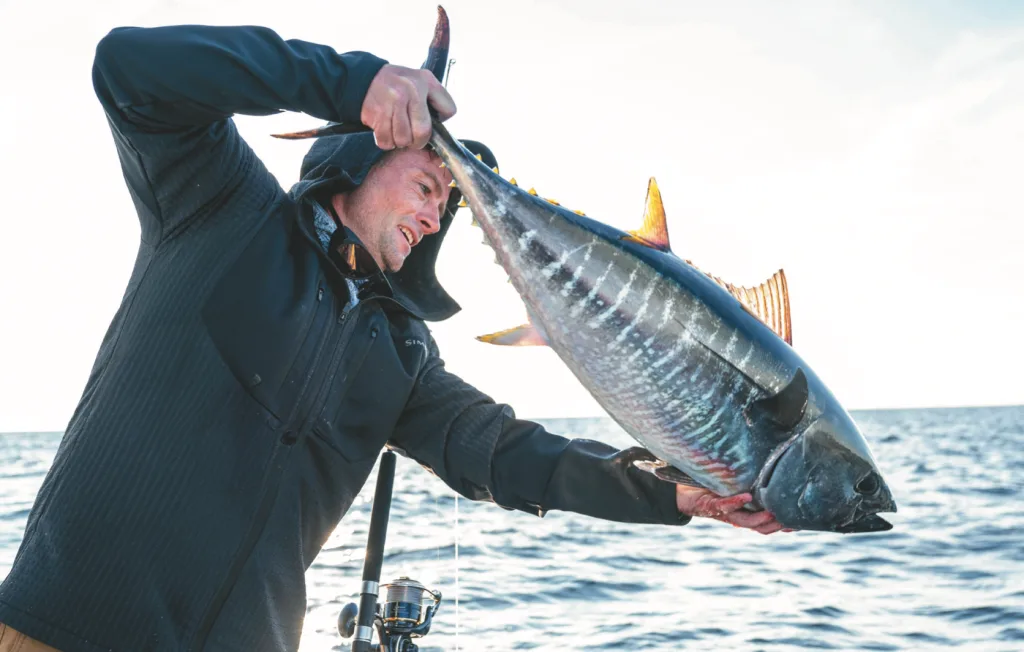
Another scientific revolution reached a critical milestone in 2016, when NOAA fisheries researcher Dr. David Richardson and colleagues published a landmark paper in the Proceedings of the National Academy of Sciences presenting what they called “unequivocal evidence” that Atlantic bluefin tuna spawn in the Slope Sea, an area of the ocean that is bounded to the north and west by the northeast United States Continental Shelf and to the south by the Gulf Stream. The paper confirmed what Lutcavage’s tagging data had long suggested and went further, demonstrating that western bluefin mature at a younger age than stock models assumed, and that larger, older fish head south to the Gulf while smaller, younger adults spawn right in the waters of the Slope Sea.
To understand why that matters, consider what it means for the stock assessment. If the models only counted Gulf of Mexico spawning when estimating reproductive output, they were missing a significant portion of the population’s productivity entirely.
The science didn’t stop there. A study published in January 2026 synthesized nearly seven decades of larval and reproductive sampling data dating back to 1955, including plankton tows and larvae collected from fisheries surveys, museum archives, and research cruise reports spanning the entire western Atlantic. Lead author Dr. Richardson described the findings plainly: “When we compiled data from many surveys, the consistency was remarkable. When you sample the same area at the same time of year, you consistently find bluefin larvae.” The picture that emerged is striking: Atlantic bluefin tuna appear to have a nearly continuous spawning distribution that begins in spring in the northwest Caribbean and southern Gulf of Mexico and concludes in early August in the Slope Sea.
In summer 2025, NOAA’s Northeast Fisheries Science Center launched two dedicated surveys in the Slope Sea: a cooperative longline survey targeting adult spawners, and a larval tow survey of the top 20 meters of the water column, with Dr. Lutcavage serving as chief scientist on the longline trip. Out of 70 net tows, researchers found bluefin larvae in more than 60 percent of their tow stations.
In a recent webinar hosted by the Pelagic Fisheries Lab at the University of Maine, Richardson made a specific prediction about what those samples will reveal: “A prediction I have is that we’re going to see much smaller fish spawn those larvae that we collected in the Slope Sea survey, including fish below the commercial size limit.” If he’s right, it would mean that the recreational-size fish recreational fishermen target are spawning offshore. Richardson added that the question of whether Slope Sea spawners and Gulf of Mexico spawners are connected or distinct spawning populations is squarely in the crosshairs. Either answer reshapes the management picture.

Genetic results from the 2025 surveys are still being processed. They will be presented to ICCAT as part of a management procedure review beginning this year, with a full stock assessment also planned for 2026.
CKMR: The Census That Fits in a Vial
Yet another consequential line of research is currently being conducted by Dr. Walt Golet’s Pelagic Fisheries Lab at the University of Maine. It is tackling the fundamental question: how many bluefin are out there?
They are using a relatively new scientific tool called Close-Kin Mark-Recapture, or CKMR. The method was pioneered on southern bluefin tuna in Australia and first applied to western Atlantic bluefin starting in 2020 by Golet.
The concept is elegant. Researchers collect tissue samples (a small clip from a single finlet) from as many individual fish as possible across the population. They then sequence the DNA from each sample and scan for family relationships: parent-offspring pairs, half-siblings, and cousins. The more samples you have, the more family connections you find. And the rate at which you find those connections tells you, with statistical precision, how large the total population must be.

Dr. John Walter, research fisheries biologist at NOAA’s Southeast Fisheries Science Center and western bluefin tuna chair at ICCAT, offered the clearest summary of where the science stands: “We’re on the cusp of really groundbreaking information in terms of answering the questions we previously didn’t know, and now we have the opportunity to not only learn those answers, but use that for management.”

Recreational anglers have been especially indispensable to this effort because they predominantly target the smaller size classes that are hardest for scientists to access any other way. Golet’s lab has built a sampling network stretching from Maine to North Carolina through collaboration with tournament operators, charter captains, and private anglers.
A November Reckoning at ICCAT
In November 2025, the U.S. delegation traveled to ICCAT’s annual meeting in Seville, Spain and came home with the largest single-year quota increase in the history of the American bluefin fishery. The western Atlantic Total Allowable Catch was set at 3,081.6 metric tons for 2026 through 2028, a 17 percent increase over the previous period. The U.S. share increases by approximately 191 metric tons beginning this year.
Capt. Mike Pierdinock, president of the Stellwagen Bank Charter Boat Association and a longstanding member of the U.S. ICCAT Advisory Committee representing recreational fishing interests, was part of the U.S. delegation in Seville. Pierdinock has been a consistent voice at the intersection of recreational access and sound science, pushing for years for management that reflects what anglers are actually seeing on the water. According to Pierdinock, the preliminary CKMR data and Slope Sea findings were central to the American argument in Seville.
The U.S. delegation also secured something potentially more significant than the quota number itself: a formal commitment from all 55 ICCAT parties to hold dedicated discussions in early 2026 on the natural distribution and mixing of Mediterranean and western Atlantic bluefin stocks, with the Slope Sea science and CKMR data squarely on the table. That conversation could lead to a fundamental rebalancing of the ratio between eastern and western catch limits, a ratio that critics argue has disadvantaged U.S. fishermen for decades.
Will the Recreational Fishery Close Again in 2026?
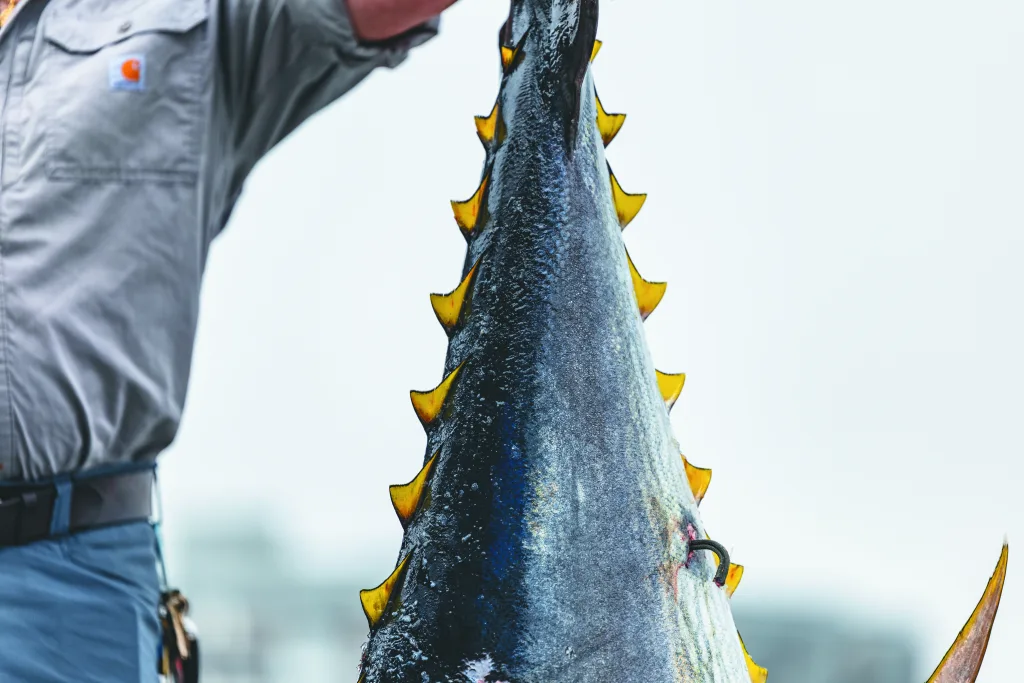
When recreational anglers exceeded their quota in 2024, NOAA was required to apply a payback—a reduction equal to the overage—to the 2025 season. The August 2025 closure, painful as it was, was in part what prevented another exceedance in 2025 and a continued payback in 2026. The fishery enters this season on cleaner footing than it did in 2025.
The quota picture is more complicated than a single headline number suggests. The 17 percent TAC increase approved in Seville applies to the U.S. share beginning in 2026, but as of press time, NOAA had not yet completed the domestic rulemaking process that translates that international quota into specific retention limits, seasons, and sub-quota allocations for recreational anglers. Until those regulations are finalized, the full benefit of the Seville increase hasn’t formally reached the dock.
There is also a significant recent development that could reshape the dynamic entirely. The U.S. notified ICCAT in January 2026 that it is exploring the possibility of continuing to report recreational catch data as it has always done, but not counting that catch against the U.S. quota. The argument is that Eastern Atlantic and Mediterranean contracting parties have long failed to fully report their own recreational landings, creating a fundamental inequity in how quota compliance is calculated across the Atlantic. The proposal has drawn sharp criticism internationally, and its outcome is uncertain. If adopted, it would represent a significant structural change to recreational bluefin management.
In the meantime, the higher quota gives NOAA more room to set workable recreational retention limits. But if bluefin show up inshore in the same numbers as 2024 and 2025, even an expanded quota can disappear quickly with enough boats on the water. The southern area trophy subquota was already closed in January 2026—a reminder that individual quota categories can be exhausted independently of the overall picture.
Pierdinock, who helped make the U.S. case in Seville, offers a measured read on what lies ahead. “I am hopeful that no recreational closure will be implemented in 2026, but there are no guarantees,” he said. “There is no payback in 2026 as a result of no quota overrun in 2025, and the Seville quota increase is yet to be implemented — hopefully that will occur later this summer. This places us in a good position to keep the recreational community fishing all year. In addition, hopefully NMFS will set aside some reserve quota in the event of a recreational overrun, to apply and keep us fishing without exceeding the recreational quota. Typically, the commercial quota uses the reserve category to address overruns—that’s been the case for some time now.”
What the Seville outcome does guarantee is that the science is finally being heard in the room where decisions get made. The Slope Sea surveys and the CKMR data supported the U.S. delegation’s case in Seville, and when finally incorporated with up-to-date genetic data in the management strategy review scheduled to begin in 2026, it could lead to a new era of science-backed limits for U.S. tuna fishermen.
How You Can Help
» Fin Clip Sampling for CKMR
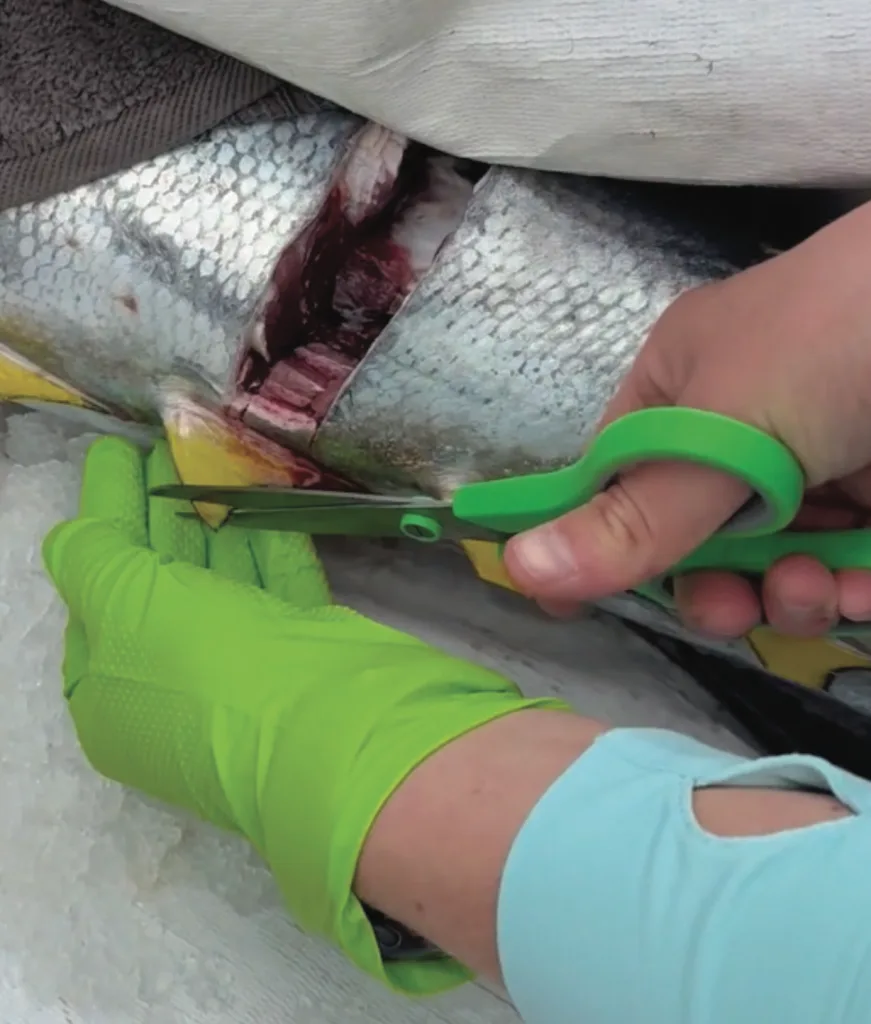
Dr. Walt Golet’s lab is actively recruiting anglers from North Carolina to Maine to collect fin clip samples from both giants and school fish. The process is simple: a small clip from a single finlet, dropped into a provided vial. Kits contain 15 sample vials and full instructions and are free of charge. If you’re serious about participating, request one at umaine.edu/pelagicfisherieslab.
» Cooperative Tagging
NOAA’s Cooperative Tagging Center has worked with recreational anglers and charter captains for decades, collecting migration, behavior, and growth data on bluefin and other highly migratory species. Even when harvest seasons are closed, tagging provides a meaningful way to keep clients on the water doing something that matters. If you find a tagged fish, report it immediately. Information at fisheries.noaa.gov.
» Catch Reporting
Accurate recreational catch reporting is the foundation of the quota system, and compliance has historically been well below 50 percent. If you think the quota system isn’t reflecting the true state of the fishery, the most constructive response is to make sure your catches are counted accurately. Report every trip through HMS electronic reporting at hmspermits.noaa.gov.
READ MORE