
As manufacturers fine-tune the designs of fish-cutting sabers, the market for fillet knives has grown increasingly saturated. However, there is no one knife that does it all. You wouldn’t bring a driver to the putting green or a surf rod to the trout pond, right? The same logic applies to fillet knives. A narrow, flexible, 7-inch blade may get the most meat off a fluke, but it would fail to carve clean-cut steaks from a yellowfin tuna.
When it comes to choosing the right fillet knife for cleaning your catch of the day, consider these features and how they make a knife better suited for certain species of fish.
(Note: On The Water is reader-supported. When you buy through links on our site, we may earn an affiliate commission.)
Length
Match your blade length to the size of the fish.
A 4- to 6-inch blade is ideal for smaller fish like mackerel, scup, or northern kingfish.
A 7- to 9-inch blade can handle most inshore species, such as fluke, bluefish, sea bass or tautog.
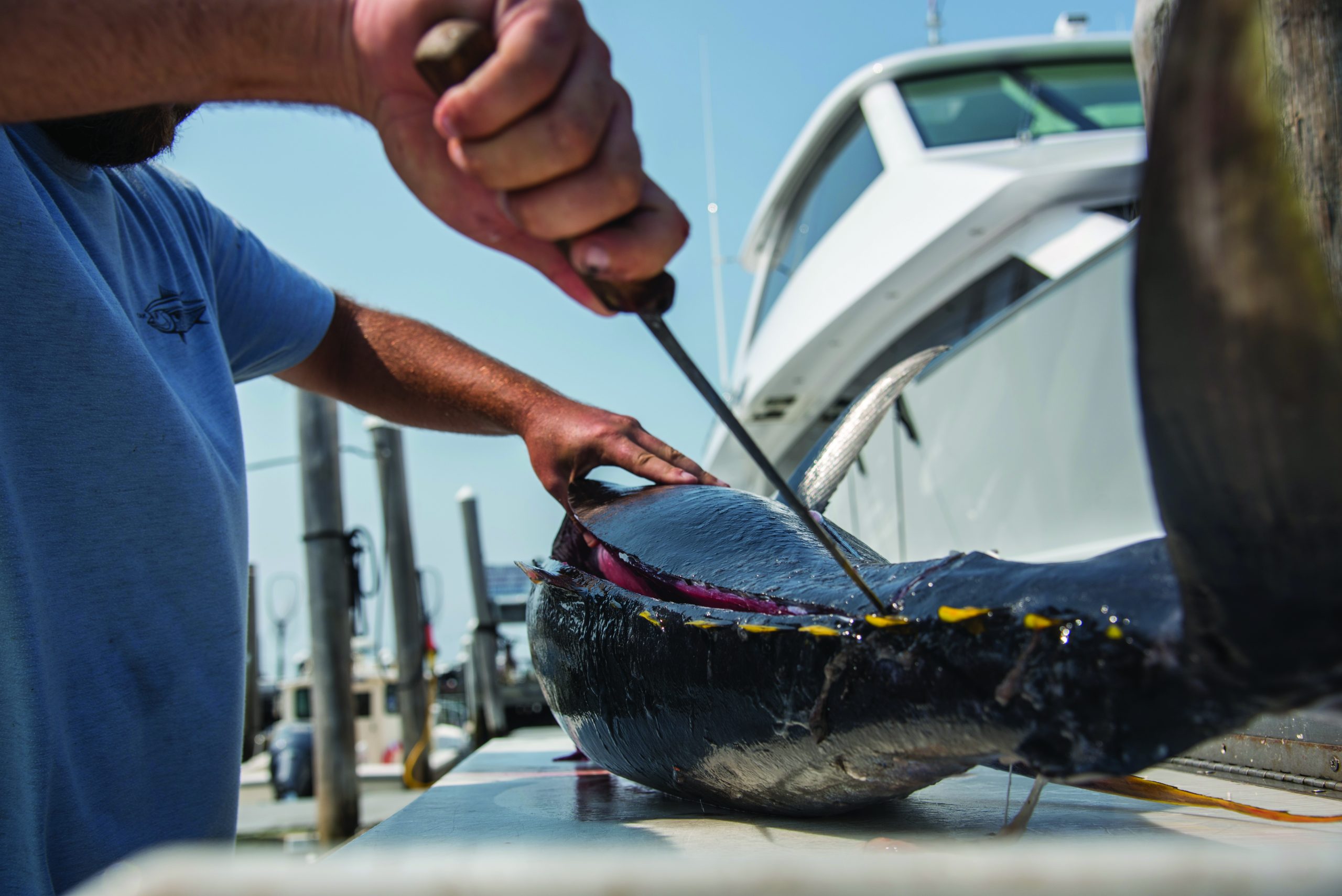
A 9- to 12-inch blade is built to tackle larger, heavier-bodied fish, like tuna or swordfish.

Flexibility and Thickness
A thin, flexible blade is great for small to mid-sized inshore fish because it can be manipulated to follow the natural contour of the spine, allowing you to cut close to bones and get the most meat off the rack. Fluke fishermen opt for more flexible knives for this reason.
A stiff blade works well for fish with tough skin or flesh and is ideal for making large initial cuts, but not the acute slices needed to fillet smaller, more delicate species.
For most applications, look for a blade with some flex that won’t sacrifice control. If you buy only one fillet knife, this feature will allow you to sufficiently cut the greatest variety of species.
Curved or Straight?
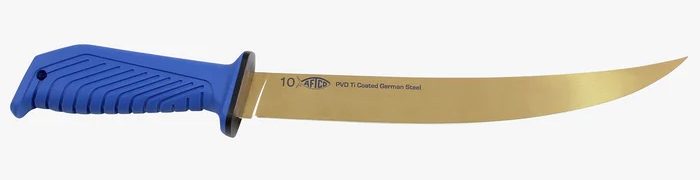
While almost all fillet knives feature a tapered blade, whether it is straight or has a trailing point (an upward curvature) is an important distinction. An angler might use both a curve and a straight blade to get the cleanest fillet possible.
On smaller, bonier fish, the curved blade is employed to slice the flesh away from the fish’s skeleton, which requires some maneuvering.
Straight blades offer less maneuverability but provide greater control for precise cuts, especially on flat surfaces, which is why a straight blade is often used to skin fillets.

Straight blades are also preferred for their stability in making the initial incisions through fatty, less bony cuts of meat. A tuna fisherman may first reach for a 9- to 11-inch straight blade and switch to a curved blade of the same length for secondary cuts along the fish’s body.
Bevel
The bevel of a blade refers to the slope of its cutting edge. Fishermen should be less concerned with the angle of the bevel and more with whether the knife has a single or double bevel.
A single-bevel blade has a slope on only one side, while a double-bevel blade is angled on both sides, creating a V-shaped edge.
Single bevel blades are preferred for sharp, precise cuts—perfect for wafer-thin slices of tuna.
A double-bevel blade is the more versatile choice for general-purpose fillet jobs, and it is easier to maintain the sharpness of the symmetrical, V-shaped edge.
Edge
In addition to a blade’s single or double bevel, the edge can be either smooth or serrated.
Knives with a smooth blade edge are designed to slice through flesh with controlled precision. Serrated-edge knives are built to saw through tough, scaly skin, cartilage, and small bones.

Tang
Tang refers to the part of the blade that extends into the knife handle and impacts control and durability.
A knife with a full tang offers the strongest construction. The blade runs through the full length of the handle, making it the most durable when twisting and cutting around bones on heavy-bodied fish.
In a knife with a partial tang, the blade extends only partially into the handle. It is less durable, but still effective for fish like fluke, scup, or sea bass.
A tapered tang is still a full tang but is narrower and thinner at the blade’s base to reduce weight while maintaining strength.
Material
Most fillet knives are made from stainless steel, which is favored for its durability and corrosion-resistant qualities, but there are variations in hardness and sharpness.
Some blades—especially boning knives—are made from carbon steel, which is known for being harder and easier to sharpen than stainless steel but is more susceptible to rusting. Carbon-steel blades need to be cleaned and oiled regularly and should be kept in dry storage.
Blades made from high-carbon stainless steel tout the corrosion resistance of stainless steel and the hardness and edge longevity of carbon steel.
Grip
Your filleting job is only as good as your knife’s grip. Most knives on the market today feature a handle designed to minimize safety hazards when cutting fish with wet, slimy hands or on a rocking boat.
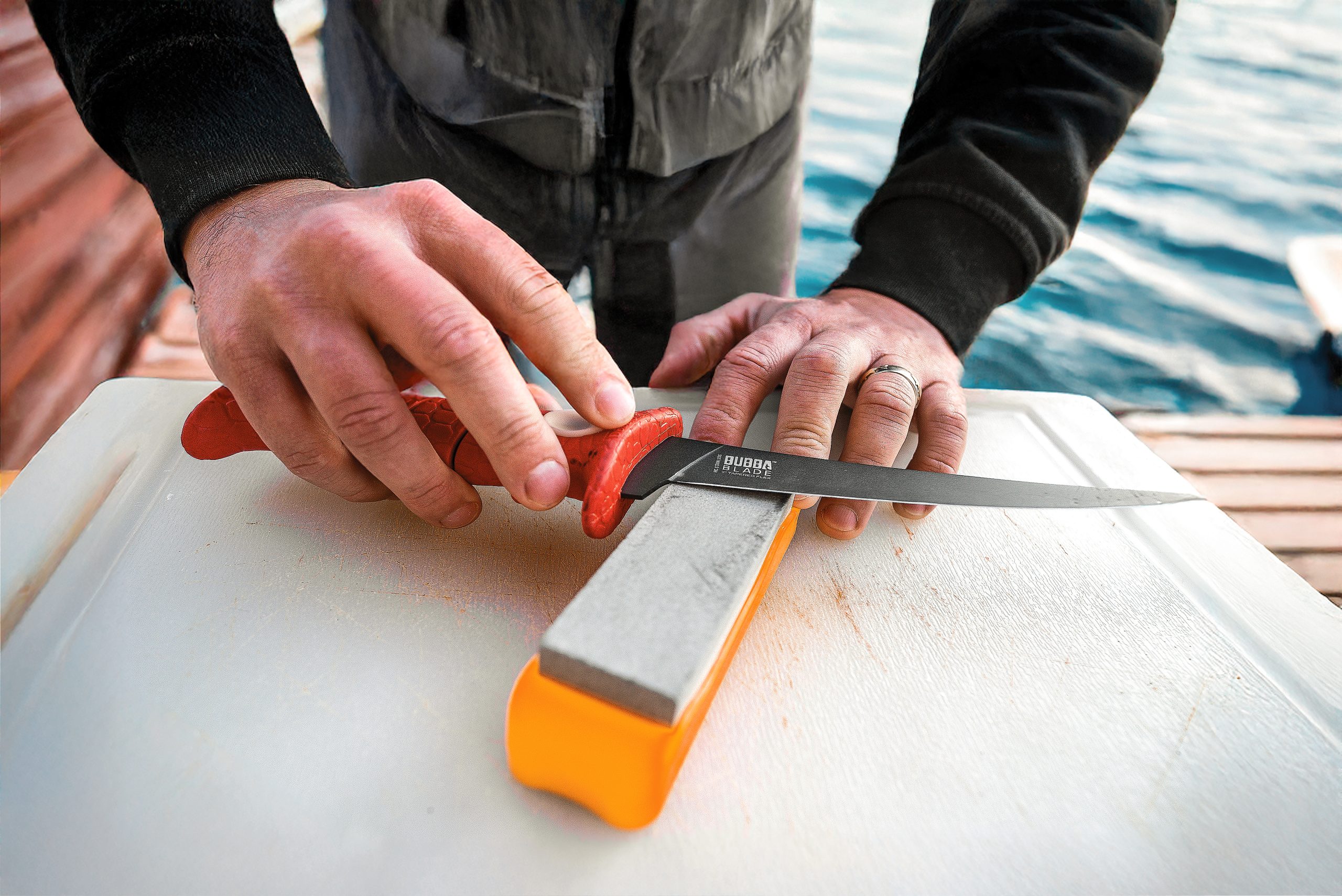
For example, Bubba’s non-slip grip is composed of a texturized rubber, while others are made from a softer, ergonomic rubber. Both handle types provide a secure hold on the blade for cleaning and cutting fish out on the water or in the elements.
READ MORE