The sound of the Yamaha outboard and the 50-mile-per-hour, face-distorting wind pressure were changing as Justin pulled back on the throttles of the Blackjack.
I could tell by the movement of the water that we had a few minutes before the prime-time bite window. This was the same spot where 11-year-old Ty McDermott caught the tournament-winning flounder the previous year. However, two hours into the 18th annual Grassy Sound Flounder Tournament, we had only one keeper onboard.
The first few spots had poor water clarity, but that wasn’t our biggest obstacle. We could adjust the lure color to account for stained water, but not for the low salinity of the freshwater runoff that created the murk. After decades of fishing the back bays, I can identify brackish water at a glance. Adult summer flounder prefer higher-salinity water compared to other gamefish like striped bass. In Cape May County, our sounds get a refreshing flush of salty ocean water every incoming tide, but a week of rainy weather still pushes summer flounder out of many back-country waters.
The water at Ty’s spot was about the same color, but we made a wing-and-a-prayer drift anyhow. It didn’t even produce a hit, so we moved on at full throttle.
You can learn valuable information by scouting before a tournament. I like to find the fish and the bite window, then leave them alone at least five days ahead of the tournament. In the interim, I obsess over the details of the game plan.
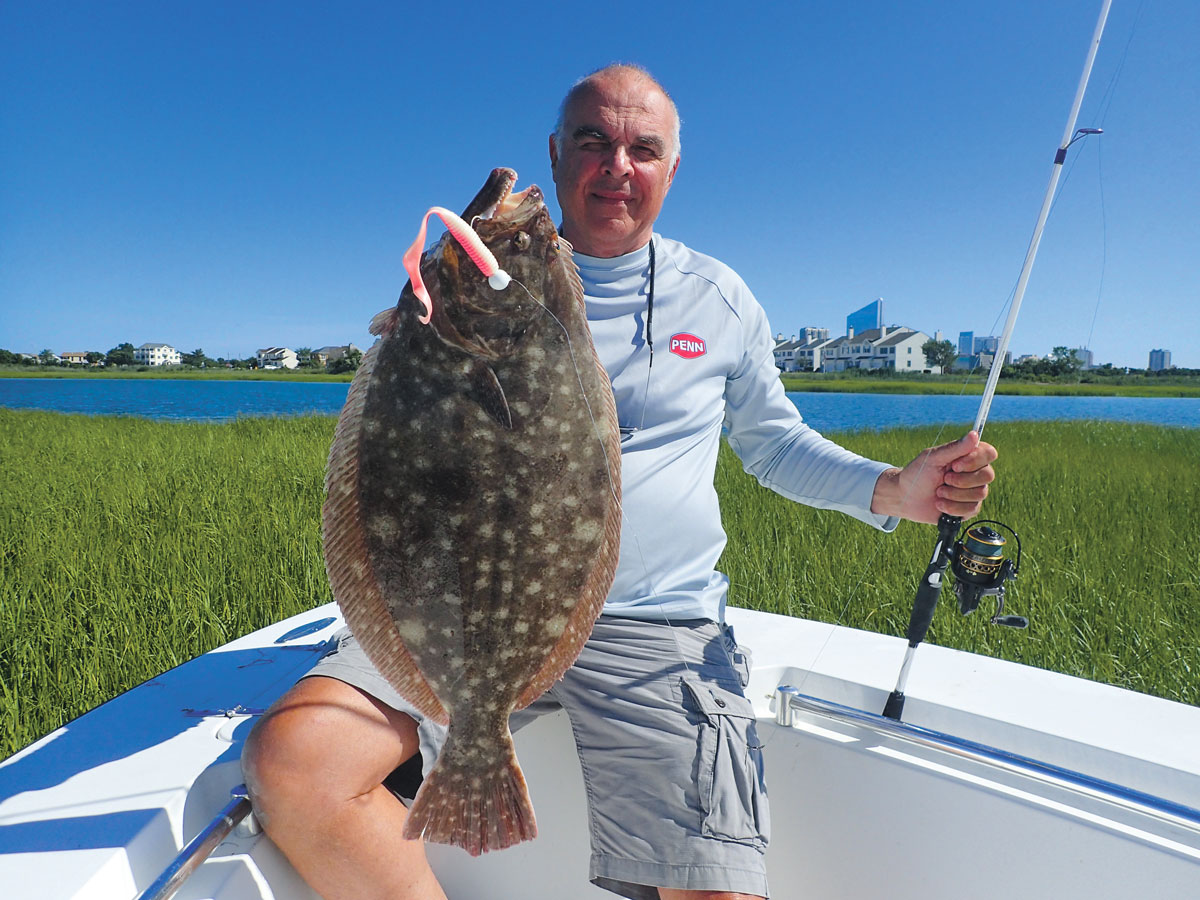
We had spent a good amount of time fishing for back-bay flounder before the tournament, with excellent success, including a 28-inch 7-pounder and Justin McDermott’s aggressive 28.5-inch 7.86-pound summer flounder. We also boated other tournament contenders like Justin’s 25.5-inch drag screamer. However, this was before a stretch of bad weather settled in just ahead of the 2024 Summer Flounder Tournament.
Jim and Debbie Moores built this tournament and the Lazy Bass Bar and Grill into a destination. Anglers travel from around the country to fish it, and the weigh-in draws a large group of spectators.
We had to force ourselves to ignore all the information gathered from our scouting trips. The most difficult and important part of tournament fishing—and fishing in general—is locating the fish and the bite window. A slight change in wind direction can shut the bite down in one area and turn it on in a different location. A week of rain and unfavorable wind totally changed our game plan. If it hadn’t been a tournament day, this fishing trip would have ended before it began. The challenge was to seek out the best conditions among the bad; however, it was a back-bay tournament with strict boundaries on where we could fish.
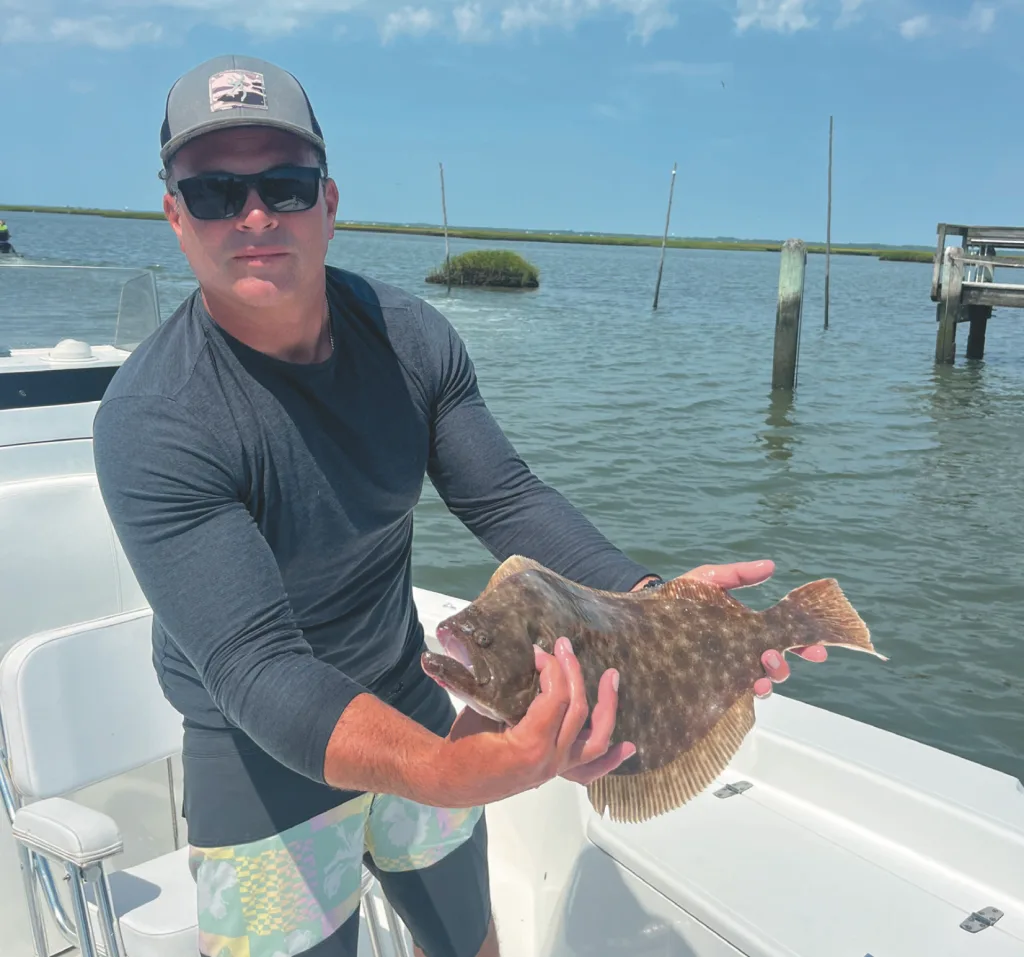
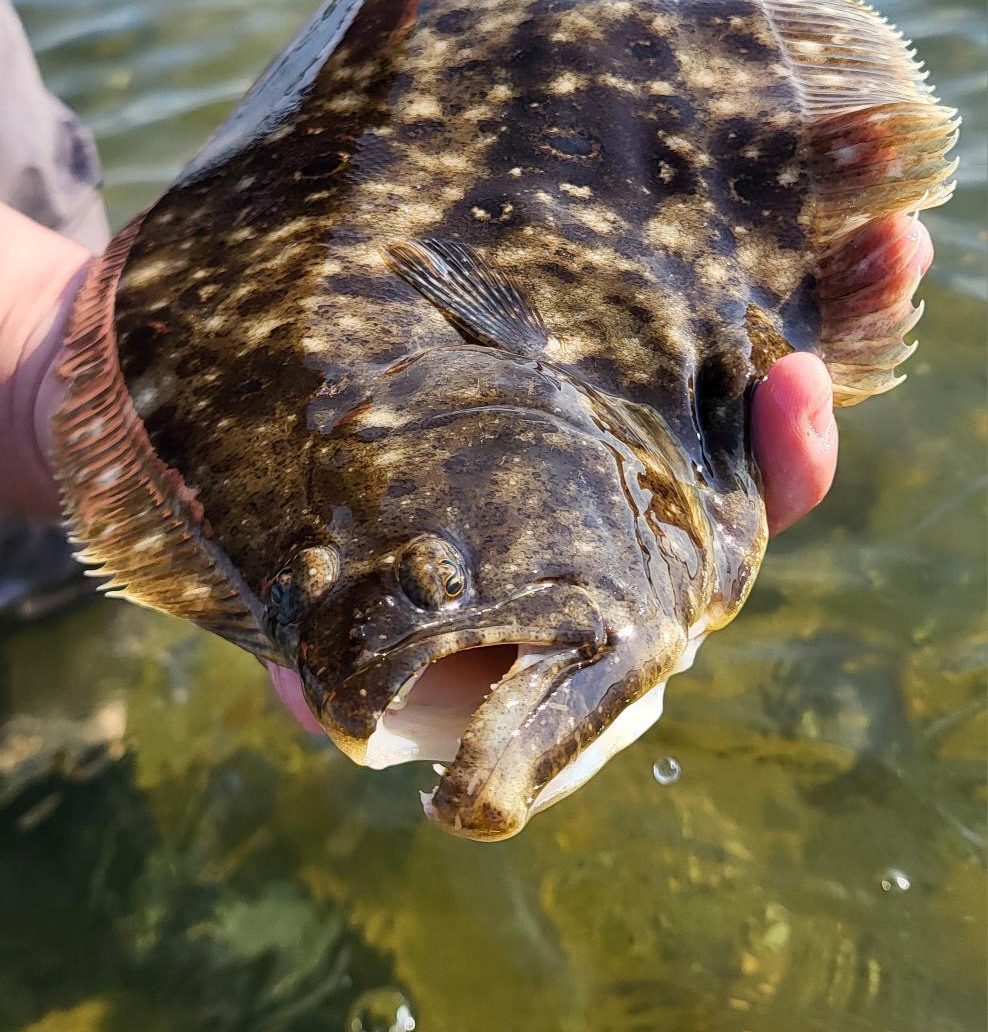
When summer rainstorms send a flood of freshwater into the back bays, fluke will seek out higher salinity areas. (Photo by John Fallon @fallon_outdoors)
Well into the afternoon, I still hadn’t caught a keeper. Ty was taking a break from fishing by sitting on a beanbag chair and playing on his phone. I mentioned to him that moments like this were critical, regardless of the endeavor. When the urge and reasoning to tap-out began to creep into Ty’s mind, I suggested we use that as a trigger to push harder. Many have reached the winner’s circle through the ability to overcome mental snags and maintain a high-intensity effort until the last minute.
After searching more, I found the cleanest water of the day, and it looked salty. Better still, it was the perfect stage of the tide for this spot. We had only 45 minutes left on the clock, so we had to get to work.
Back Bay Summer Flounder and Salinity
(Photo by Adam Eldridge)
Dirty, cold water often gets the blame for slow, back-bay flounder fishing, but more often, it’s the drop in salinity, brought on by freshwater runoff that kills the bite.
Summer flounder are “euryhaline” fish, meaning they can tolerate a wide range of salinities, yet keeper-sized fluke show a clear preference for higher salinity zones, which determines how they distribute through the back bays.
Adult summer flounder favor areas with salinities of 28 parts per thousand or higher. The open ocean in the Northeast has a general salinity of about 32 parts per thousand. This means fluke favor the lower end of estuaries, closer to the inlets. But during midsummer, with evaporation and reduced freshwater inflows, backwater salinity can increase, spreading fluke throughout the system. The higher-salinity areas also tend to have sandy or mixed sand/mud bottoms that fluke gravitate toward.
When summer rainstorms send torrents of fresh water into the bays, it can push fluke closer to the inlets or restrict their feeding activity. When fishing after heavy rains, focus your efforts on the incoming tide, when water conditions will be more favorable for fluke. Fish areas with a strong tidal flow near inlets or deeper channels, where the salinity won’t fluctuate as much.
Justin hooked up with a keeper flounder on the first drift and did the same on the second drift.The crew’s mood quickly went from gloomy to sunny and hopeful. Justin was using a dark-colored 5-inch straight-tail soft plastic, so we all switched to the same color. The productive jigging cadence of the day was a very slow lift and drop, pause, and repeat. The fast jig was not working due to the cold water temperature of 56 degrees.
Sometimes the fluke key in on a specific jigging cadence, so alternate between fast and slow until you find what the fish want.
I fish for summer flounder exclusively with artificial baits, which I think are advantageous because I can adjust for water temperature, water color, and current speed more accurately. The jigging style alone can ignite a bite.
Dayna hooked her first summer flounder of the day soon after, and she was extremely excited. On the next-to-last drift, I set the hook on the biggest summer flounder of the day. By the time we had to head for the dock, we’d all caught keeper flounder, including Ty.
Ultimately, we managed to cover all the tournament summer flounder categories with a qualifying fish. Considering the tough fishing conditions of the day, this was a satisfying accomplishment. Whether backing down to the scale at the White Marlin Open or at a small club tournament, if you have a qualifying fish to weigh in, you are having a momentous day.
We separated the fish, tagged them according to category of entry, placed them in the tournament burlap bag, and closed it up for the weigh-in. We secured the deck for the high-speed run. I adjusted the jack-plate for super-shallow water so we could stay in the back country and avoid no-wake zones. If we were not within sight of the weighmaster by 4:30 p.m., our team would be disqualified. Thanks to Justin’s high performance 26-foot Blackjack bay boat, we made it to the director’s line of sight with time to spare and handed the burlap bag to the marina crew at the gas dock. They placed all the team bags on ice in preparation for the weigh-in event 1.5 hours later.
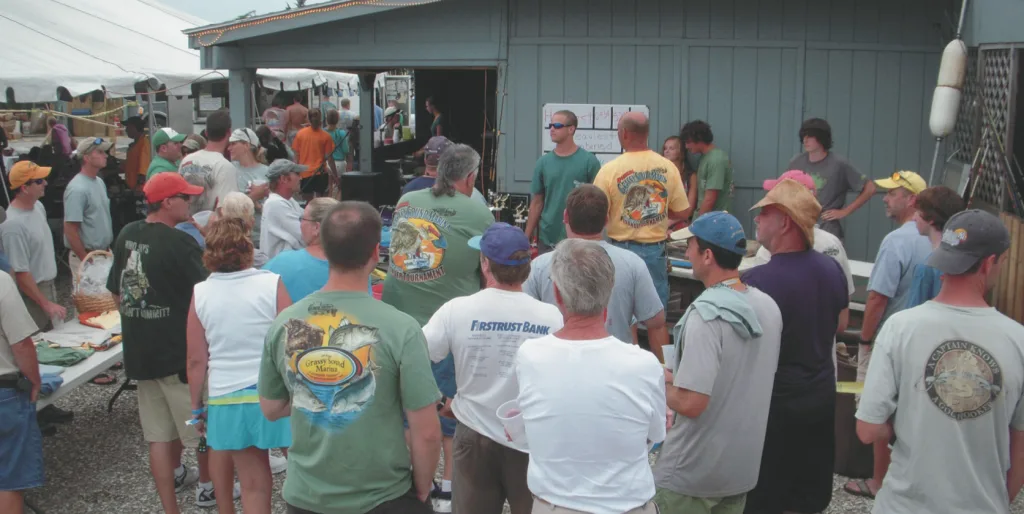
A crowd gathers to await the weigh-ins for the Grassy Sound Summer Flounder Tournament.
It was a beautiful summer afternoon, sunny with a light breeze out of the south. The crowd gathered around the weighmaster’s scale as the live band tuned up. Debbie Moores, the assistant tournament director, announced that the weigh-in would begin with the kayak division. The crowd could not see the fish until the weighmaster opened each bag.Their eyes and ears resembled a concerned German shepherd as the bags were measured, examined, then weighed. The echoes of the crowd’s surprise were heard across the bay when Matt Marino’s giant sheepshead hit the scale, pushing it to 10.5 pounds. Matt also had a nice flounder in his bag that earned him first place in the tournament’s kayak division.
The crowd grew larger with the announcement of the main event, the weigh-in for the boat division. By this time, I had spoken with several top-notch fisherman who hadn’t boated a keeper flounder all day. I was only half-listening to the fish stories as I kept most of my attention on Jim Moores, the weighmaster. He announced the team’s name, length of the fish in inches, then placed the fish on the scale. If the fish made the leader board, it was announced and written in place. I noticed that most team bags contained only one or two fish, with most just over keeper size. Halfway through the weigh-in, a 2.9-pound summer flounder was holding first place when our team bag was announced. After the fish were weighed, our heaviest summer flounder was written into the first-place spot on the leaderboard.
At 3.76 pounds, the chances of holding first place at that point of the weigh-in seemed slim to none. I knew that the average winning weight for back-bay summer flounder tournaments from Ocean City, New Jersey, to Indian River Inlet, Delaware, is about 5.8 pounds. So, I decided to enjoy our time in first place as the final 10 teams weighed in.
I watched the digital scale numbers intensely as the Manuella crew’s heaviest flounder ran the numbers past 3 pounds, but then settled at 3.51. My vision went blurry as the remaining team’s fish hit the scale, again falling short of our number and sealing our second consecutive win in the Grassy Sound Summer Flounder Tournament.