

Sharks are already showing up in Massachusetts waters, and a viral catch-and-release of a white shark off Nantucket this week is a timely reminder that shore-based shark regulations are in full effect. As summer approaches, the Division of Marine Fisheries is reminding anglers of the rules designed to protect large sharks and keep beaches safe.
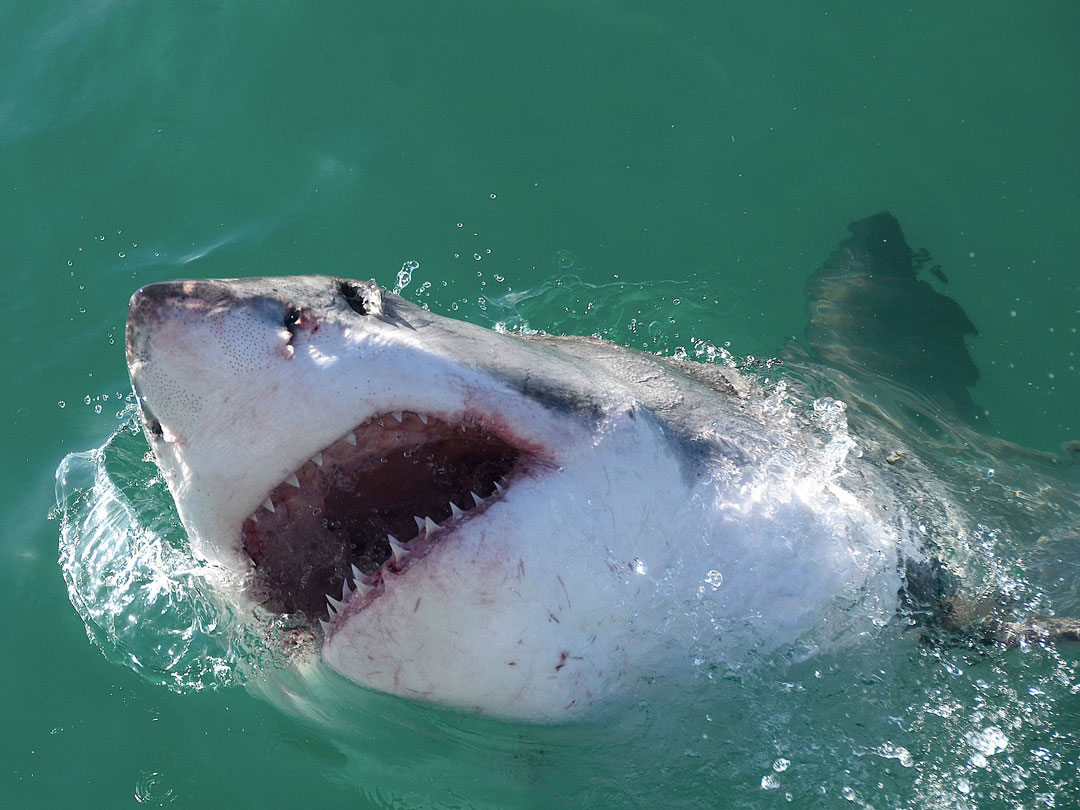
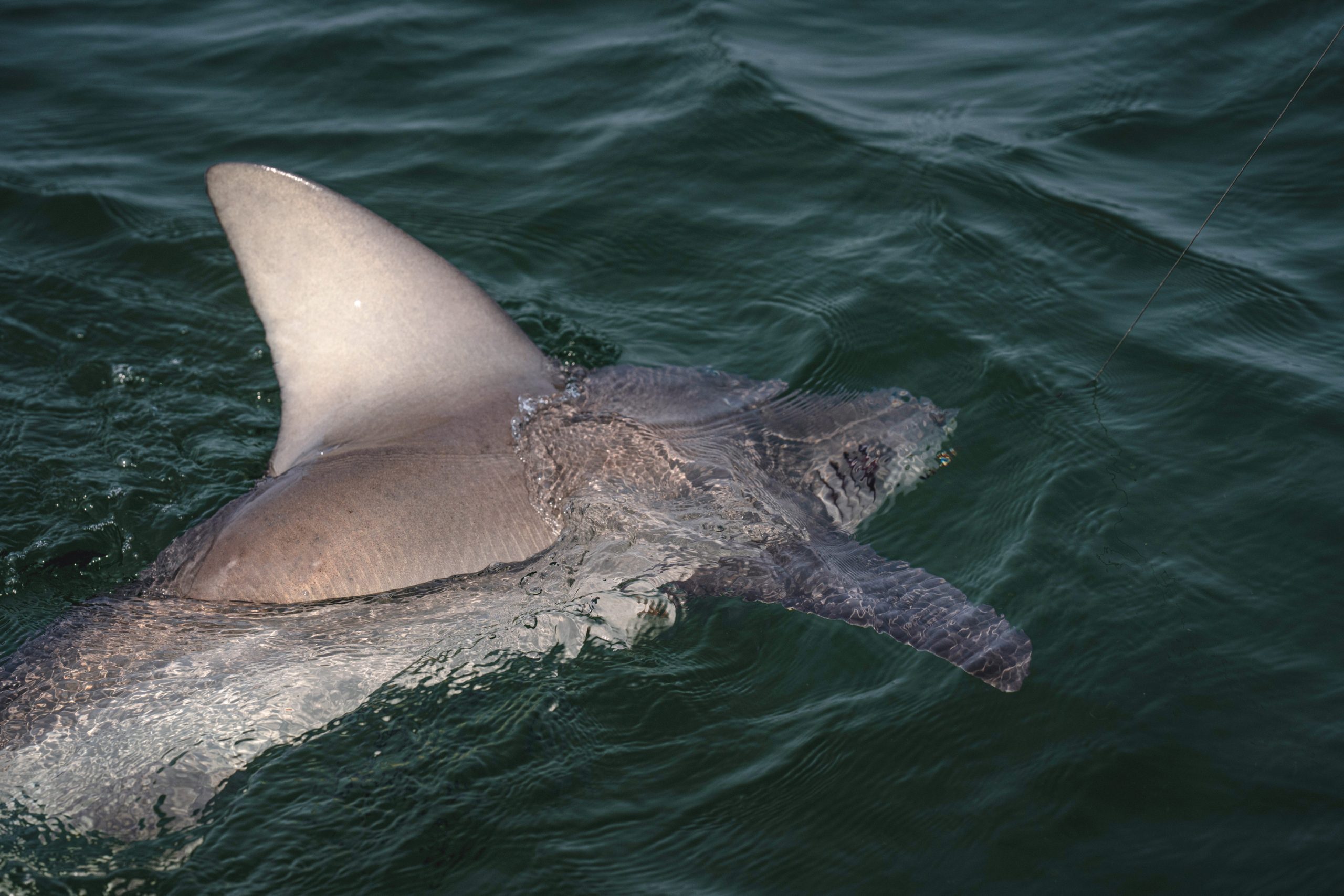
On June 7th, shark angler Elliot Sudal, who has spent more than a decade fishing for sandbar sharks and other species from Nantucket’s south shore, hooked his first-ever white shark from the beach. The fish, estimated at over 8.5 feet and around 300 pounds, drew a crowd of stunned onlookers as Sudal worked to release it. As soon as he realized what he had, he knew he had to release it immediately — white sharks are a prohibited species in U.S. waters, with no intentional targeting allowed.
Massachusetts enacted shore-based shark fishing regulations in 2025 after several instances in recent years when anglers likely fishing for white sharks from shore created public safety risks for other beachgoers. DMF’s goal was to discourage anglers from intentionally targeting white sharks by prohibiting the use of heavy gear in areas where white sharks were likely to be encountered. (Note that Nantucket is not included in the shore-based shark fishing prohibition area.)
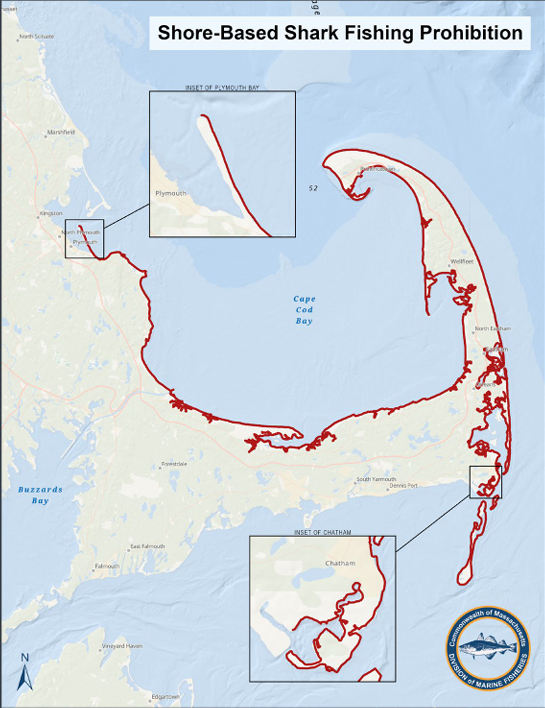
Where Heavy Gear Is Prohibited
To better restrict the targeting of white sharks where they are most commonly found, DMF created an area (see red shoreline on map) where anglers are prohibited from fishing from shore with a baited hook that has an inside gap exceeding 5/8-inch (when measured straight across from barb to shank) coupled with a wire or metal leader that measures greater than 18 inches. The heavy gear is prohibited beginning at the northernmost point of Plymouth Beach, following the shoreline around Cape Cod Bay and the Outer Cape, and including all of Chatham Harbor and Monomoy Island. Lighter tackle may still be used within the restricted area to target other species.
Heavy gear fishing is permitted outside that zone, but with one key restriction: no chumming from sunrise to sunset in authorized areas, for public safety reasons.
No Drones or Remote Deployment
Regardless of location, using mechanized, compressed propulsion, or remote-controlled devices to deploy baits is prohibited for all shore-based fishing. This covers drones, bait cannons, and RC boats. Deploying bait with manual devices such as kayaks and kites remains allowed.
If You Hook a Shark, Here’s How to Release It Right
- Keep the shark in the water — gills especially
- Minimize handling time
- Do not sit on the shark’s back
- Use a long-handled dehooking device if it won’t slow the release
- Carry wire or bolt cutters to cut your leader or hook quickly if needed
For the full regulations and a map of prohibited areas, visit the Massachusetts Division of Marine Fisheries.

This guy was using chum on a beach with swimmers and other beach goers around. All muscle no brains. Lucky no one was hurt.