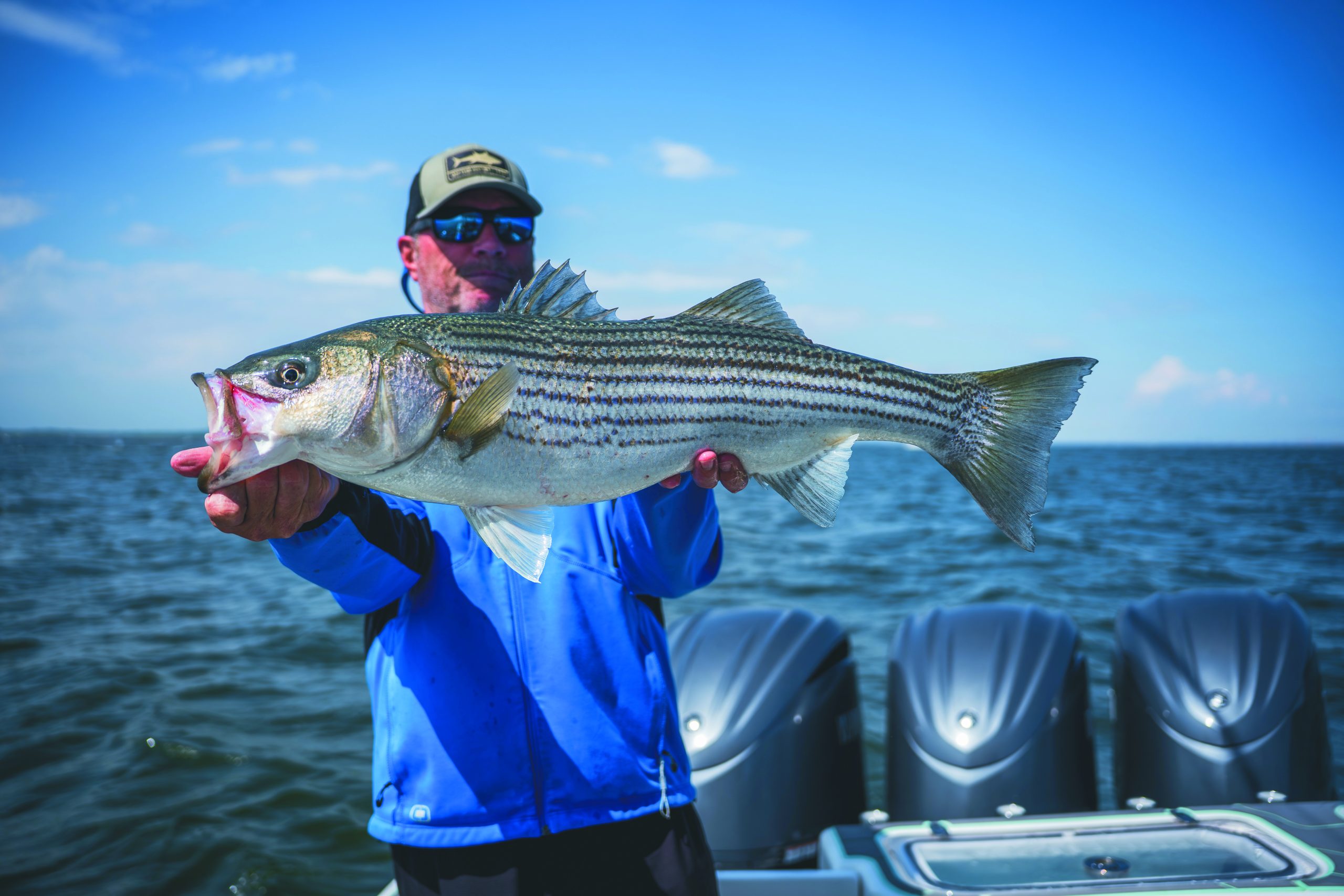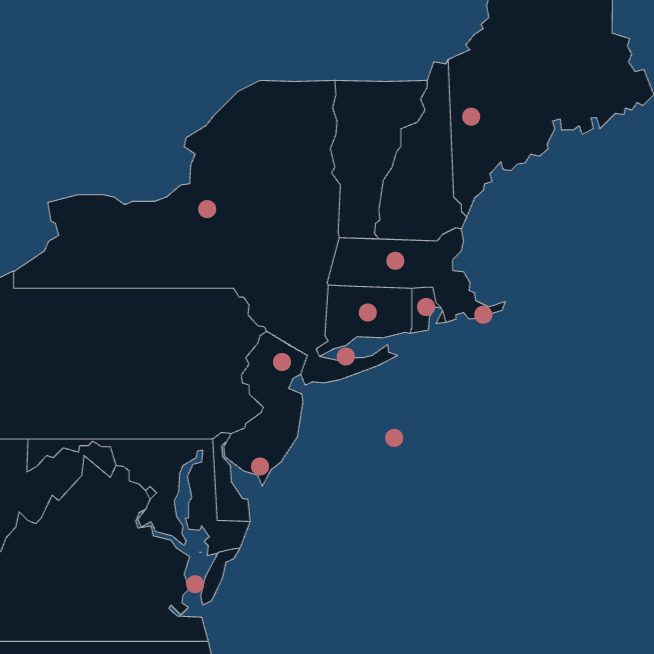

Narragansett Bay is a deep estuary cutting into the Rhode Island coastline from its mouth at the Atlantic to the Providence River. The bay is bordered by Aquidneck Island to the east and the mainland to the west, with multiple passages and tributaries feeding the system.

Broad shallow flats line the upper Narragansett, while the lower bay is marked by deep basins, rocky points, and channels exceeding 100 feet. Strong tidal exchange through the East and West passages creates rips and current seams. The combination of depth, current, and freshwater inflow make it a prime springtime destination for migratory striped bass entering southern New England waters.
The Bait
When the stripers reach Narragansett Bay, they are ravenous, says Captain Rob Taylor of Newport Sport Fishing Charters. Luckily for them, they reach the bay to find a smorgasbord of different baitfish.
Mantis in the Mud
One of the first baits that bass get on in Narragansett Bay is the mantis shrimp, says Taylor. These alien-like crustaceans emerge from their mud burrows in May, and stripers pluck them off the bottom. “Back when you could keep larger bass, fishermen regularly found their stomachs full of mantis shrimp,” says Taylor. The best imitations, Taylor added, are big soft plastics and bucktails bounced along mud bottoms.
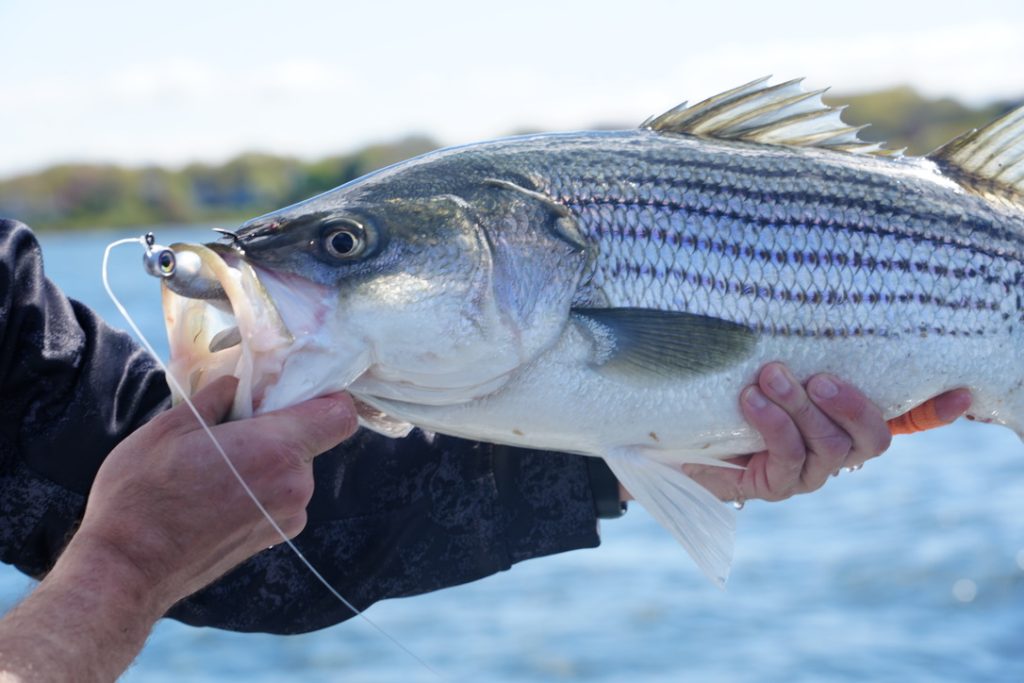
This bite flies under the radar because fishermen rarely see mantis shrimp. Occasionally, Taylor says, bass will feed on them near the surface. As opposed to a big splashy bite on a bunker or herring, bass produce subtle swirls and wakes when eating mantis. Fishermen seeing this and throwing big topwaters like pencils or the Doc may end up frustrated, according to Taylor, but by downsizing or fishing subsurface, they’ll begin hooking up.
Harried Herring
In addition to being a magnet for migratory stripers, Narragansett and its tributaries harbor strong populations of holdovers that get active when the herring return. The influx of 8- to 12-inch baitfish reach the bay with stripers in hot pursuit. I’ve had two late-April, early-May tog trips on Narragansett with Taylor hijacked by schools of northbound stripers pushing herring to the surface. In both cases, the fish appeared to be fresh from the ocean, likely arriving in the bay within the past few tide cycles.
Deep Bunker
Adult menhaden make up the most noticeable schools of baitfish on the bay. Bass will hound these schools over mud flats of 15 to 30 feet. Sometimes, the biggest concentrations of bunker are far from the big striper schools, with the baitfish packing into harbors and up toward the Providence River. In open bay areas where the stripers gather, bunker tend to hold deeper and move faster since they often have hungry bass in pursuit.
The Tactics
Taylor gets his striper season going by “looking for the signs.” It could be a couple of diving gulls or swirling baitfish, but he looks for any reason to swing through an area with his electronics to search for stripers. After a long swim without eating, the fish are less concerned with orienting to structure and more concerned with finding forage, often over open water or featureless mud flats.
Slow Trolling and Live Chumming
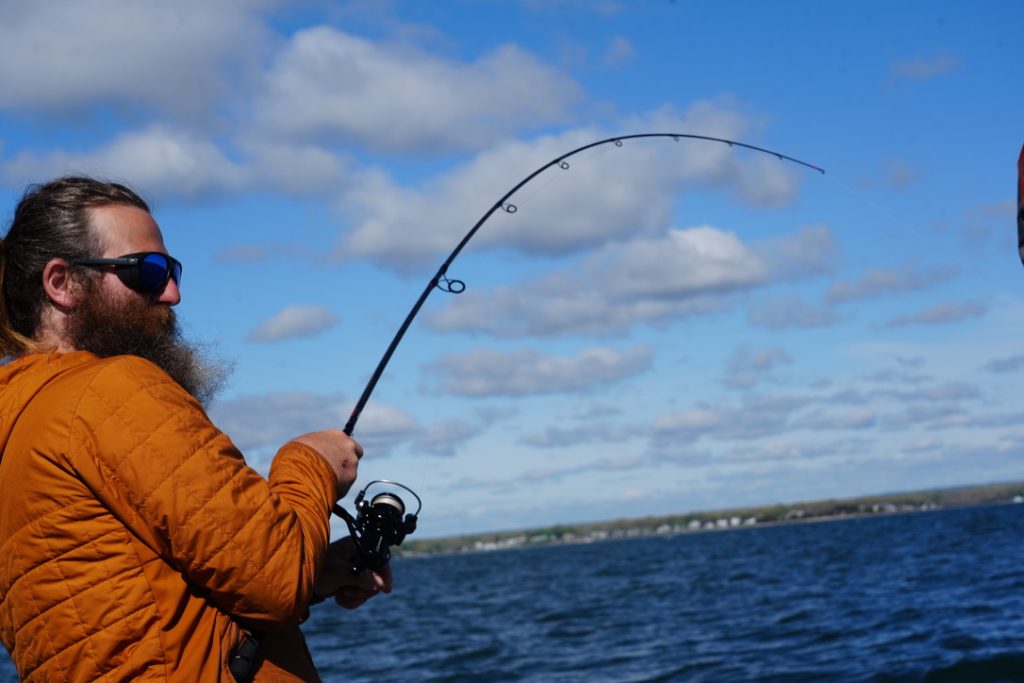
Taylor has an ever-growing playbook of techniques for fooling spring bass on Narragansett. When bunker are in good supply, he fills the livewell and brings the baits to 15- to 25-foot plateaus where schools of stripers are staging. While looking for the fish with his Humminbird electronics, Taylor slow-trolls a pair of live bunker. If he locates a school, he takes the boat out of gear and begins throwing live baits like grenades, hoping that a few panicked bunker amid a school of large stripers will flip the competitive-instinct switch among the fish and create a feeding frenzy. When it works, he lobs a live bait or topwater into the fray, and the hookups are instantaneous.
In recent seasons, however, bunker have been scarce, forcing a change in approach. Even with a lack of bunker, though, bass still pack into Narragansett.
Flutter Spooning
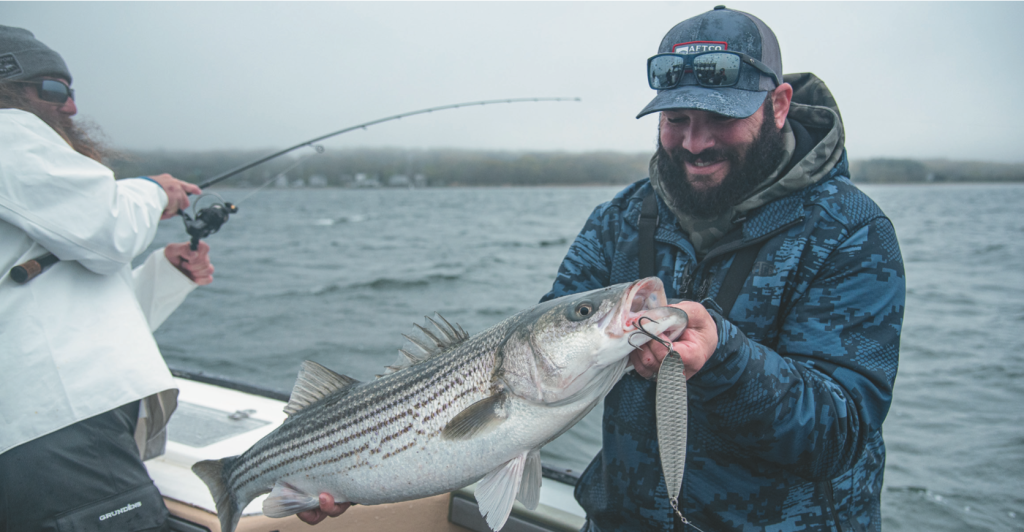
When stripers move through Narragansett’s passages in pursuit of deep-running herring or bunker, the large profile, erratic fall, and big flash of a flutter spoon prove irresistible to the fish.

While a flutter spoon can be jigged vertically with good success, Taylor prefers to pitch the lure away from the boat, let it hit bottom, and work it with long, upward sweeps of the rod. He gives the lure slack on the fall, which creates the enticing flutter. Bass usually hit on a slack line and get hooked on the next upward sweep.
Open-Water Gliding
At times, Taylor will find stripers suspended over the bay’s deeper channels as they migrate in. He’s had success in these situations by fishing large glidebaits like the Big Ray made by Nate Medeiros of Southcape Swimbaits. The action and size of these baits can pull up bass holding 30 feet down over 65 feet of water.
A burning-fast retrieve, broken up by pauses and longer, slower glides, results in crushing hits from the bass as they rocket out of the depths.
Timing
Late April to mid-June
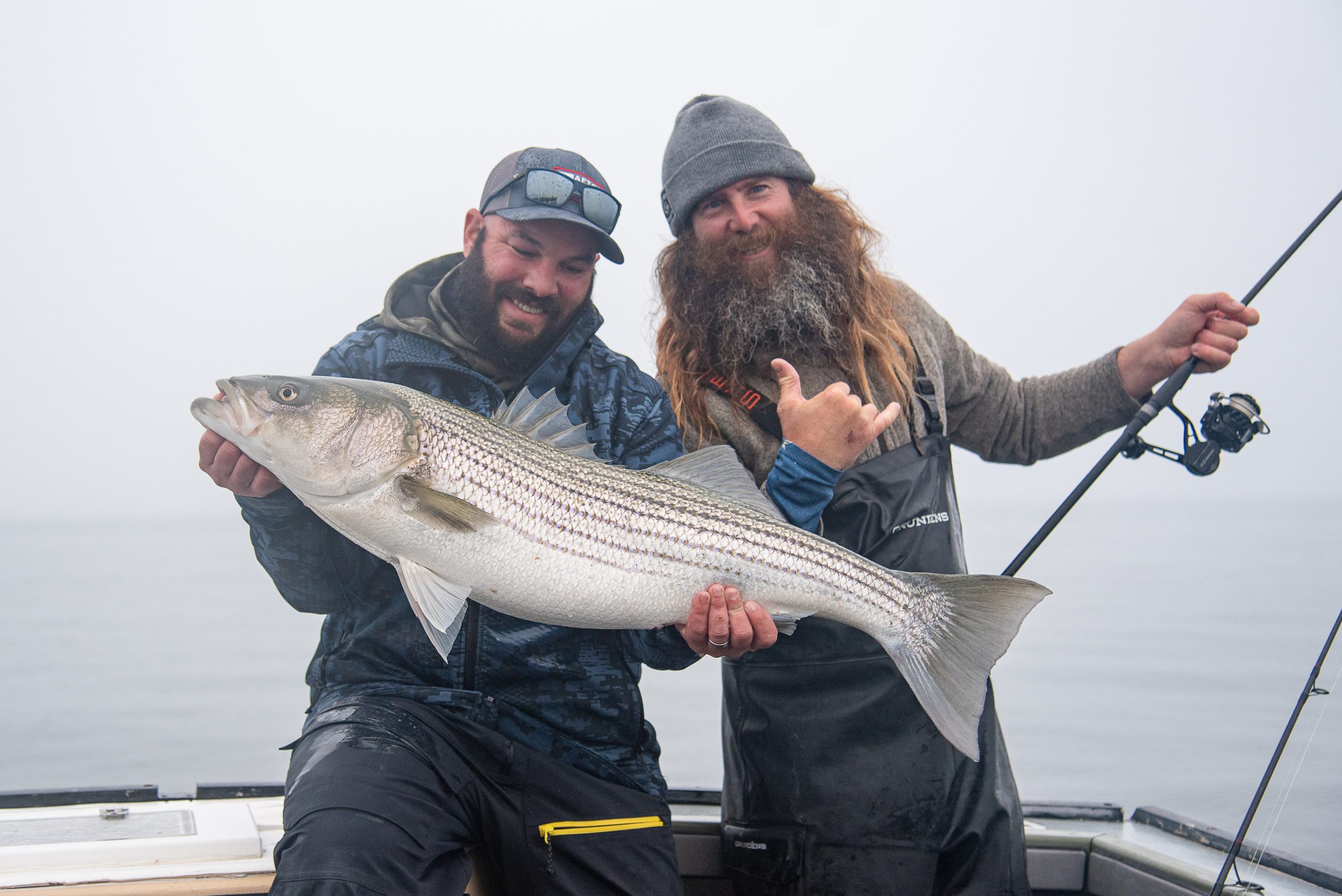
The Narragansett Bay striper season kicks off in late April, with 28- to 36-inch fish settled in by May 1. Larger bass aren’t far behind, and by Mother’s Day, Taylor has found fish beyond the 30-pound class. Fish remain into June before warm temperatures send the bass and bait back to the oceanfront off Newport.
» Book a spring striper trip on the bay with Captain Rob Taylor of Newport Sport Fishing Charters
READ MORE