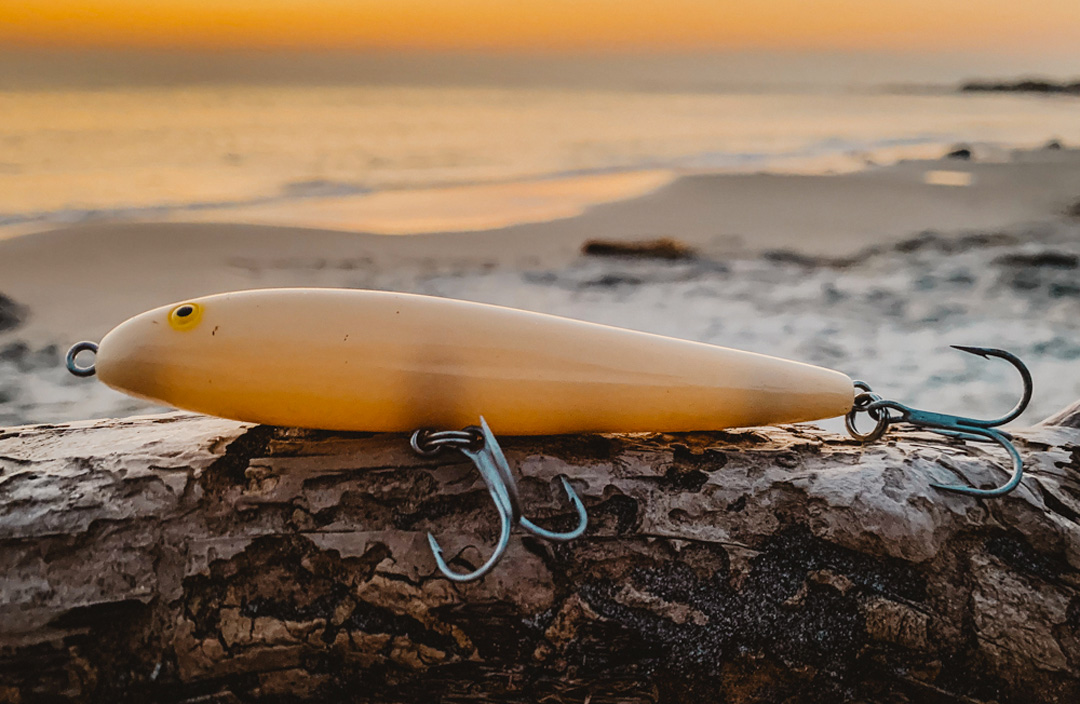

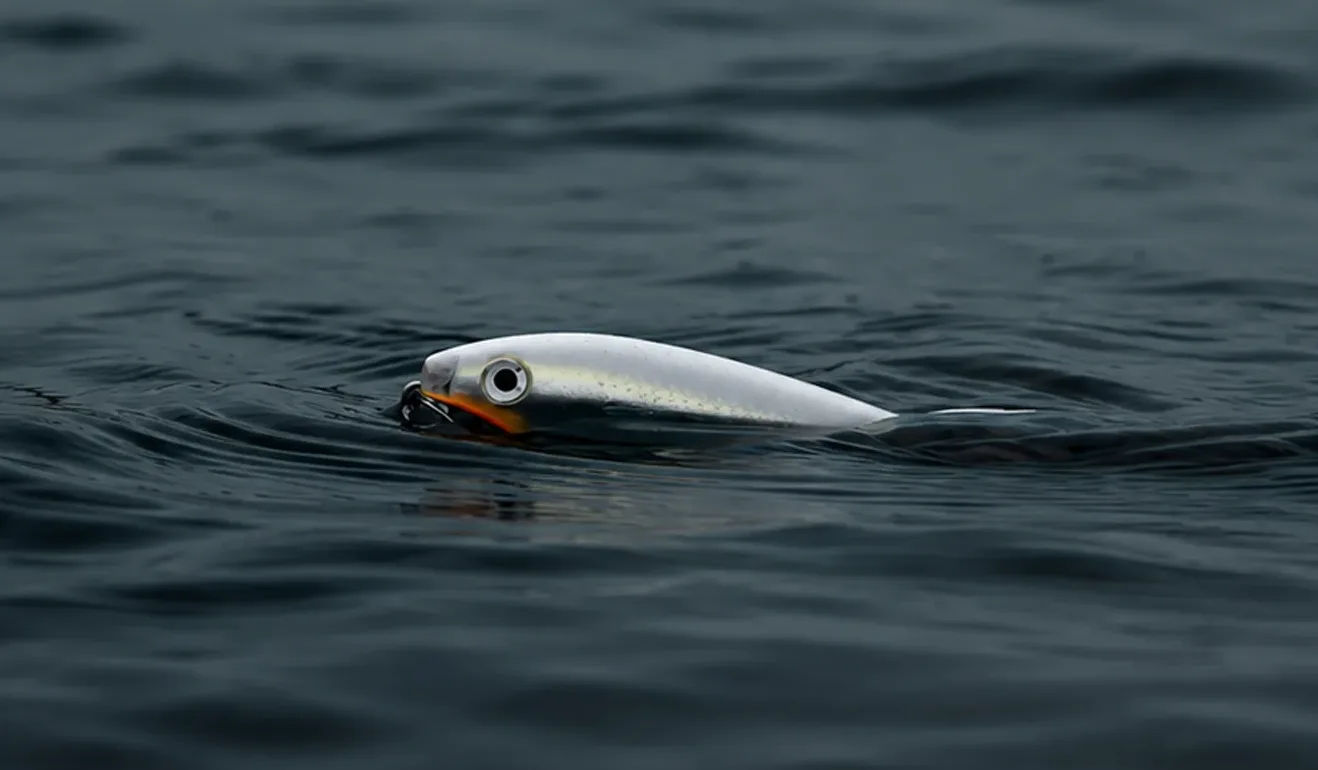
A staccato pop! shatters the stillness of the salt marsh and expanding ripples mark the place where a small topwater spook walked only seconds before. The first topwater strikes of the season come against a spartina backdrop, as warming bay waters have stripers looking up for their meals. These backwaters call for a gentler touch than the super-sized spooks and pencils anglers use for ocean stripers. For back bay blowups, tie on a smaller bait with a tighter walk that can be cast against the sod and worked toward the channel edge.
Once the backwaters warm past 60 degrees, 4- to 5-inch walk-the-dog topwaters become some of the best search baits in a striper fisherman’s arsenal from spring through fall.
Tackle for Small Topwaters
Small spooks fish best on light to medium-weight spinning tackle, particularly 7’ to 7’6” fast-action rods. The fast action helps create the sharp walking motion of the plug.
Most of these lures weigh less than an ounce, so a 3000- to 4000-size spinning reel spooled with 15- to 20-pound-test braided line allows anglers to cast the lures far enough to reach distant structure or breaking fish.
Leader material can be an important consideration for small topwater lures. Fluorocarbon sinks, and a longer fluoro leader can inhibit the action of a 4-inch walking bait. Plus, on a topwater lure, the reduced visibility of fluorocarbon underwater is less beneficial. Instead, opt for a 15- to 20-pound-test monofilament leader to get the best action out of your small topwater spooks.
The same is true of clips. On larger topwaters, a clip has little effect on a lure’s buoyancy, but on a 5/8-ounce lure like the Rapala Saltwater Skitter Walk, a striper-capable clip can weigh down the nose and dampen the action. Instead, attach small topwaters with a loop knot like the Rapala knot.
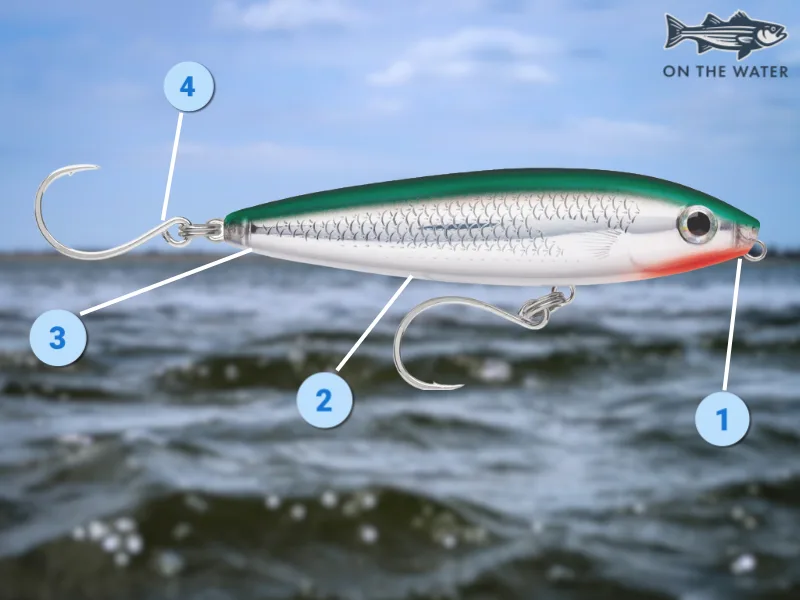
Anatomy of a Rapala Saltwater Skitter Walk
Length: 4 3/8 inches
Weight: 5/8 ounce
-
The lure’s shape, weighting, and line-tie orientation create a tight zig-zagging action with minimal effort from the angler. Just a few flicks of the rod tip are enough to get it walking.
-
An internal rattle cuts through the noise to give stripers a target to home in on. It is especially helpful when fishing in dirty or stained water.
-
A weighted tail helps boost casting distance by reducing tumbling and causes the lure to sit tail-down at rest.
-
Stock belly and rear treble hooks can be replaced with inline single hooks. They may reduce the number of hook-ups, but inline singles are safer for the fish and the angler, and lead to quicker, cleaner releases.
Baby Steps: How to Fish a Small Topwater Spook
After the lure lands, let it settle for a moment. Some anglers wait long enough for the ripples from the splashdown to fully disperse. Keep the rod tip low and make steady twitches, moving the rod no more than a couple inches before returning it to the starting position. Giving the lure a bit of slack between twitches will help it to walk to either side.
Work regular pauses into the retrieve, sometimes letting the lure sit still long enough to let the ripples disperse. Often, strikes will occur as soon as you resume the retrieve. If a fish misses the lure, maintain the same retrieve speed for a few feet before pausing.
READ MORE