
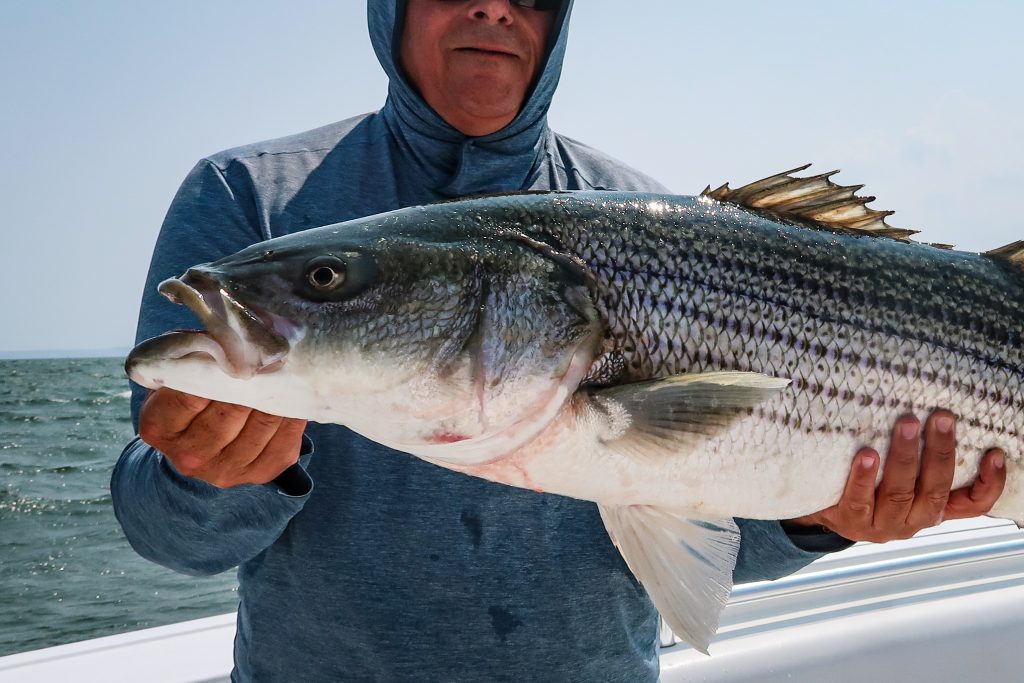
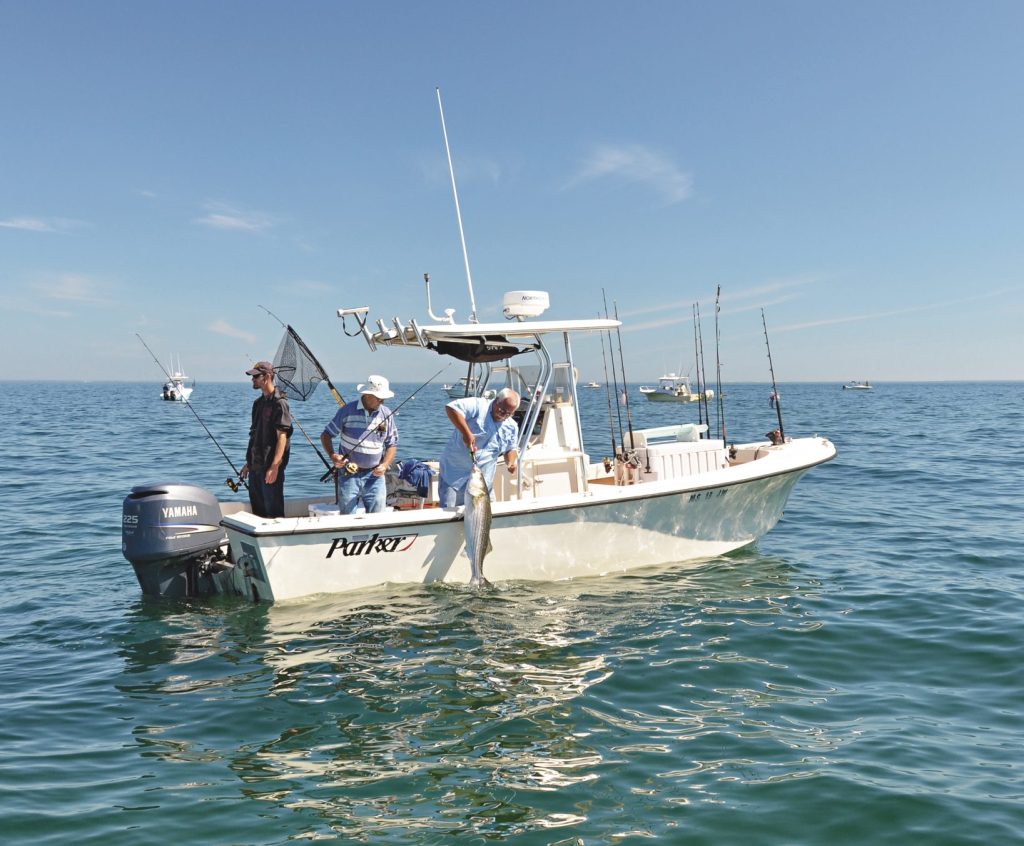
On a calm June morning, a boat angler stays on a broad school of 35- to 45-inch striped bass pushing menhaden just off the beach. Every drift produces another bent rod. Soon, more boats join in on the action. The fish look thick, healthy, and abundant. It’s the best striper fishing he’s seen in 20 years on the water.
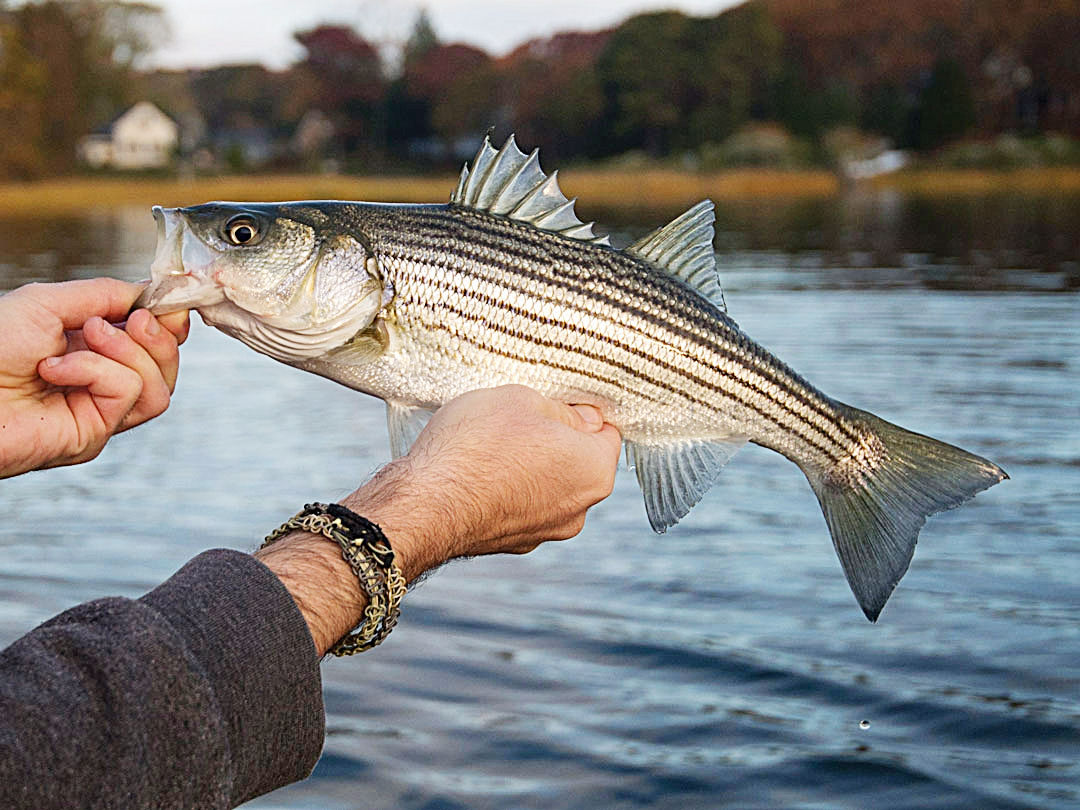
A few miles away, a surfcaster walks back to her truck after a session that started an hour before first light and didn’t produce a bump. The few bass she has landed this season were all good-sized fish, but there hasn’t been any sign of the schoolie stripers that she used to catch and release by the dozen on early spring mornings.
Both anglers are confident they know what’s happening with striped bass. Each one is seeing only part of the story.
To make sense of the current state of the striper fishery, and to understand what striped bass fishing is likely to look like over the next few seasons, we must start by separating personal experience from population-level evidence.
Overfished Doesn’t Mean Collapsed
In management terms, striped bass are overfished and have been overfished since 2017. When anglers hear “overfished,” it might sound like a dire situation, one that calls for a moratorium on all striped bass fishing. That’s not necessarily the case.
In fisheries science, overfished has a specific meaning. For striped bass, it means the spawning stock biomass (SSB)—the estimated total weight of mature female spawning fish—has fallen below a value called the threshold.
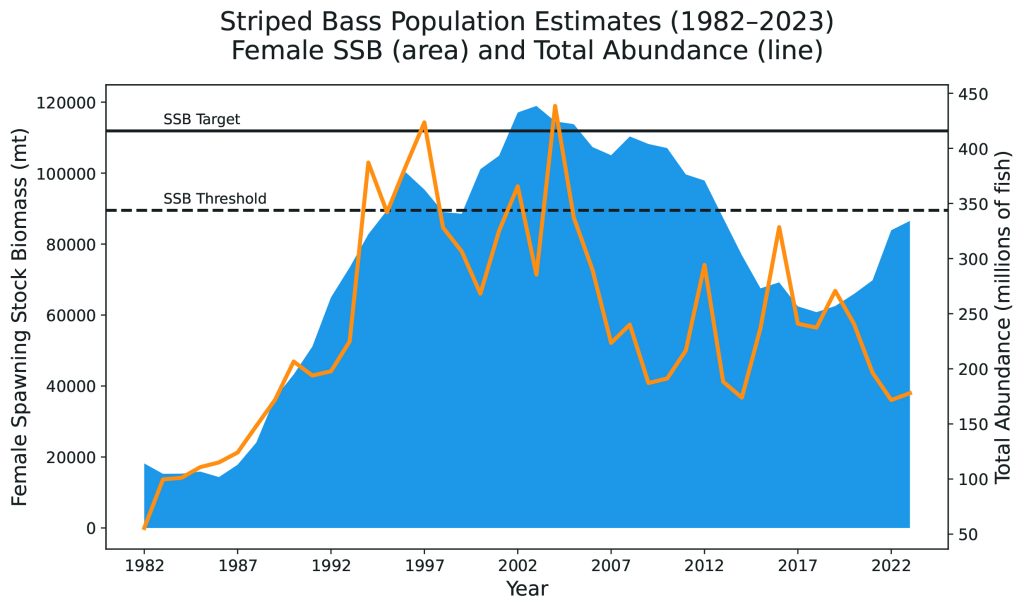
The threshold managers use today is based on 1995, the year striped bass were declared recovered after the collapse of the 1980s. That year became the benchmark for what a “healthy” stock should look like.
In other words, fishery managers looked at the state of the fishery in 1995 and said, “This is the condition we want to maintain.” Managers then set a target 25% higher than the 1995 level to build in a buffer.
When the stock assessment showed SSB had fallen below that threshold in 2019, striped bass were officially declared overfished.
Recruitment Is the Engine

Every striped bass you catch started as an egg drifting in a river. Only a small fraction survive their first year. Recruitment is simply how many survive that first year, and each group of survivors becomes a “year class.”
A single strong year class can shape the fishery for a decade. On the flip side, weak recruitment over several consecutive years thins the wave of fish moving through the system.
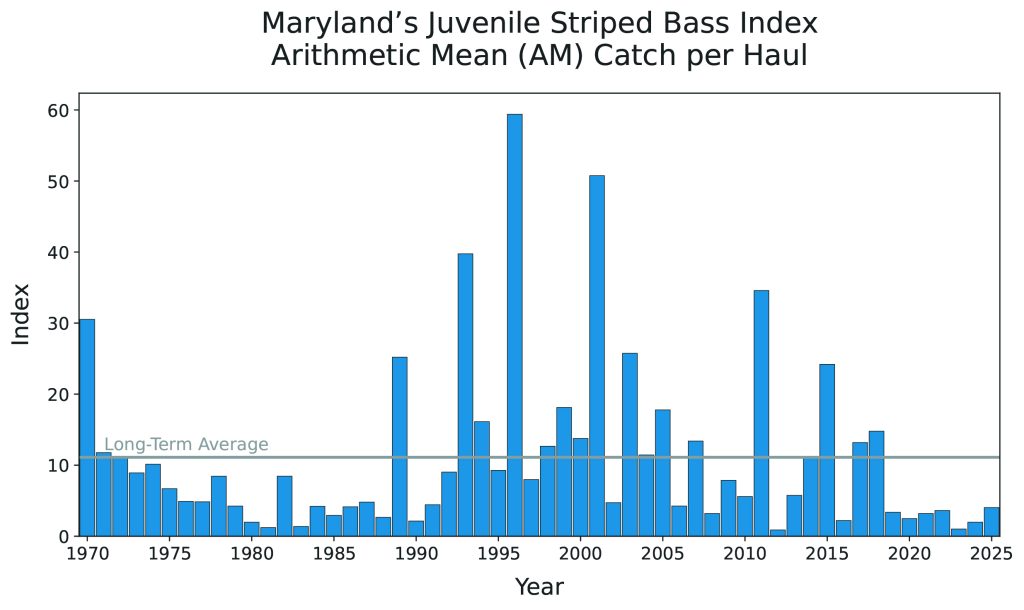
Over the past seven years, recruitment has been below the long-term average. In plain terms, fewer young fish are coming up behind the current generation.
This recent stretch of poor recruitment is not a symptom of the stock being overfished. Having a specific number of big, female, egg-bearing striped bass does not guarantee strong recruitment. Environmental conditions, including river flow, water temperature, and habitat quality, are believed to play a major role in determining spawning success, recruitment, and year-class size.
Some of the large year-classes of the early 1990s, the ones that helped rebuild a collapsed striper population, were born from an SSB that was below the current threshold. And some of the weakest year classes occurred when SSB was near the target in the mid- to late 2000s.
How Scientists Measure Striped Bass Recruitment
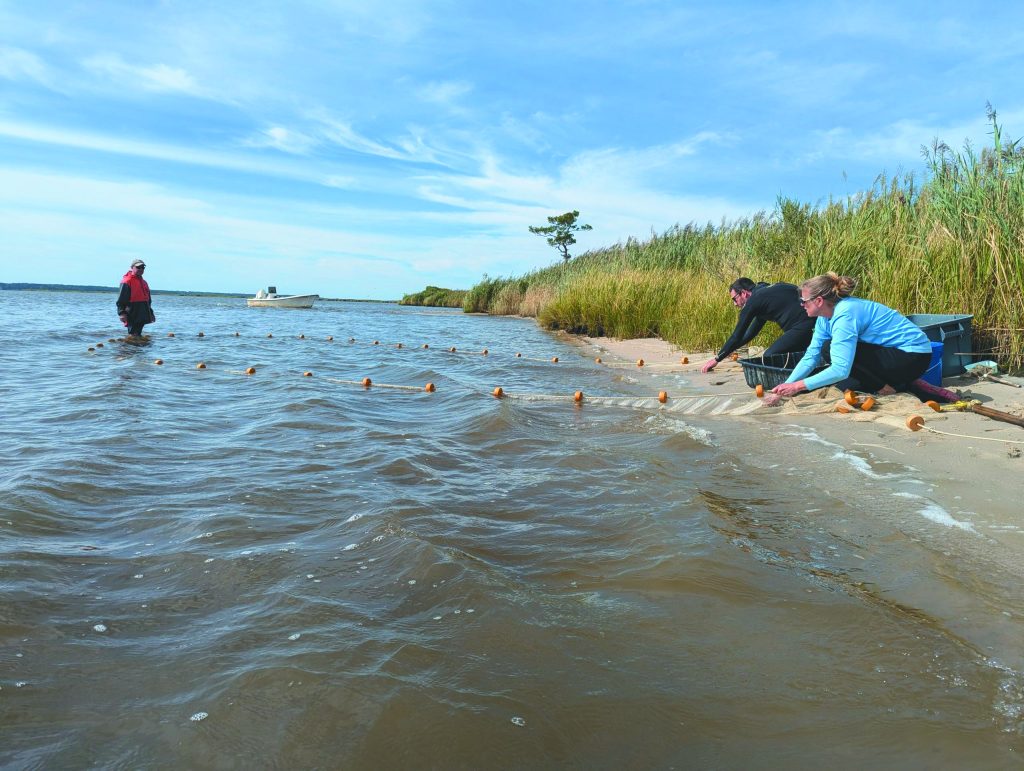
When biologists talk about “recruitment,” they’re not guessing. They measure it every year in the rivers where striped bass spawn.
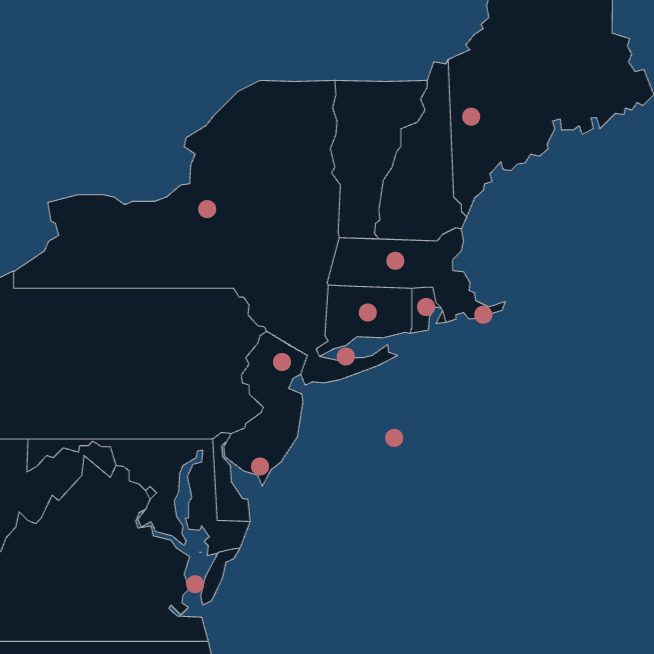
The Chesapeake Bay produces the majority of Atlantic coast striped bass — often more than 70% of coastwide recruitment in strong years. Each summer, Maryland and Virginia conduct standardized juvenile surveys in shallow shoreline habitats and tributaries. Using small-mesh seines and electrofishing gear, biologists count young-of-the-year (YOY) striped bass born that spring, typically 2 to 6 inches long.
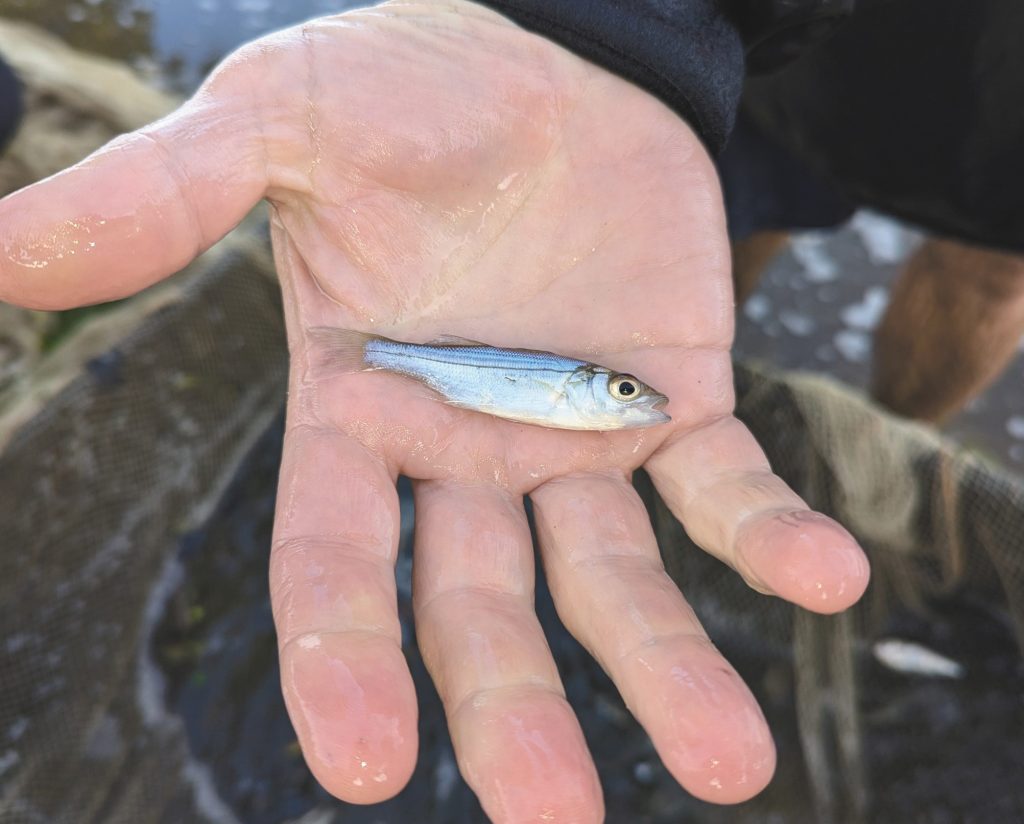
Because the same methods are used in the same locations every year, scientists can compare results over time and calculate a Young-of-the-Year Index, one of the most closely watched indicators of future year-class strength.
» Read More: 2025 Striped Bass Spawning Survey Delivers More Bad News
Understanding Total Mortality
Recruitment determines how many fish enter the system. Mortality determines how many leave it.
Striped bass mortality comes from fishing mortality (which includes recreational harvest, commercial harvest, and release mortality from catch-and-release fishing), and natural mortality (which includes predation and disease).
In recent years, recreational fishing, including release mortality, has accounted for the largest share of fishing-related removals. The 2024 stock assessment estimated that 11% of striped bass fishing mortality in 2023 was attributable to commercial fishing. The remaining was attributed to recreational harvest (40%) and catch-and-release fishing (49%).
Most released fish survive. But at high levels of fishing effort, even a small mortality percentage can add up. That’s why catch-and-release alone can still have a meaningful impact.
Management Changes and Deadlines
When the 2019 stock assessment determined that SSB had fallen below the threshold and that fishing mortality was above its target, the Striped Bass Management Board was required to act. Managers have reduced fishing mortality by reducing the bag limit and creating a slot limit for recreational harvest, and by reducing commercial quotas. They have also attempted to reduce catch-and-release mortality through measures such as requiring circle hooks when fishing with natural bait, and in recent years, managers have even considered no-targeting closures to reduce fishing effort.
However, note that striped bass management is focused on rebuilding SSB. Because SSB measures the total weight of mature female fish, rebuilding can occur more through the growth of individual fish, and less from an increase in the total number of fish. In other words, even if managers succeed in rebuilding the SSB to its target, the fishery won’t look or feel like the late 1990s and early 2000s boom. Instead, the total abundance of striped bass—the number of striped bass available to catch—may remain well below those peak levels.

What Anglers Should Expect in the Years Ahead
The striped bass we catch this season were born years ago, so the next few seasons are, in many ways, already written.
With seven consecutive below-average recruitment years, fewer young fish are entering and moving through the population. With lower overall abundance, strong striper fishing will be less widespread. Anglers will likely continue to see solid numbers of larger fish from earlier year classes, but fewer small schoolie stripers.
For anglers focused on catching big striped bass, the odds are on their side for the next five to ten years as individual fish from the strong 2015 and 2018 year classes grow larger. However, as those fish are depleted—through natural mortality and fishing mortality—there will be a gap while at least seven years of below-average year classes move through the population.
While the status of striped bass is complicated, the direction of the fishery over the next few seasons is not. With fewer young fish entering the system, what we’ll see on the water is already taking shape. What we can’t predict is when Chesapeake Bay will produce another strong year class. Until it does, the future of this fishery will depend on how we handle the fish we already have.
RELATED