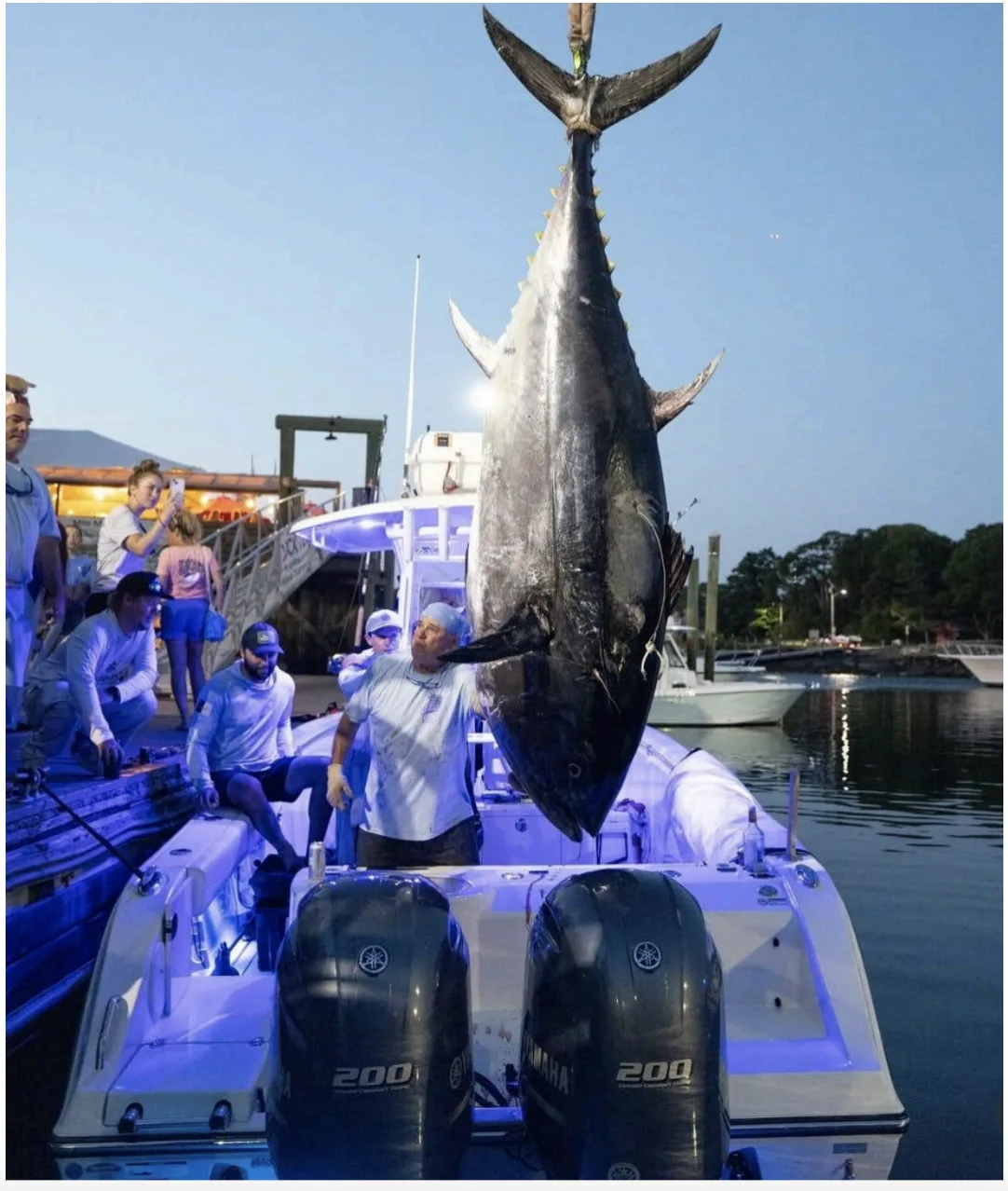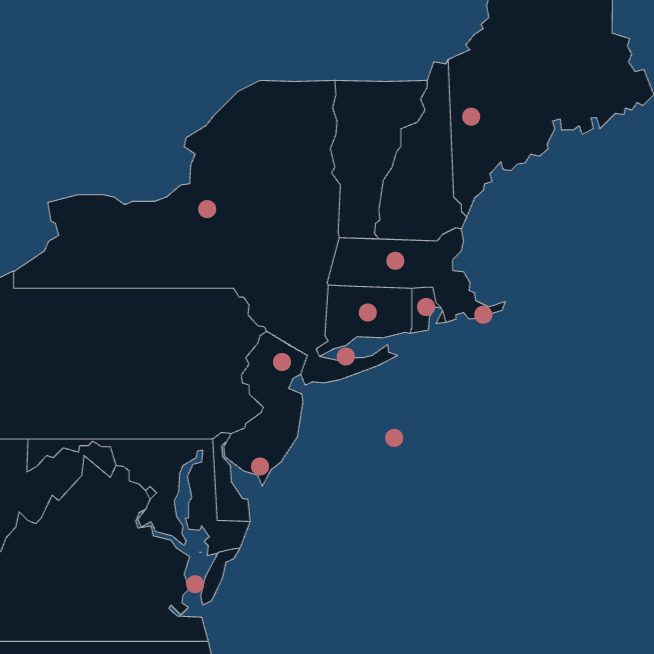

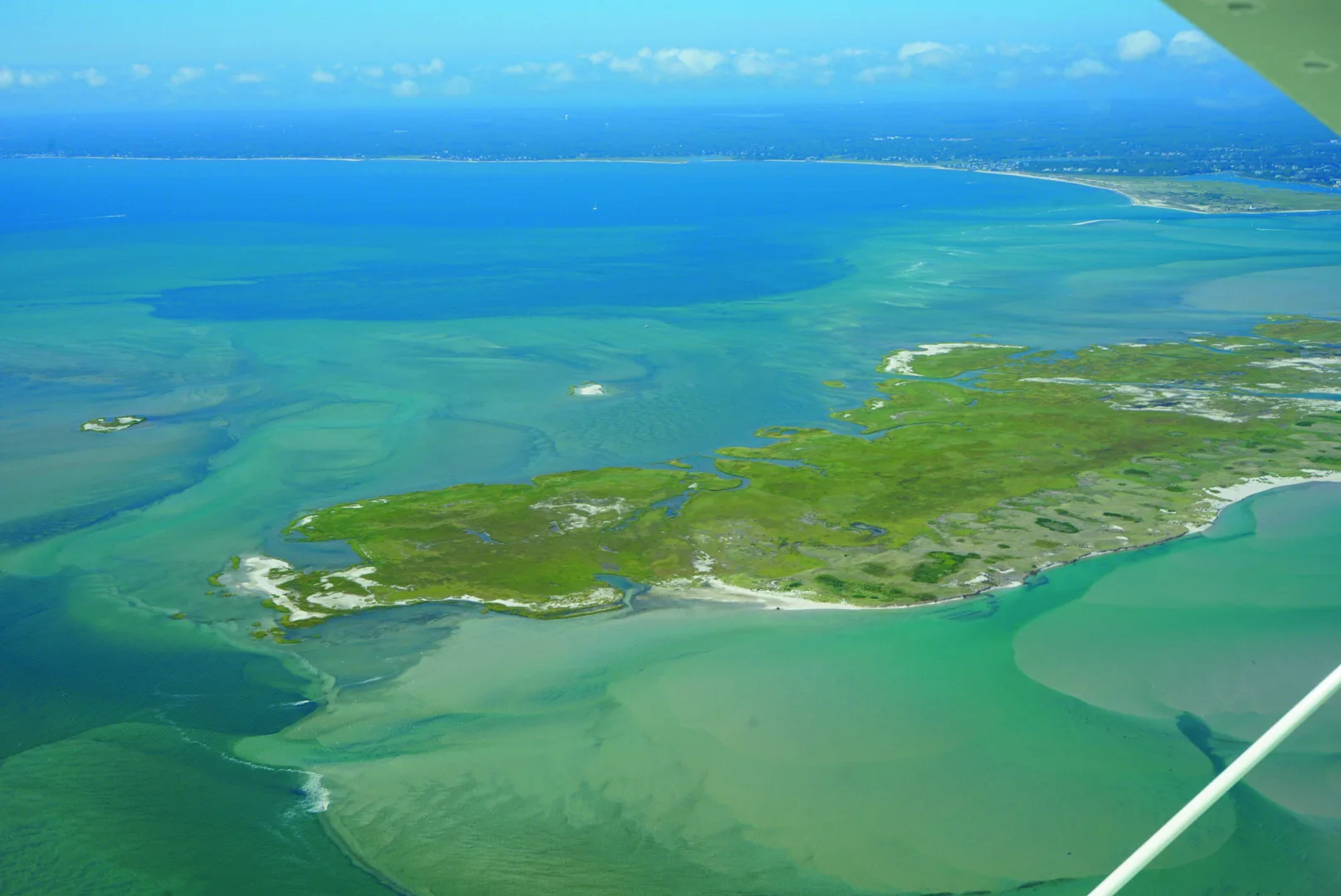
Chatham is beauty with a few bruises underneath. Its puritanical roots might prohibit such a brag, but it’s a Tuna Town unlike any that have come in its wake. Its geographical limits are inherently fluid, drawn more in saltwater and sand than in survey lines. And it affords the first glance of sunrise on Cape Cod, as if dawn itself trusts Chatham first. In those early moments, the seaboard feels less like a town and more like a threshold, not sitting beside the Atlantic so much as leaning into it.
Here, memory can mean a generation or a tide, depending on the speaker. To some, history is inherited; to others, it’s something that washes in overnight. The land remembers in family names and tuna tail-adorned sheds; the water in shifting buoys and a quiet rearrangement of the map in increments too small to notice until suddenly they aren’t. It is a place that has learned to live with its own contradictions: white church steeples, affluent summer accents, and wedding bells drifting over a harbor of commercial hulls carrying the smell of diesel and rotting lobster bait.
Look closely, though, and the bruises show. Storms have carved the outer-beaches often enough that residents speak of nor’easters the way farmers speak of droughts. Ask the old salts, and they’ll tell you The Bar doesn’t care for your credentials or chart-plotter. It’s a living thing, part of the flexing arm extended into the Atlantic; a drawstring of opportunity and chaos. The understanding is that the past is never quite past here. Even the fog moves with purpose, pulling itself across the fishing grounds like a coarse jacket meant for work rather than warmth.
And then there are the bluefin, whose arrival generates a kind of magnetism, pulling in thrill-seeking anglers, families of dreamers and working hands alike, all who feel most alive at the fringe of what the sea permits. In the annual collision between the warm pulse of the South Channel and the cold breath of the Gulf of Maine, life blooms in the form of shimmering sand lance and herring parade. No chamber of commerce brochure can relate the augur of a bow pointed at smokestacks of humpback exhalation, a seasonal communion that borders on spirituality. This is where bluefin carve their bright signatures through surface feeds and sonar screens, chased by the seasonal flock and descendants of Whalemen.
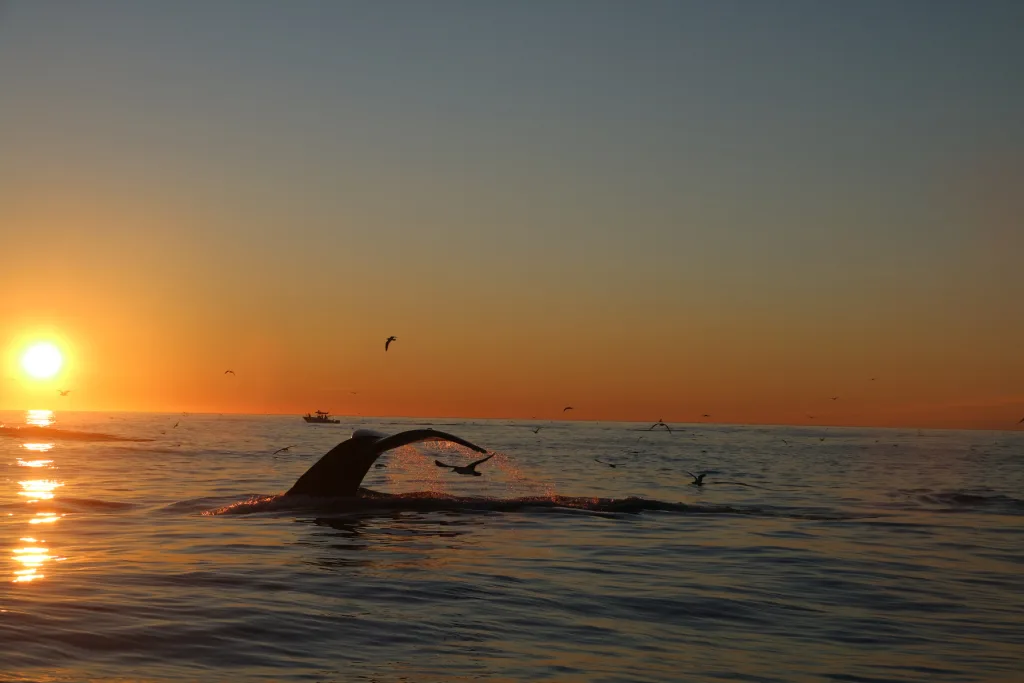
It’s true, tuna were a late inheritance, not a founding principle of Chatham’s contract with the Atlantic. Still, the drift fishery naturally lends itself to the ego-dowsing elements of current, competition and chance. Out here, the sea-state not structure, decides the script, with any patch of blue-green water between the 20- and 30-fathom line just as likely to hold sickle-fins if the conditions align, or the tuna gods deem it so. Like Main Street on a July afternoon, Chatham’s fleet can also swell to a circus when light and variable conditions prevail. But, when weather windows compress into late September, and small-craft advisories litter the calendar, a father and son can find themselves all alone in a pit-patter of rain, surrounded by airborne giants, golden finlets backlit against a gunmetal horizon.
To fish and love Chatham is to roll with the changes. It’s an arena both idyllic and brutally honest in its appraisal of your decision-making. In banner years, consistent patterns produce world-class results, until, like last call at The Squire, the scene turns on its heel and leaves you blinking under house lights. After a wind shift, king tide, or bait layer that evaporates without reason, suddenly all that’s left are consequences. One day you’re dialed in, reading shearwater sign and slicks like scripture; the next, you’re questioning whether you’ve ever known anything at all. And yet it’s this volatility that keeps us moored to this place. Chatham’s fishery may not offer the clarity wrought in monuments and mountain passes, but it feeds a sense of wonder just the same.
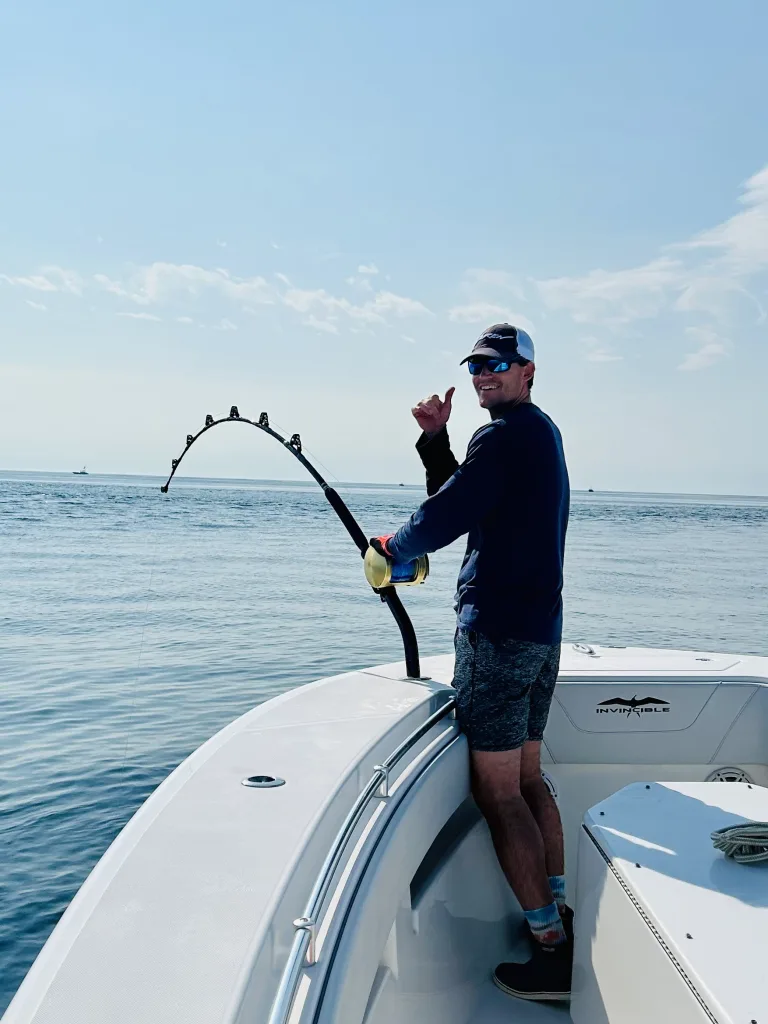
When the puzzle pieces do align; when the tide slows, birds tighten, and the sounder picks up a wolf-pack rising to sixty feet, Chatham reminds us why we endure the blank and snake-bitten days. It’s in these moments that white-knuckled rides through the mist turn into fireside tales of victory torn from the jaws of defeat. It’s where multiple casting rods will bounce in rhythm to flickers of golden-purple iridescence of deep color, and boat-side detonations leave even the most hardcore anglers awe-struck. It’s where lifelong friendships are forged in pain and pursuit of the monolith, and family bonds are tested until the hinges of the fillet table groan. Chatham offers these moments freely, then snatches them back, bruising and blessing us again in the same breath.
This fishery keeps everyone honest, and if you’re lucky, it’ll keep you coming back. Sure, it will break your heart on occasion, but few have watched a molten sunrise over Monomoy and felt anything less than admiration. Maybe we hesitate to call ourselves a Tuna Town because we live inside a miracle so constant we forget to notice it. And maybe that’s the point. Chatham’s magic isn’t just in its fish or outposts furthest from civilization—it’s in the people. Generations learning from one another, handing down knowledge, stitching together a culture of persistence and pride built on the idea that we are what swims past us, but only if we can catch it.
Still, for all the tuna glory that exists “Out East,” a solemn truth remains: this town knows humility. Abundance here always carries vulnerability in its shadow. The very forces that shaped Chatham refuse to stagnate: currents roam, sandbars migrate, and bait cycles answer to a mosaic far larger than our sliver of coast. Every generation that has worked these waters has had to reinterpret its footprint.
This generation toes the line between tradition and technology: commercial rigs stacked with carbon-fiber confidence, mates learning to read both birds overhead and side-scan images below. We’re fortunate to live in a moment when bluefin numbers appear strong and whales still quarter the shoals with choreographed poise, but such luck rests on unstable ground. Miracles require vigilance, and the honesty to see this place not as an amusement park, but as part of a living web we barely understand.
That’s the real inheritance: learning that this fishery is both resilient and exposed. Every time we cross The Bar, whether for a paycheck, a passion, or as best friends navigating the fog, we’re adding our line to a story that began long before us and must continue long after. In the end, being a Tuna Town isn’t a boast; it’s a stewardship. A promise that what swims past us matters not just because we chase it, but because we’re responsible for ensuring there’s something left to chase tomorrow. Chatham is, and always will be, a threshold to that future, for anyone who crosses it and returns changed, whether or not they come home with a fish.