
Heading down south for the summer.
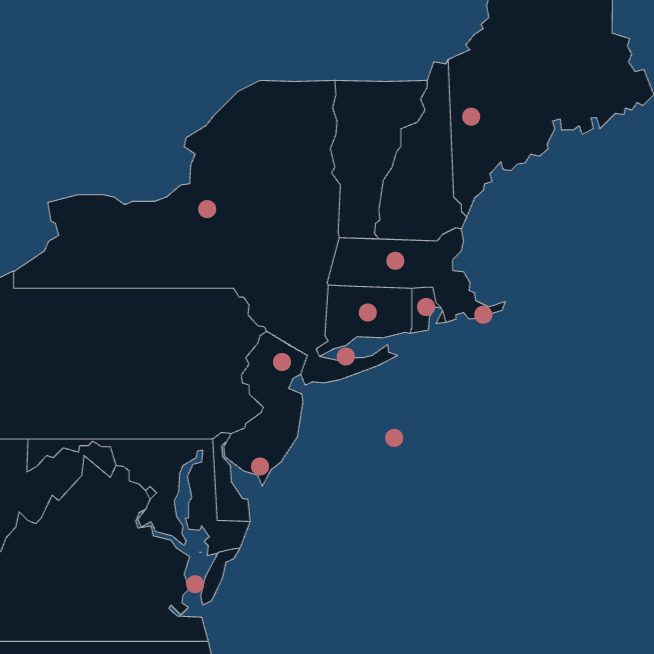
As we get into the hottest summer months, most anglers head south for a mix of species that make the Chesapeake their home for the season. During July and August, the southern portion of the Chesapeake Bay, from Cape Charles, Virginia, to Solomons, Maryland, becomes the place to fish for red drum, speckled trout, bluefish, Spanish mackerel, cobia, and tons of other bottom-dwelling species.
One of the reasons why most Maryland anglers head south during July and August is the striped bass closure that goes into effect from July 16 to July 31, with a possible week-long extension until August 7. The reason for the closure is that warm-water temperatures are hazardous for striped bass and stress them to the point that the mortality rate for caught-and-released fish is excessive. Generally, after 9 or 10 a.m., it becomes too hot to target striped bass, so most anglers switch to bottom fishing for white perch and spot in the Upper Bay region. The limited availability of species worth chasing in the Upper Bay is another reason why anglers head to the southern portion of Chesapeake Bay, looking for bigger and better fishing opportunities.
(Note: On The Water is reader-supported. When you buy through links on our site, we may earn an affiliate commission.)
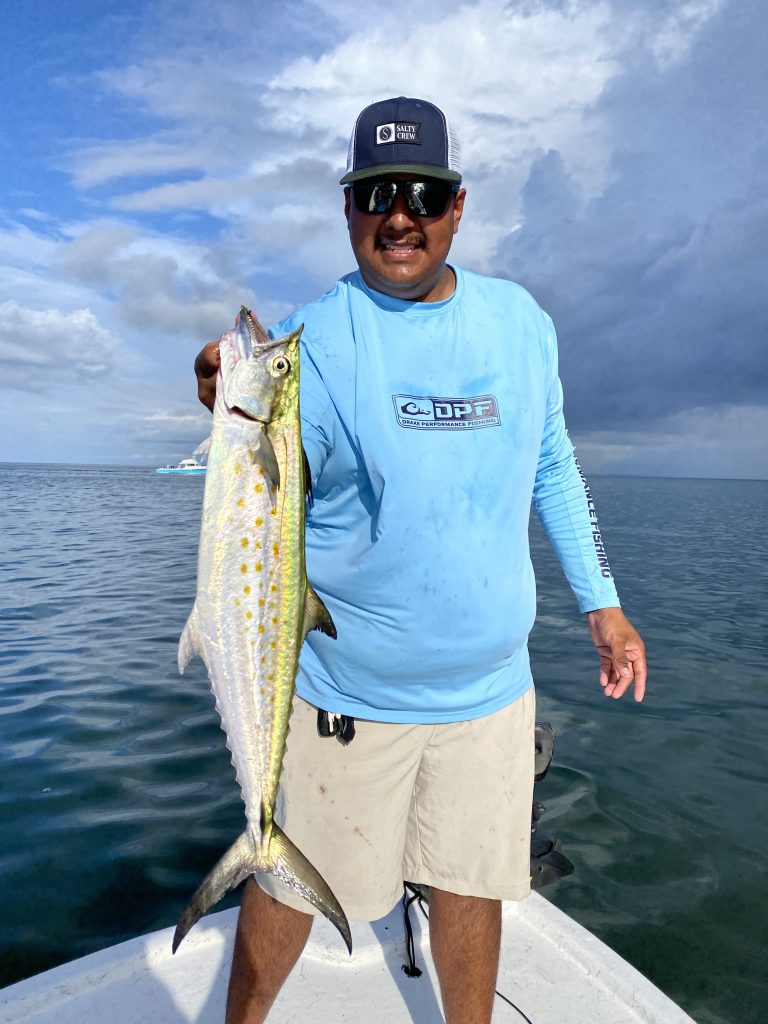
Most anglers will go after bluefish and Spanish mackerel in open water around channel edges and river mouths, where baitfish such as silversides and bay anchovies move around during the tide cycles. Some of the best areas to find bluefish and mackerel in southern Maryland are the mouth of the Potomac River, around the Target Ship, and the mouth of the Patuxent River. Bluefish begin to appear during the first to second week of July, and the mackerel usually show up a week or so later. Virginia’s waters tend to get bluefish and Spanish mackerel earlier in the summer; they can be found in most areas from the Bay Bridge Tunnel to the southern area of the Tangier Sound. Try casting ½-ounce to 1-ounce metals or trolling number 1 to number 3 planers paired with silver or gold Clark or drone spoons.
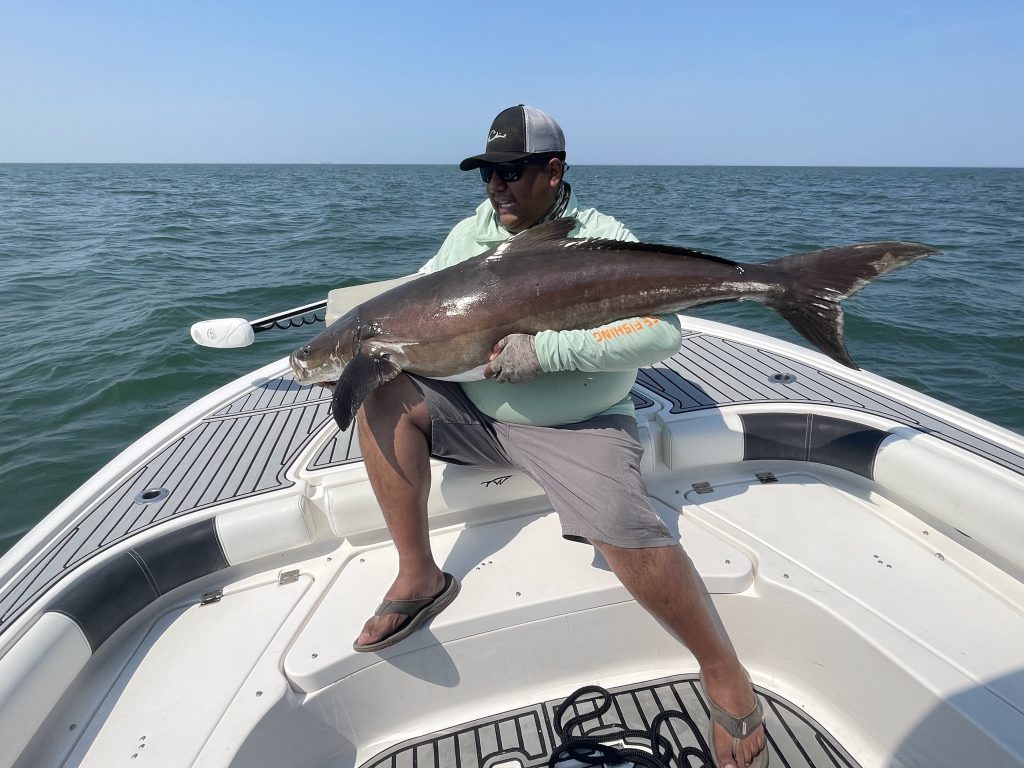
Some of the other species that most anglers are after in the southern portion of the Chesapeake Bay are cobia and redfish (red drum). Cobia are one of the hardest-fighting inshore fish. They make their way into the Bay in early June in Virginia waters and slowly work their way north. By July and August, they can be found anywhere from the Chesapeake Bay Bridge Tunnel to the southern portion of Maryland waters around Point Lookout.
Sight-fishing for cobia is the most common technique, but chumming is also a great way to target them. Early-season chumming in the Cape Charles area is very prevalent; most people anchor at Cherrystone Reef and the north side of Latimer Shoals in about 12 to 18 feet of water. The baits of choice are cut bunker on the bottom or live eels. Fish-finder or Carolina rigs are the ones to use, making sure to have enough weight to hold bottom. Placing one chum bag on the bottom and one on the surface can help bring cobia closer to the boat.
When sight-fishing, live eels is a popular method. Bunker-colored stick baits and bright-colored bucktails, like orange and pink, are some of the best lures to use for cobia. When they’re close to the boat, a topwater lure also works. Cobia show up in Maryland waters in waves; first, small groups arrive in the middle of July and continue to show up in waves until early September. Their range in Maryland waters is from Point Lookout to Chesapeake Beach, with most being caught between Solomons and the Target Ship.
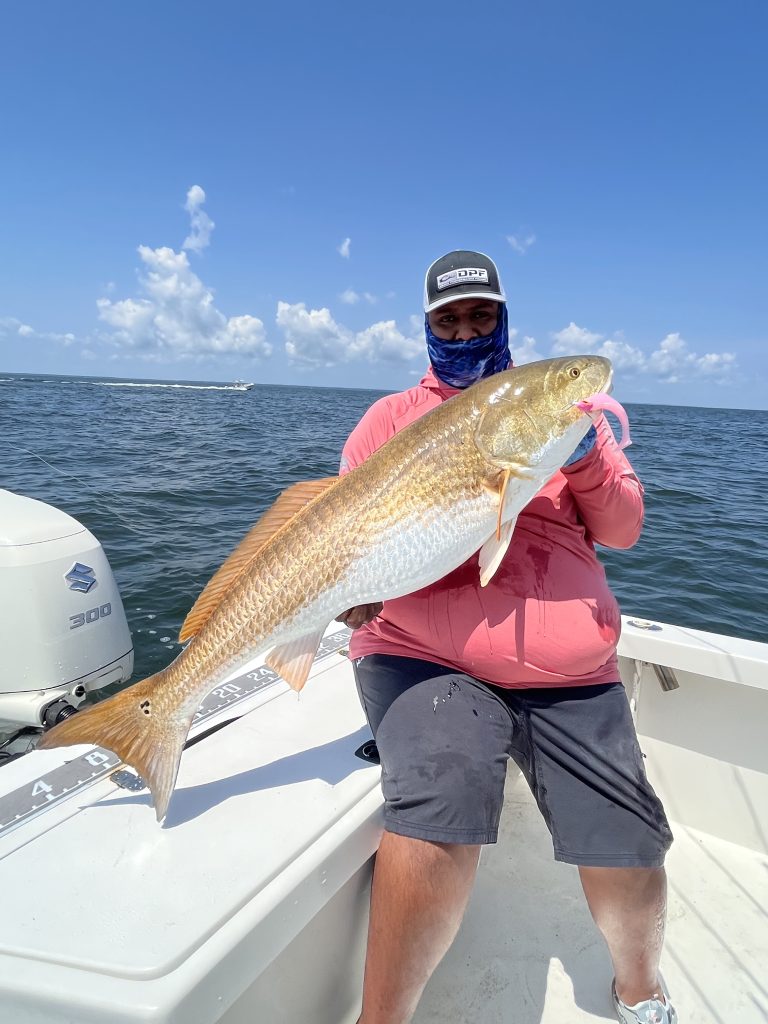
Redfish are another species that most anglers chase during the summer, especially big bull reds. Puppy drum can be found just about anywhere in the lower Bay, from marshy shorelines to deep-water reefs. Most range from 12 to 19 inches long and can be caught with a variety of techniques, from bait on a bottom rig to casting weedless-rigged lures. A peeler crab on a bottom rig is one of the best baits to use, and a small 3- to 4-inch paddletail on a jighead is a skinny-water fisherman’s favorite.
Big bull reds can be found around the channel edges, shoals, and flats throughout most of Chesapeake Bay. Large schools of reds hold in the Virginia area from the Bay Bridge Tunnel to the shoal areas around it. They feed on a variety of forage, including but not limited to large crabs, bunker, shrimp, and small croaker. Jigging around pilings with 1.5- to 3-ounce jigheads paired with 6- to 7-inch soft plastics is one of the more popular ways to catch trophy drum. Most anglers opt for the Z-Man DieZel Minnowz, which can also be used when casting to schools of bull reds in open water.
Chunking or live-lining croakers mixed with hard-shell blue crabs is another way to catch bull reds, especially when they are under heavy fishing pressure. Like cobia, these larger drum take a little longer to reach southern Maryland waters around the Target Ship to the Solomons area. They arrive around late July to the first week of August and can be found in massive schools, swimming just beneath the surface. When they form these schools, which is a spectacle, it’s easy to spot them because of the color change in the water.