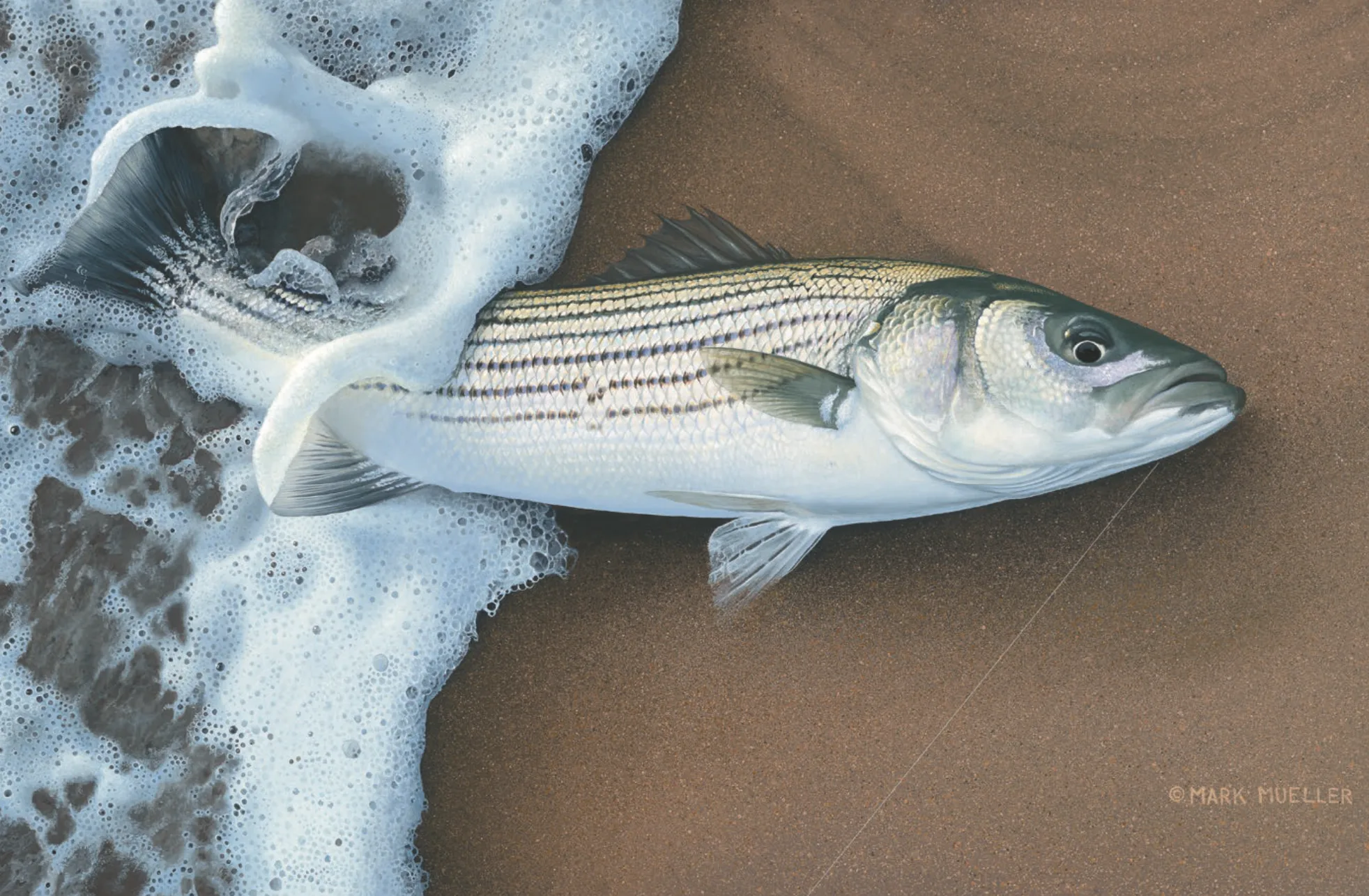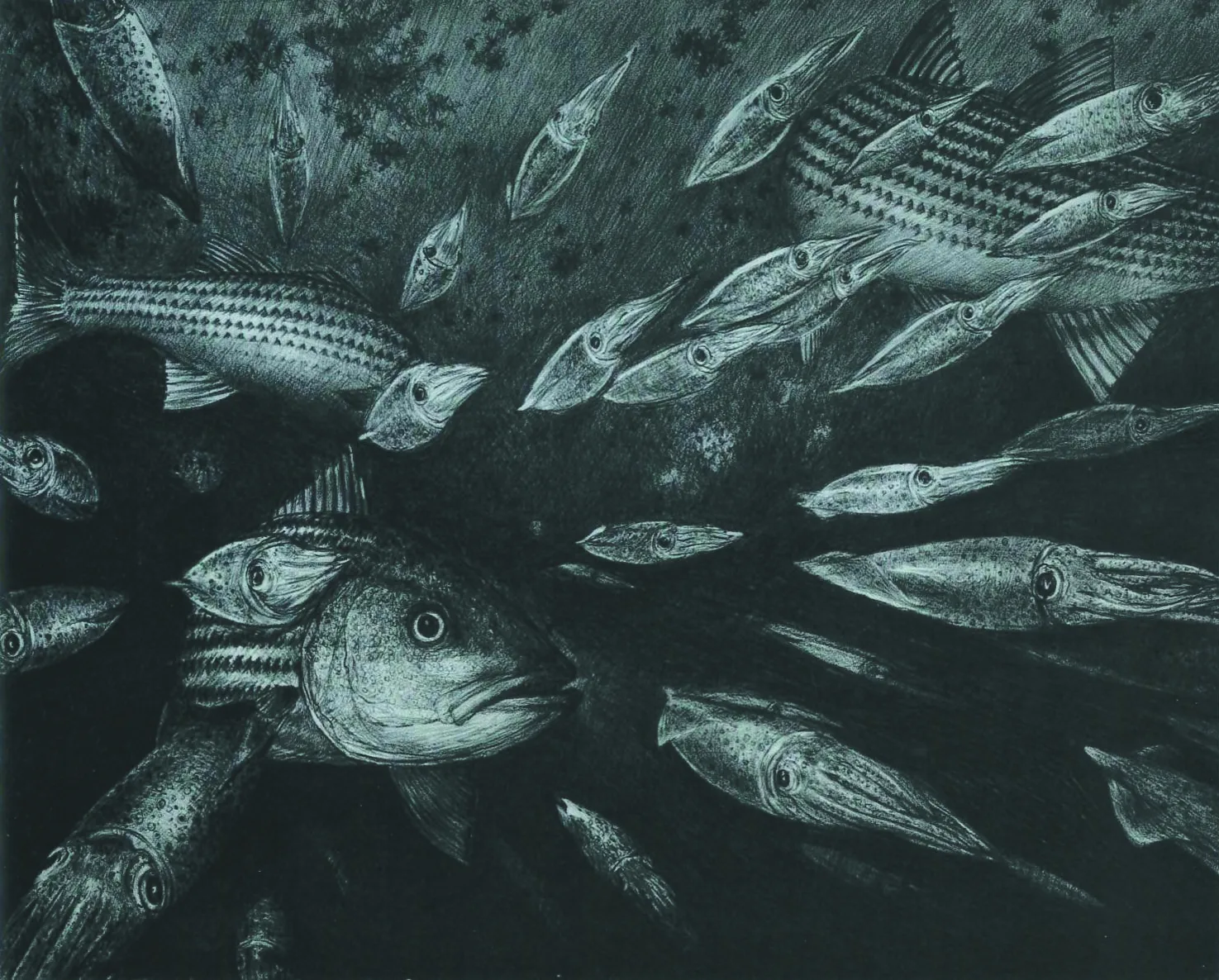

“Whether I’m painting or drawing, I always do the eyes first,” Joanne Gallant said. “If I don’t get the eyes right, I might as well toss it and start from scratch.” The New Hampshire-based artist learned, through trial and error, that it’s easier to build around a strong base than it is to paint an entire fish or wild animal only to struggle with the eyes at the end. Many portrait artists—especially those who lean into realism, like Gallant—agree that a subject’s eyes can make or break an entire work of art. They set the tone for the piece and give it a unique identity. Similarly, Gallant’s identity as an artist is centered around a family heritage of hunting, trapping, and fishing in New England.
Gallant grew up in Rowley, Massachusetts, just a few miles from the fabled striper fishing grounds of Plum Island. Her great-great-grandfather captained a schooner out of Gloucester to fish for Atlantic halibut off the coast of Iceland. Her grandfather was a fisherman and lobsterman out of the same port, and her father was an avid fisherman, trapper, and hunter. Her family made annual trips to a sporting camp just north of Sugarloaf Mountain in Maine, where she learned to fly cast. This early introduction to the mountains and a maritime lifestyle heavily influenced her creative expression and how she would raise her own children.
A mother to three boys, Gallant had her hands full during their formative years. Her family settled in Ipswich, not far from her hometown, where she worked as a hairdresser for two decades. Raising her sons near the coast afforded them easy access to the nearby marshes and beaches that she enjoyed throughout her childhood. “My husband is a fly fisherman, and he used to take the boys striper fishing a lot,” she said. “I’ve done plenty of striper fishing too, but now we live on a small pond, so I mostly fish for largemouth bass and do some fly fishing for trout on the rivers.”
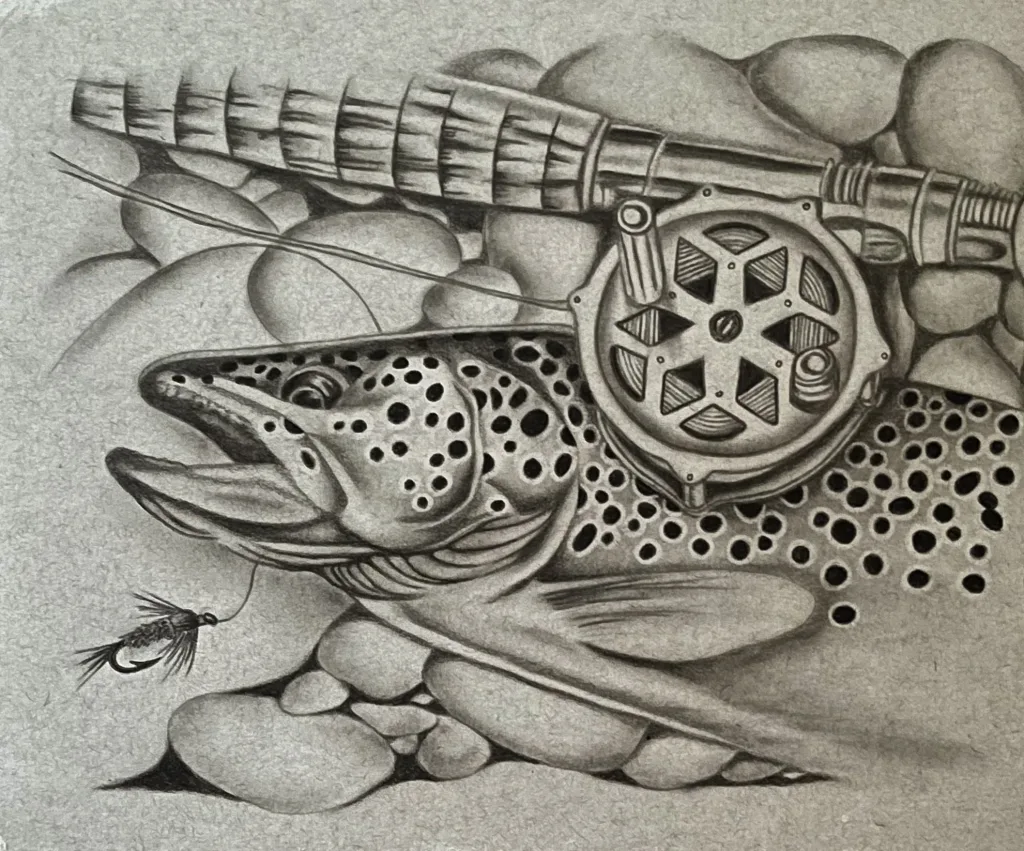
In addition to the bountiful waters in their own backyard, Gallant made a point to continue annual family trips to the same Maine sporting camp she frequented with her father. To this day, she is a member of a land trust that protects the area surrounding the sporting camp. “All three of my boys grew up going there, and that’s where they, too, learned to fly fish,” she said. “I have a deep-rooted passion for fishing, so I tried to instill that passion and environmental stewardship in my boys.” Her son Steve quickly developed intense enthusiasm for the sport and today is an authority on surfcasting, contributing writing to On The Water and Surfcaster’s Journal. “He’s a lot like my father,” she said proudly.
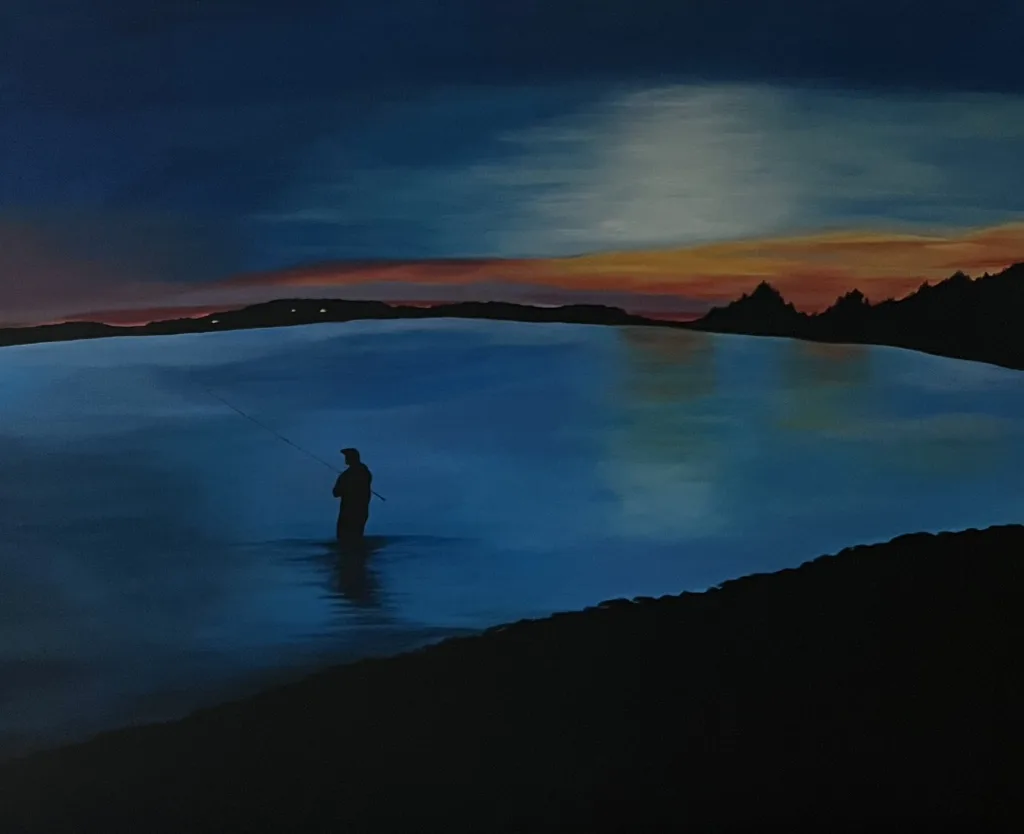
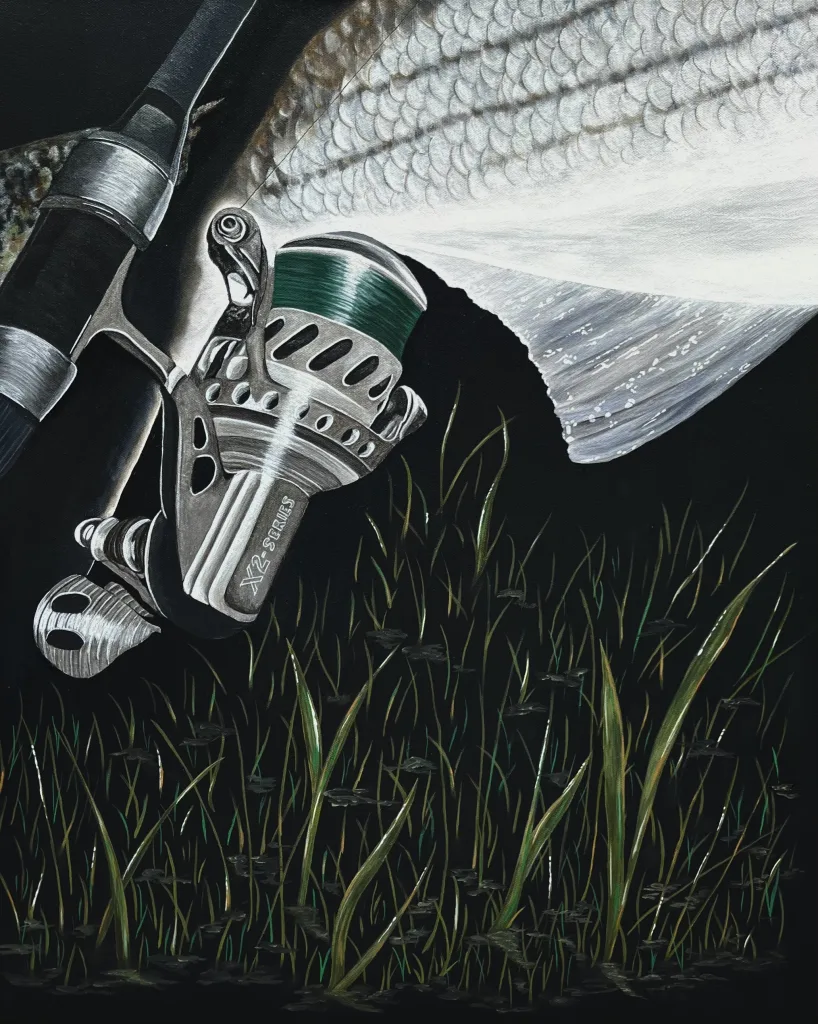
Years later, with her sons out of the house and more time for leisure, Gallant’s obsession with fishing and the outdoors transformed. She exchanged the rod and reel for a paint brush and canvas. She still spends plenty of time on the water with a camera in one hand and a rod in the other. “When I retired six years ago, my husband and I moved from the North Shore of Massachusetts to Conway, New Hampshire, and I tapped into fishing, wildlife, and outdoor painting.” Gallant’s artwork reflects her environment—where she is and where she’s been—as well as her interests and hobbies. “I like to paint based on photographs I take and use them for reference. I only take pictures of things that drive me to create. If I’m not genuinely interested in the subject or topic, I don’t have the motivation to pursue it,” she said.
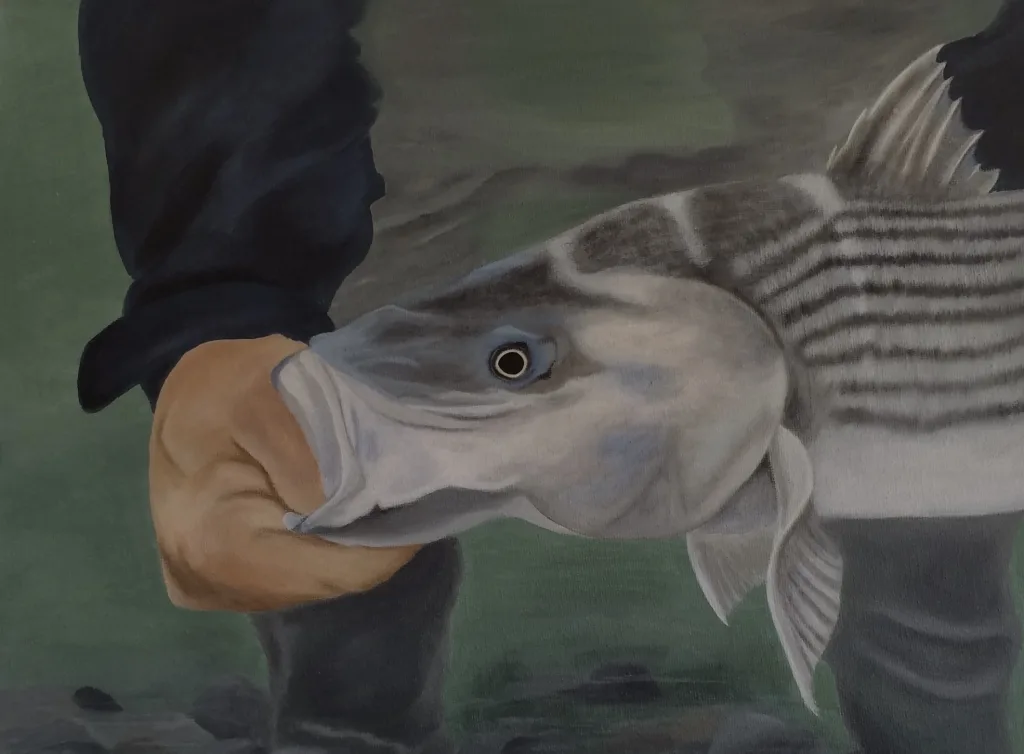
Stepping into this new creative realm was not as simple as picking up a brush and canvas. She initially sought some guidance from other artists, inquiring about different types of paint and which mediums to use for her purposes. She tested her skills through experimentation and quickly developed a style that draws heavily on realism. It didn’t take long for her portraits of fish and wildlife to strike a chord with members of the community in the White Mountains. “The deep affection I have for the sporting camp I grew up visiting, combined with my current surroundings, led me to focus on local fish species and animals like foxes, otters, and owls,” she said. Acute detailing of fins, scales, feathers, and fur became her specialty, and she relies on her camera to capture those fine details so she can better recreate them on the canvas.
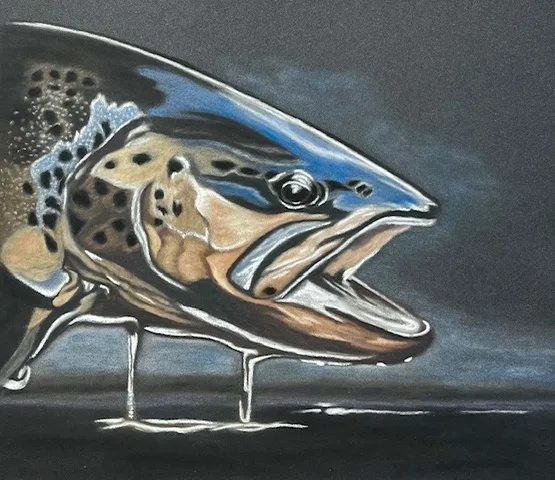
Gallant favors acrylic paint for many of her fish and wildlife portraits. “I like acrylic paint because it has good blending features and I just don’t have the patience to work with oil-based paint, which takes a day to dry before I can revisit it.” To avoid complacency, a few years ago Gallant began working with pastel pencils because she also wanted more color and saturation in her pieces. “I enjoy variety, and I don’t want to get bored by sticking to one approach for too long,” she said. The initial switch from acrylic paint to pastel pencils, though temporary, was not seamless, but Gallant insists that creative hurdles keep her engaged and contribute to her growth as an artist. “I researched different types of pastel pencils and the best paper that would allow me to maintain my style.” The paper she landed on is gritty, which holds the chalkiness of pastel pencils nicely and allows her to easily blend colors to better replicate natural lighting—whether it be the shimmering golden flank of a brown trout, or the lanky silhouette of a great blue heron reflecting off a glassy pond.
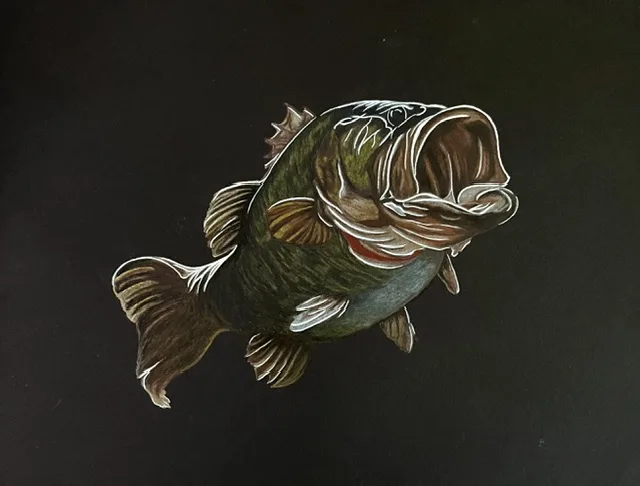
Between her dedication to raising a family and working full-time, Gallant only recently began sharing her paintings and illustrations with the public. “I didn’t put my work out there until I moved to New Hampshire and joined the Mount Washington Valley Arts Association,” she said. “I’ve been a resident artist in their gallery for about three years now. My pastel portraits are currently on display, but they rotate every three months.” In addition to the MWV Arts Association gallery, her work hangs in North Conway’s Sap House Meadery, and she donates some finished pieces to charity events or fundraisers for groups like the Pierce Pond Watershed Trust in Maine. She even occasionally takes on portraits by request. “I do a fair number of pastel portraits of people’s dogs, but I don’t advertise that because I’m not in it for profit. If I make it a job, that takes the fun out of it.”
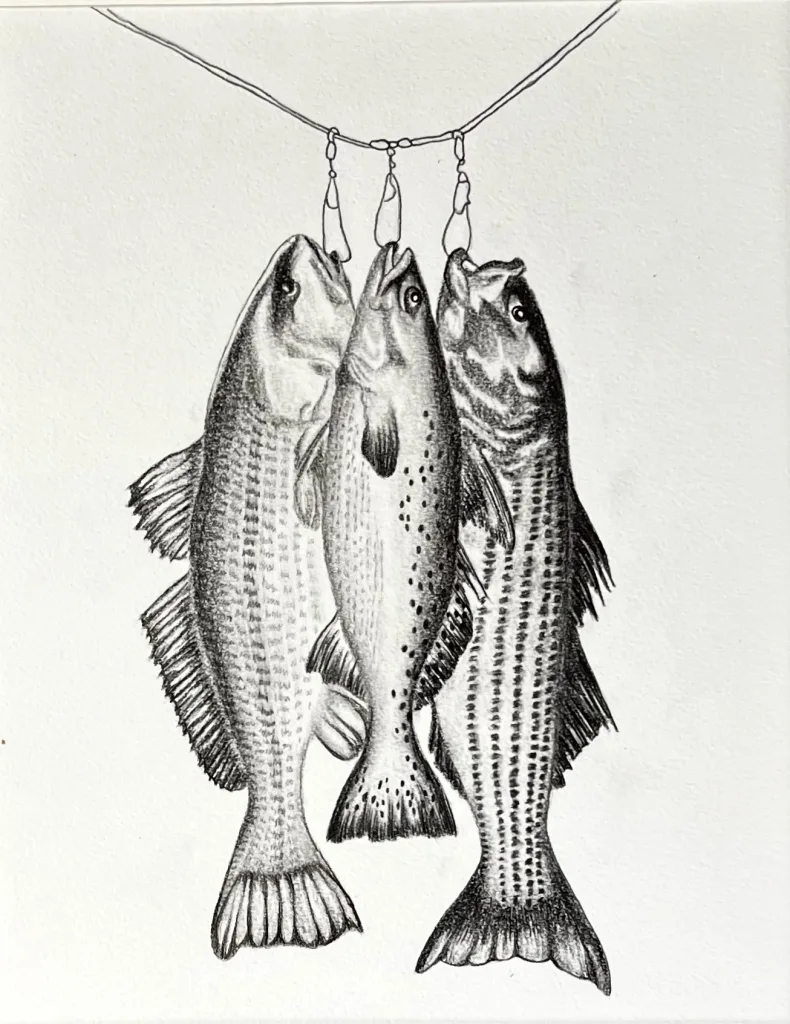
It’s fitting that Gallant’s process always starts in the same place it did when she first picked up a brush: the eyes. If she gets that right, everything else can be built around them. Her own eyes and perspectives were shaped by the North Shore’s waters and the woods of Maine, and the generations of fishermen in her family. Now, retired and unhurried, she channels that inherited passion for fishing and the outdoors through paint and pastel not for a paycheck, but for the love of the game.
Explore Joanne Gallant’s work on Instagram @joannemgallant and in the Mount Washington Valley Arts Association Gallery (@mwvarts).
READ MORE