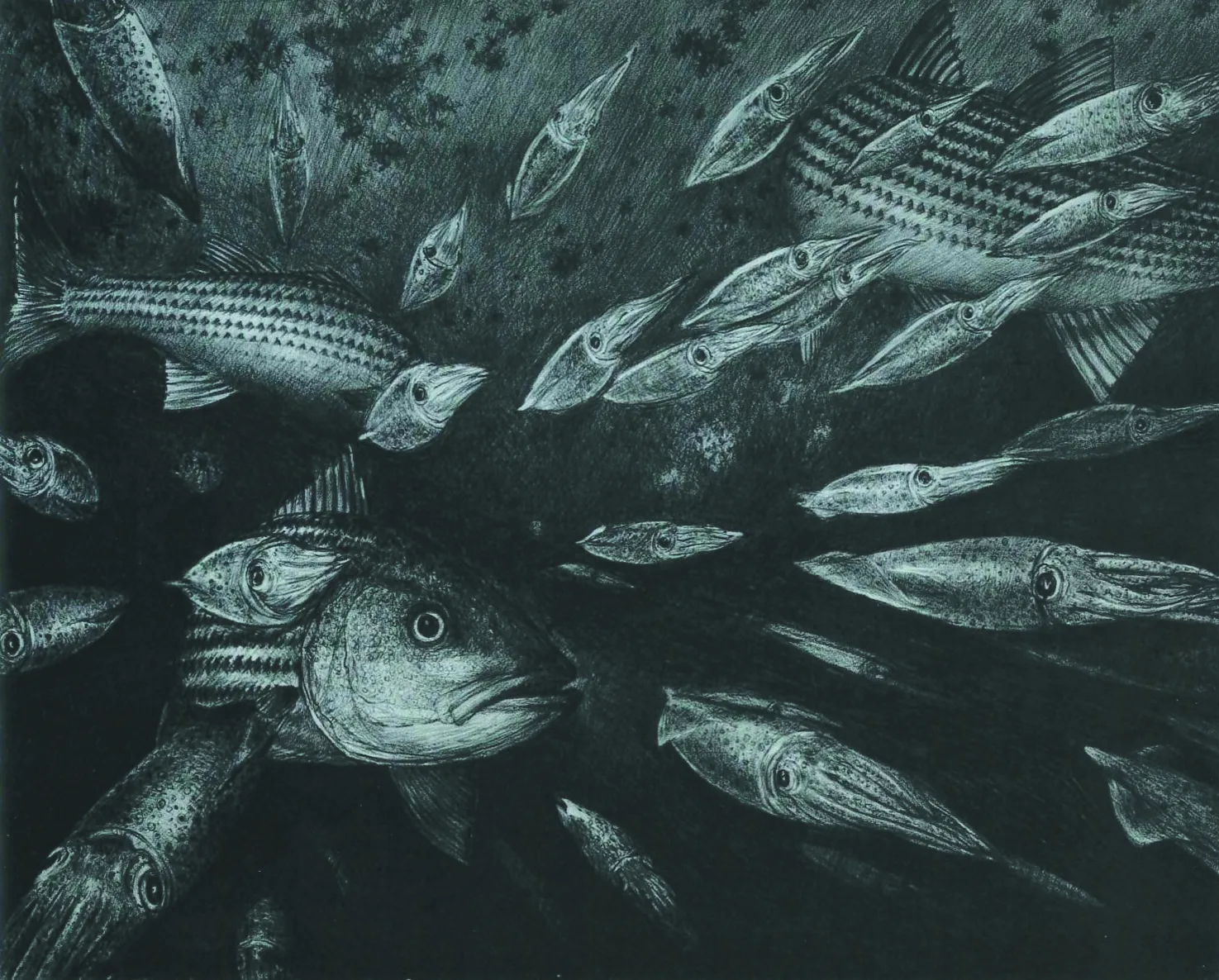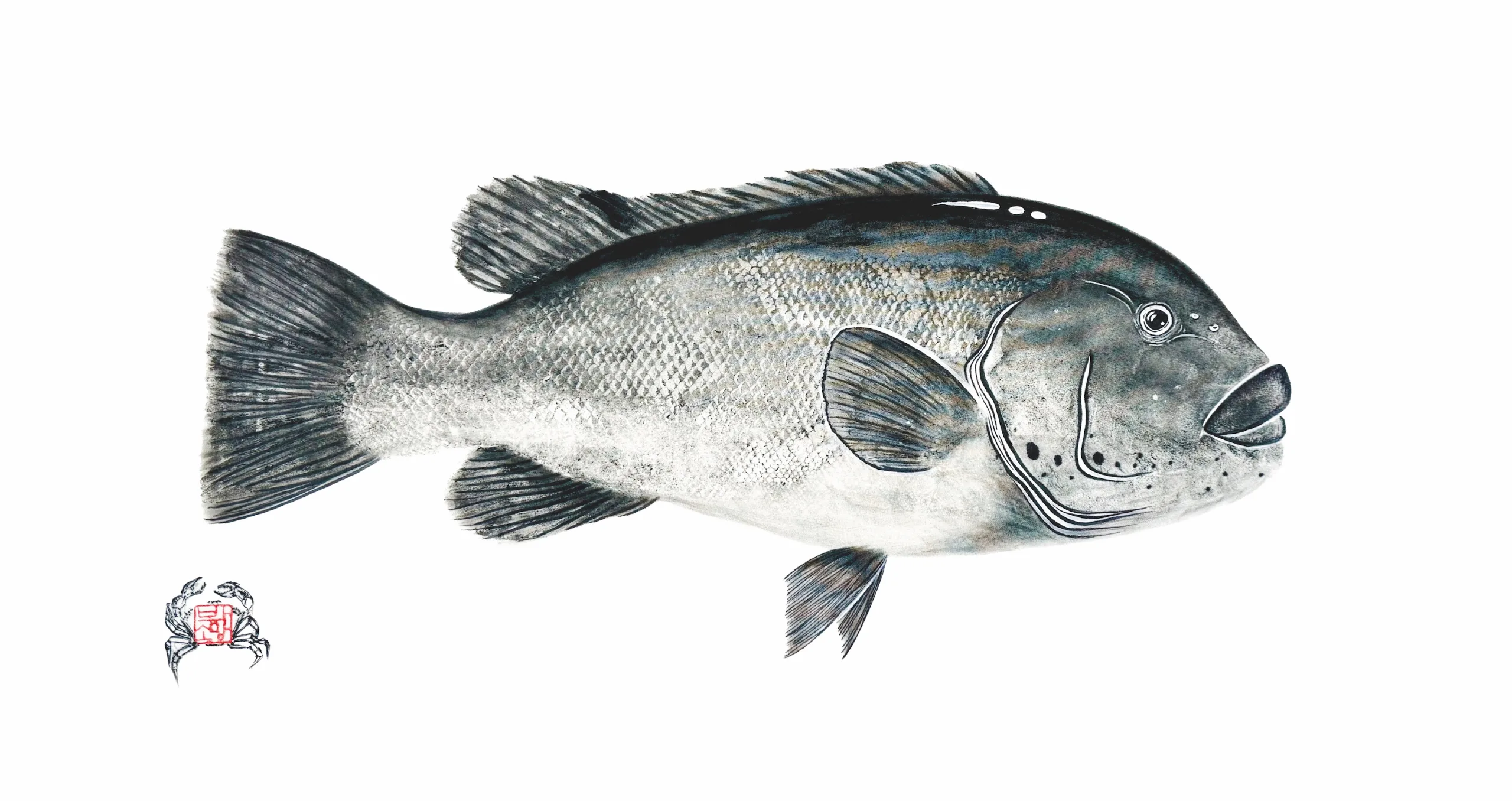

It struck me like a lightning bolt at the Saltwater Fishing Expo this past winter—a gleaming, acrylic painting of a shimmering striped bass lying in the surf wash of a lapping wave. The purple hues, the shining sunlight reflecting off its scales, the white foam of the receding wave captured with absolute precision. I had to know who painted this masterpiece, and that was when I met artist Mark Mueller.

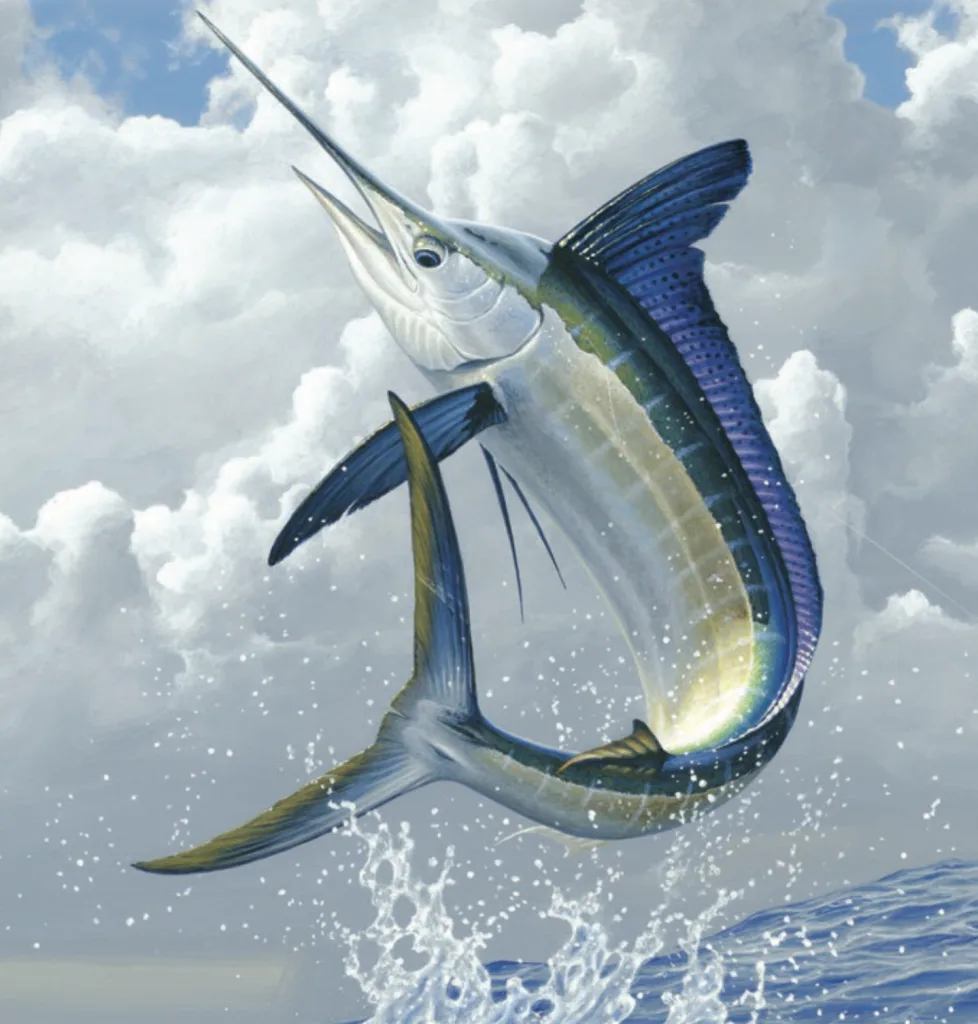
In Hamburg, New Jersey, in the state’s northwestern sprawling glacial hillsides, Mark Mueller focuses on outdoor scenes of native flora and fauna, while carving out a niche in marine art. “I’ve always painted wildlife, but it was only about ten years ago when I got into saltwater fishes,” said Mueller. “I caught my first striper when I was fifteen years old with my brother Bill off Sandy Hook in the 80s, and even though marlin was my ‘gateway’ fish into painting, the striped bass is by far my favorite to paint. It’s difficult to capture all the nuances of the scales and stripes, to get the fins exact with all the subtleties and coloring you notice when you really dive deep into the fish.” His ability to encapsulate that beauty is why that striped bass painting I first saw at the Expo is hanging on my wall right now.
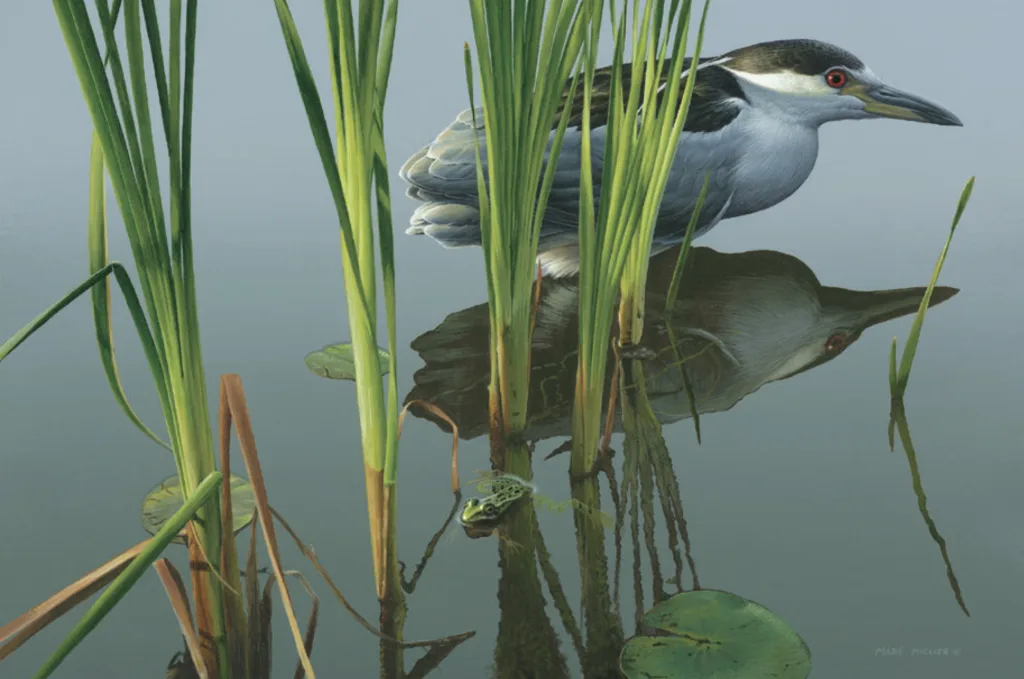
A Syracuse graduate, Mueller majored in Illustration and was mesmerized by the work of celebrated Canadian wildlife painter Robert Bateman. “When I was a senior, I walked into a gallery and saw a wood-carved trout. I was blown away by its beauty. Six months later at twenty-three, I painted my first brown trout and put it at the Cardinal Art Gallery, hanging next to Robert Bateman originals. It sold immediately.”
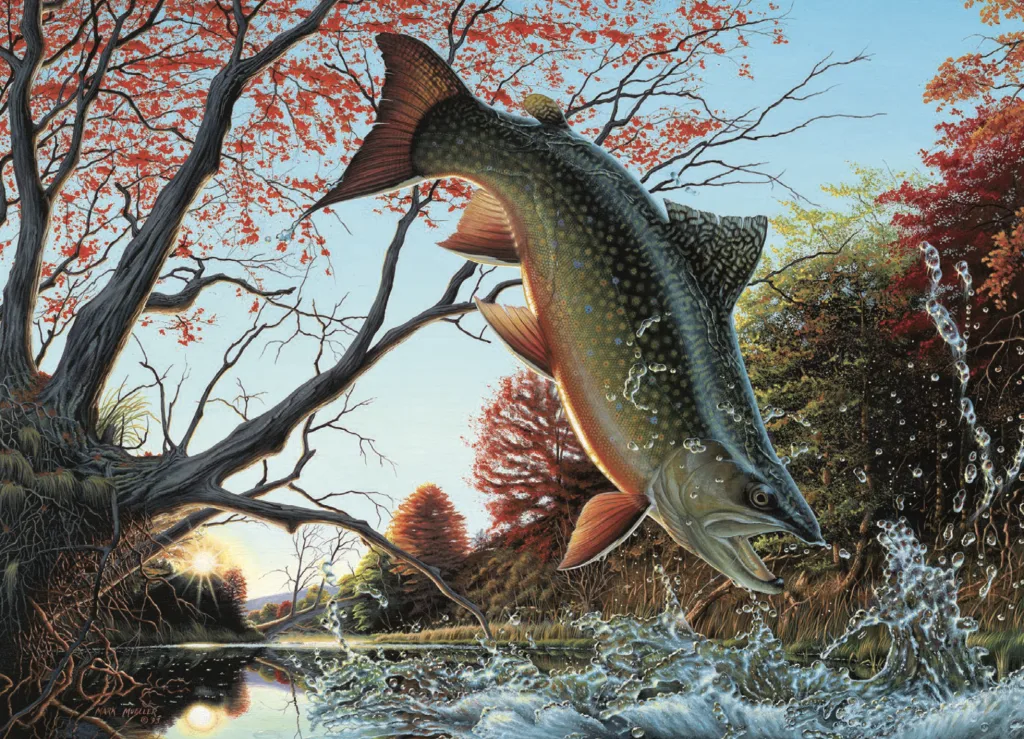
Mueller’s medium is acrylic paints on Masonite, a rigid, ultra-smooth alternative to stretched canvas. He believes the smoother surface helps render finer details of a specimen. “I take a lot of photos and videos when I’m fishing, holding the camera at different angles to notice not only the specimen but the environment. Sky reflects the purple hues at certain angles, background foam, lighting of the environment. After I look at the images, I make a model out of clay to mold it in any direction to establish the curves, angles. That opens a lot of doors for composition of a piece, of how I want to approach its dynamics.”
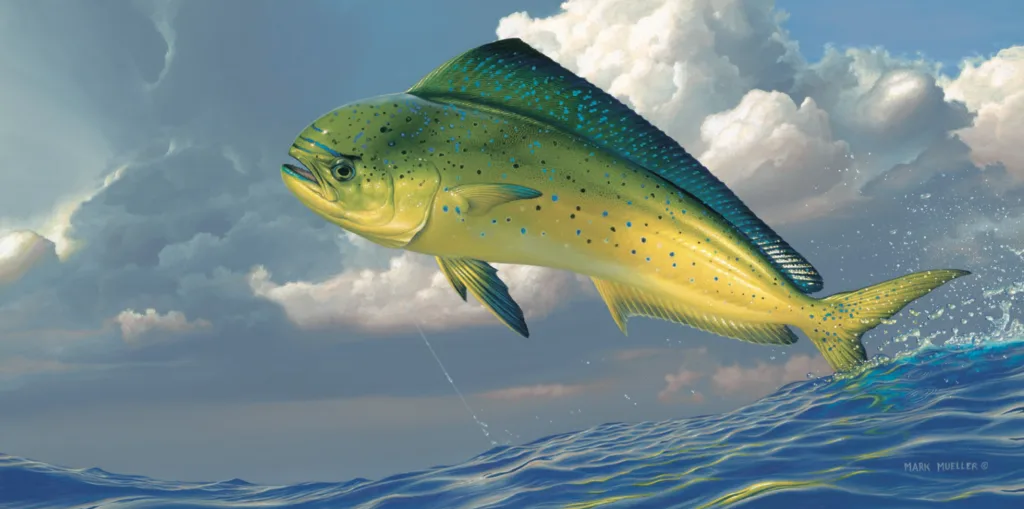
Regarding challenging species, Mueller says, “It’s the ‘ugly’ fish that are challenging to paint, like fluke that are just mainly brownish or tautog with all the too-tiny details. I feel like I’m just getting started covering the marine fisheries. My next goals are to paint a tarpon and a false albacore.”
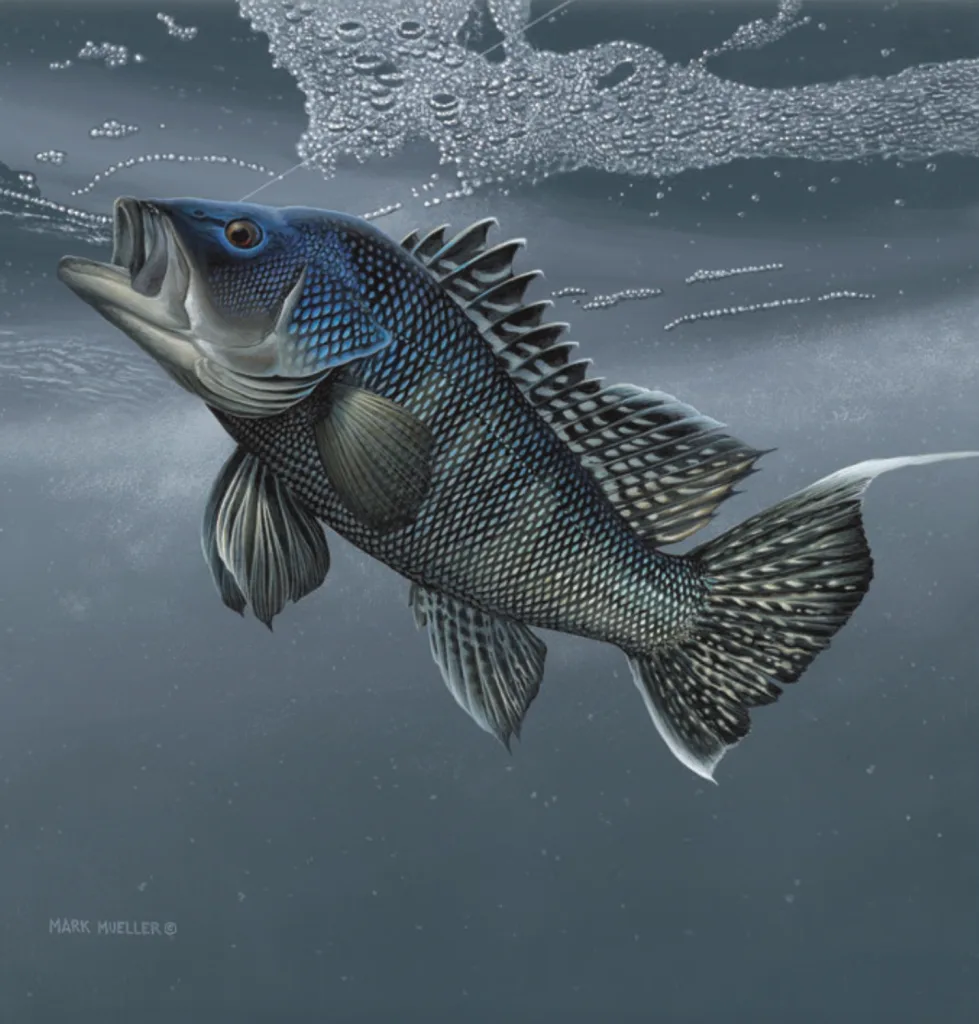
For aspiring artists, Mueller offers this advice: “Paint as often as you can and I mean like every single day. Anything you paint even, if it isn’t a masterpiece, is a learning experience to feel out your style and vision. Try not to look at other people’s artwork to work off for your vision. Take your own reference photos to paint off, so it’s truly an original scope. Most of all, stick with it. Whether or not you end up selling your artwork isn’t as important as the joy it brings you.”
» Find Mark Mueller’s wildlife art at MarkMuellerArt.com
READ MORE