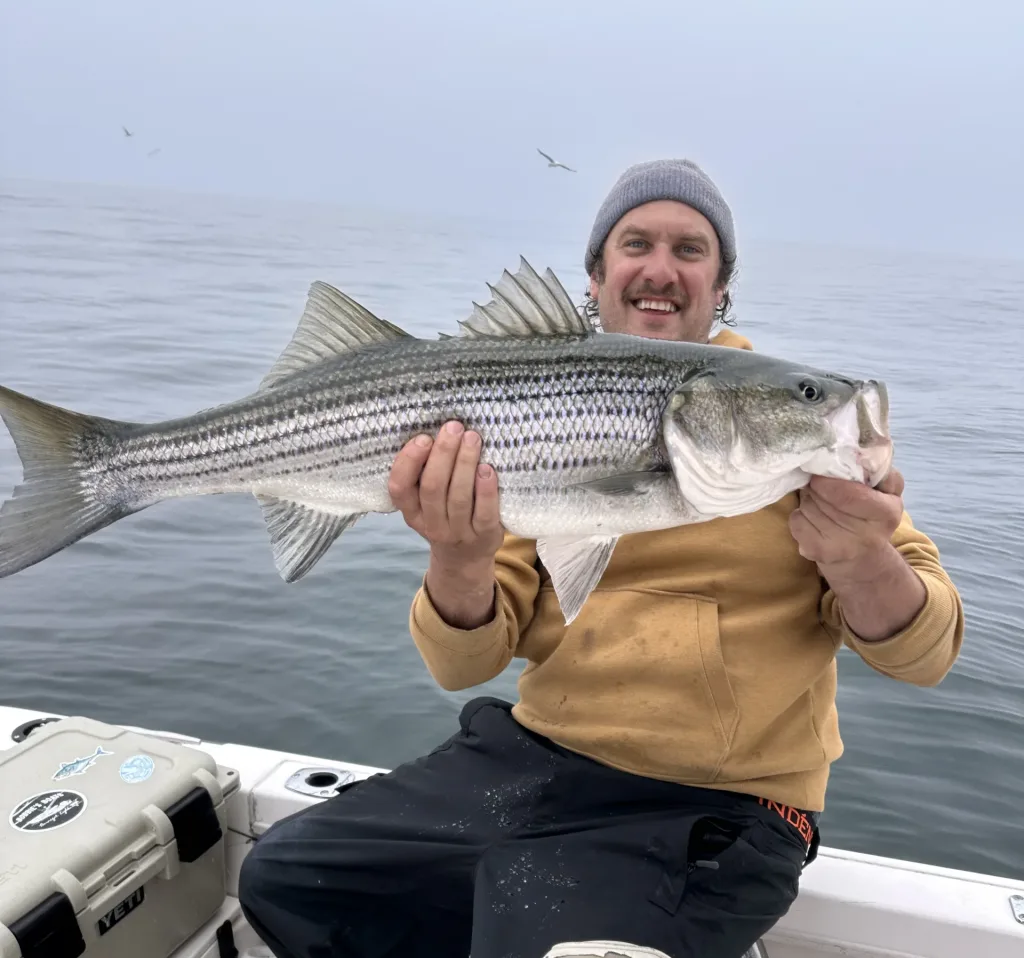
“They’re here, I know it,” Brad Leone says, tapping two red smudges on his Simrad as we bob up and down in a rip near Napatree Point. It’s mid-May, but the weather doesn’t seem to know it yet. A spring cold front has bathed the Connecticut coastline in mist, and with no other boats on the horizon, we drift in silence.
For the past hour, Brad has scoured Fishers Island Sound in search of migratory striped bass. Determined to not go home empty-handed, he checks his charts. “We can stay here, or hit the Pawcatuck River,” Brad mutters. “Or try a few spots on the way to lunch.” He adjusts his trademark black beanie and leans over the helm like a preacher about to deliver a sermon. “Pawcatuck River, let’s do it.”
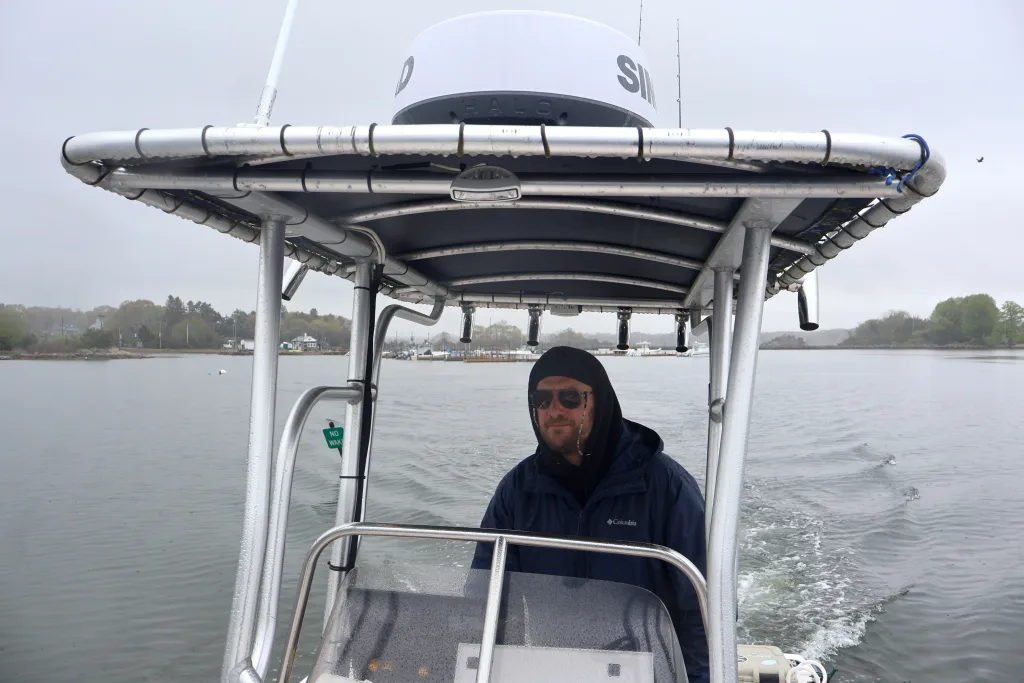
Brad jams down the throttle of his Grady-White, “The largest 18-foot vessel on the sea,” as he describes it, and we shoot off into the gloom.
Leone prepares to punch it into Long Island Sound in “the largest 18-foot vessel on the sea.”
If his name sounds familiar, it’s because chef Brad Leone has been an internet staple for nearly a decade. He first stepped into the limelight at Condé Nast’s Bon Appétit, where he evangelized on the bubbling world of fermentation—think kimchi, kombucha, and, of course, sauerkraut—and gained a following thanks to his irreverent charm and everyman approach to cooking. Today, Brad stars in two self-produced series on his YouTube channel, Makin’ It and Local Legends, as well as his podcast, Lay It On. He has also authored a New York Times bestselling cookbook, Field Notes for Food Adventure, which offers a variety of New England-inspired recipes.
More importantly, Brad Leone loves fish.
“I was fortunate to grow up in the woods, and it was my dad who introduced me to fishing and hunting,” Brad says. “He was not someone you’d picture from New Jersey, though. The dude was in cut-off jeans constantly. He looked like he was from Louisiana or Florida.”
Long before Brad landed in a professional kitchen, he got his start at home, making venison sausage and grilling flounder with his dad. It was here that Brad developed a taste for lesser-known fare. “Frog is delicious,” Brad says. “But snapping turtle soup is phenomenal.”
After moving on from Bon Appétit in 2022, Brad moved his family from New York City to Connecticut. He promptly bought a boat and fishing tackle, and converted his two sons into dedicated fishermen. “My dad used to tell me, ‘If you’re going to kill something, we are going to eat it,’” Brad says. “But the older I get, the more I realize that I love watching my boys catch fish more than I love to keep them. I think I have matured as a fisherman.”
Leone has been chasing migratory striped bass in eastern Long Island Sound since 2022, when he and his family made the move from New York City to Connecticut.
Being both a chef and an angler, Brad has a unique perspective on the relationship between sustainability and recreation: “You go to parts of Asia or South America, and they’ve been eating tiny baitfish forever,” Brad says. “There’s a reason why everything in the ocean wants to eat an anchovy.”
While Brad is no stranger to harvesting gamefish such as striped bass, bluefish, and tuna, he recognizes that Northeast fisheries are under increasing pressure. “A lot of these overlooked species are more abundant, so there’s lower stakes,” Brad says. “Being able to catch and cook bait can be a lot more approachable.”
So far, Brad’s favorite recipes include spicy tomato-braised squid and mackerel roasted in an outdoor pizza oven, but he is always on the lookout for his next experiment.
High on his list of new species to tackle is menhaden, which Brad hopes to turn into garum, the fermented fish sauce that served as a staple condiment in ancient Rome. He’s also turned his sights on various back-bay crustaceans. “Imagine how good fried grass shrimp would be on a salad,” Brad says.
While Leone has harvested his share of gamefish, like striped bass and tuna, these days he is focused on exploring more sustainable and accessible seafood options.
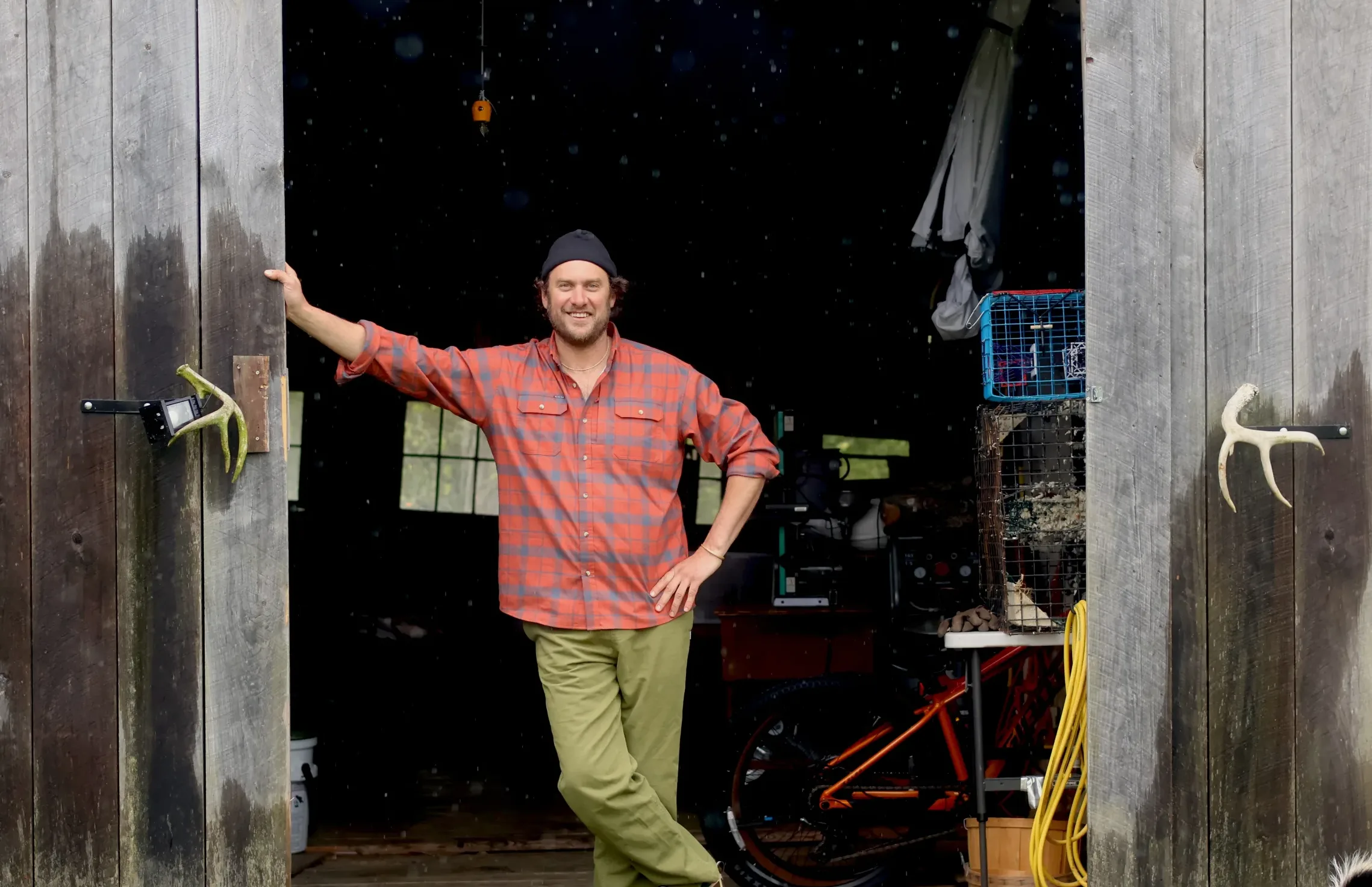
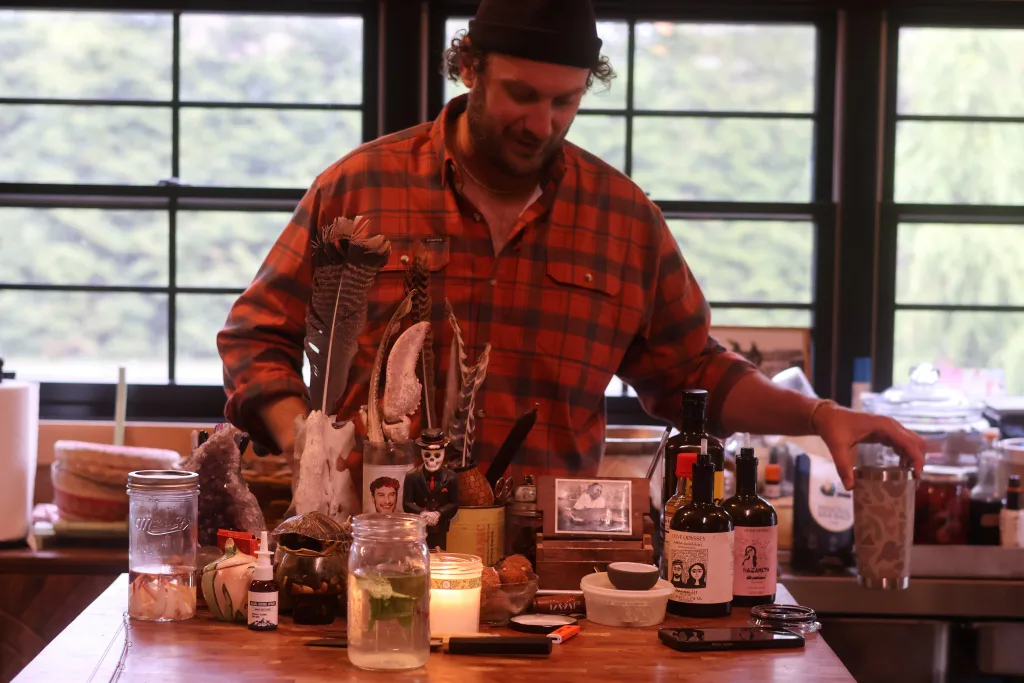
Most of these ideas come to fruition in Brad’s home studio, a converted garage at the heart of his property. It has everything a mad culinary scientist would need—a walk-in freezer, countless jars bubbling with fermented fruits and vegetables, and clay pots brimming with herbs. At the center of the space is his island counter and “Ingredient Shrine,” a smattering of keepsakes and vials of spices collected from Brad’s travels. Before starting any new project, he is careful to pay homage to “the Lord of Death,” a small wooden figurine gifted to him by a fan.
At the heart of Leone’s home studio is the island counter and his “Ingredient Shrine”, which includes spices, oils, and trinkets from his travels to different parts of the world.
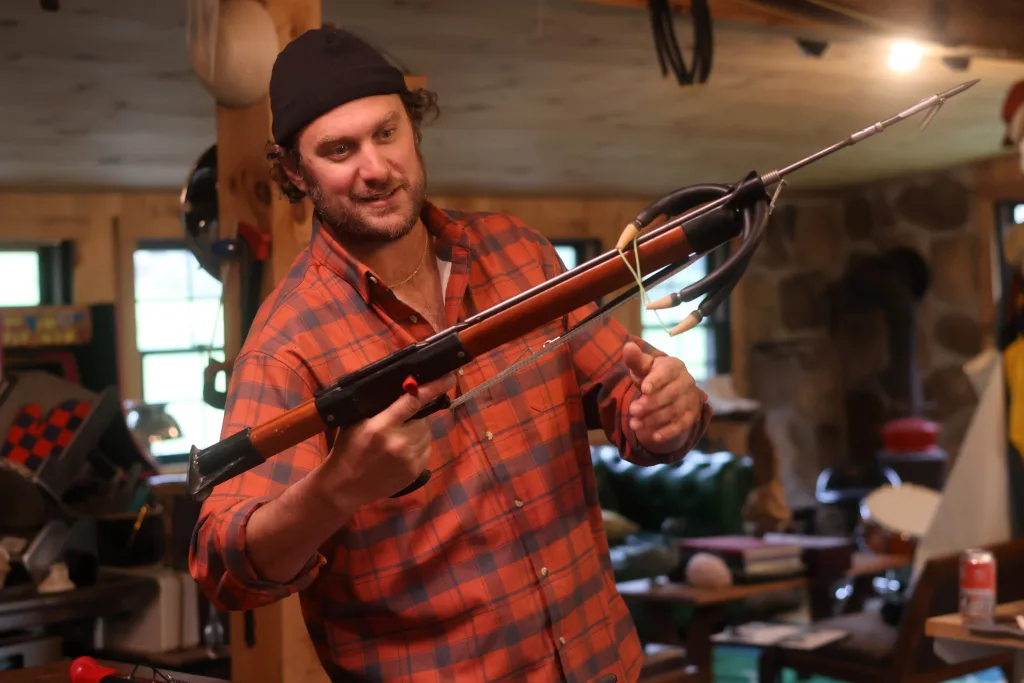
Beyond his affection for niche ingredients and knickknacks, Brad quite literally has a barnful of gear he is eager to use. Fly rods, tube-and-worm rigs, three-way rigs, giant Penn reels, spearguns—you name it, he has it. “Some of this stuff I’ve had since I was a kid, other stuff has been sent to me,” Brad says, holding up a dusty rod case. “One day I’ll use everything in here.”
A fisherman to his core, Leone boasts an impressive collection of spearguns, fly rods, antique reels and tackle that he has accumulated since his formative years.
Even though Brad has steered away from harvesting gamefish, he hasn’t lost the itch for catch-and-release fishing. “It’s my church out there,” Brad says, and like any true believer, he never passes up an opportunity to get on the water. Even when the weather won’t cooperate.
Dishes for Fishermen
For anglers looking to get creative in the kitchen, flip through Brad Leone’s Field Notes for Food Adventure—a collection of delicious recipes with ingredients that reflect the spirit (and the seasons) of the Northeast. Here’s a taste of what lies between the covers of the New York Times Bestseller.
Chapter 3 – Eat More Squid
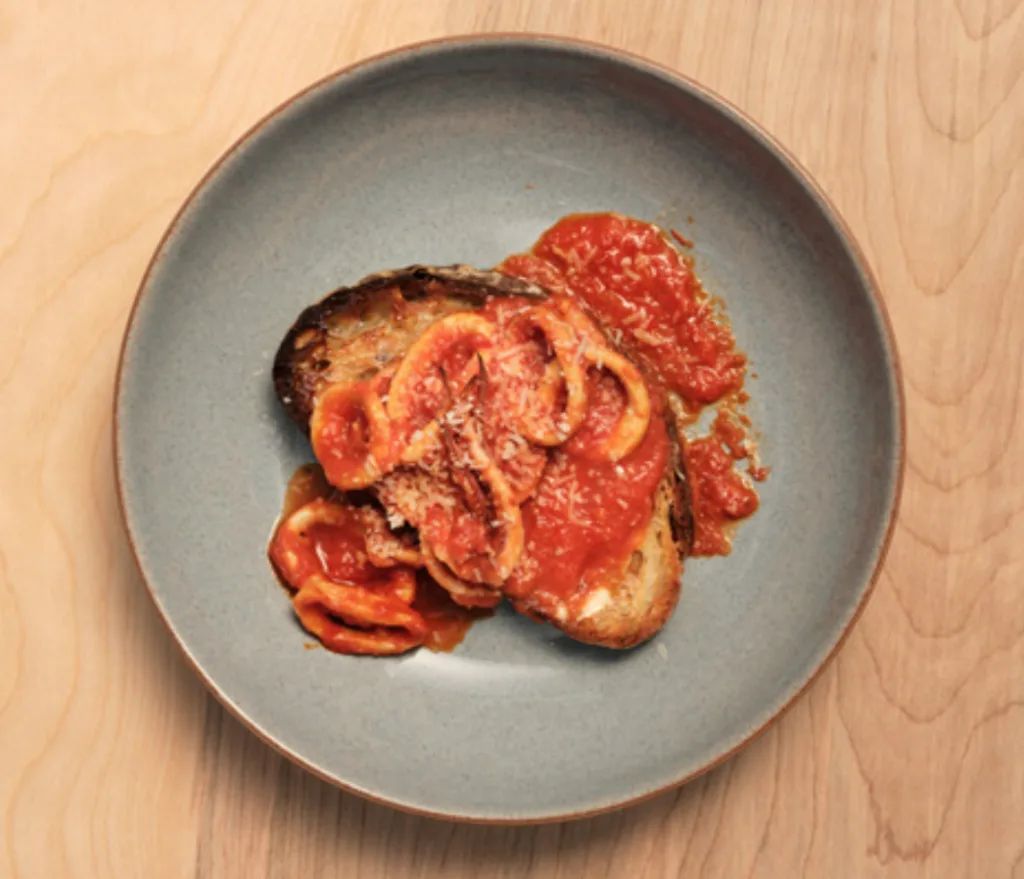
Recipe: Squid Toast (p. 84)
Serves 4
(Photo by Pat O’Malley via Field Notes for Food Adventure)
To avoid a rubbery texture, squid is usually cooked hot and fast, or low and slow. I crave it both ways. This recipe represents low-and-slow perfection. Think of the sauce like a squid Fra Diavolo—spicy and tomatoey—with squid that’s tender but not mushy, just super soft. Braised this way, it doesn’t taste like the ocean, but rather acquires a richer, deeper flavor that goes so well with the tomato sauce. It’s great on grits, pasta, or toast, as it’s served here. And I don’t care what the Italians say, go ahead and put some Parmesan on top. I do it all the time.
Ingredients:
1 small shallot, minced
1/4 cup extra-virgin olive oil
3 garlic cloves, crushed, peeled, and chopped
1 dried chile de arbol, sliced
3 Tbsps. white miso
1/4 cup white wine
1 (28-ounce) can crushed tomatoes
2 pounds squid, tubes and tentacles, rinsed, tubes sliced into rings
3 Tbsps. salted butter, plus more for the bread
Toasted bread
Grated Parmesan, to taste
Freshly ground black pepper, to taste
In a medium saucepan, sweat the shallot in the oil over medium heat for a few minutes. Add the garlic, chile, miso, and wine and let simmer for about 2 minutes. Stir in the tomatoes and allow to simmer on low for about 15 minutes, just to let the tomatoes get juicy and break down a little.
Add the squid and butter to the sauce. Cook the squid, stirring often, until it is white throughout and perfectly tender, about 45 minutes.
Lightly butter some nice toasted bread of choice and spoon the squid and some sauce over each piece. Cover with grated Parmesan and pepper.
Chapter 10 – Whatever Fish
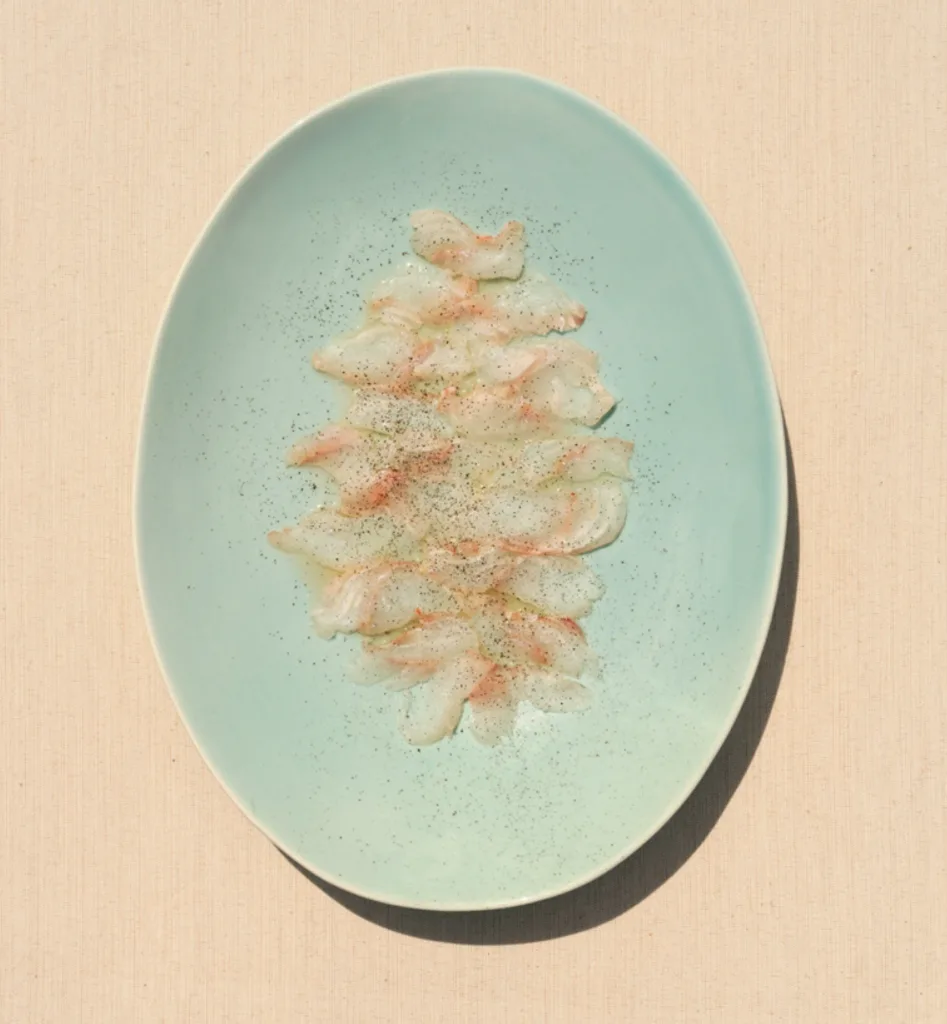
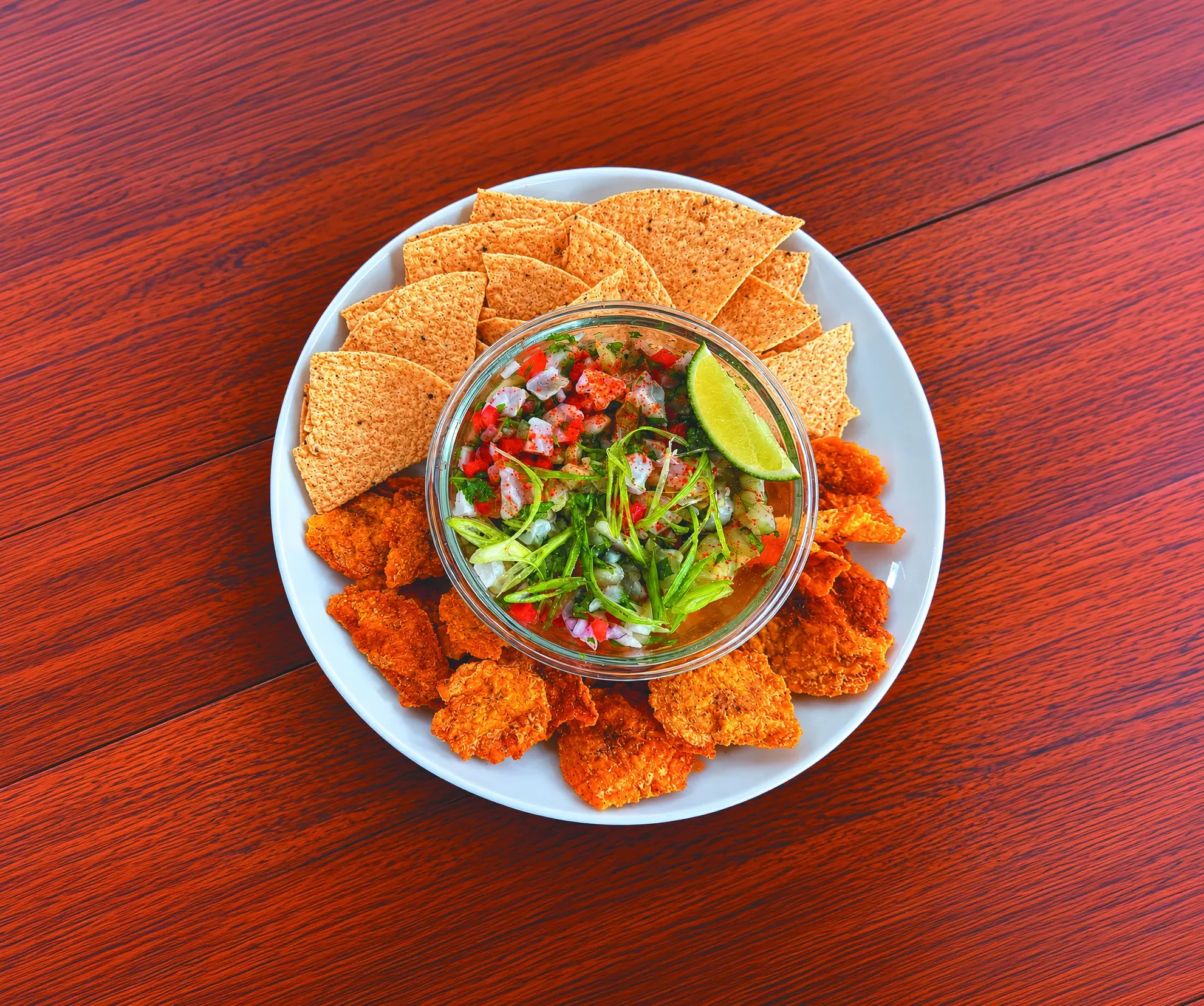
Recipe: Crudo (p. 267)
4 to 6 servings
(Photo by Pat O’Malley via Field Notes for Food Adventure)
If you’re in a place where you’ve got great access to fresh fish, I’ve got you covered with this crudo. Easy to make, always a crowd-pleaser. I’ve never made this for someone who didn’t like it. It’s easy to adjust to different tastes and comes together quickly.
Ingredients:
8 ounces sushi-grade fish fillet, such as sea bass, fluke, or any fish you can consume raw
¼ cup white shoyu
2 Tbsps. pink grapefruit juice
2 Tbsps. yuzu juice, fresh or bottled (Note: If you can’t find yuzu juice, add an additional 2 tablespoons of one of the other citrus juices instead.)
1 Tbsp. navel orange juice
1 Tbsp. lime juice
1 Tbsp. finely grated fresh ginger
2 to 3 Tbsps. nice extra-virgin olive oil
½ tsp. powdered toasted nori
½ tsp. powdered dried dulse
Kosher salt, for serving
Whether you bought or caught the fish, trim any undesirable or tough bits from the fillet. Keep your fish in a cold fridge or place it in the freezer for a couple minutes to firm it up and allow for easy slicing.
Start to slice the fish against the grain like you would red meat. Using your sharpest and longest knife, use the entire length of the blade from the heel (closest part to the handle) to the tip to slice the fish, not chop it. You want clean cuts that keep the fish beautiful and intact. How thin or thick you want to cut is a personal preference and also depends on the species. As you work, lay the slices out on a pre-chilled platter; I like to leave a little space between each piece.
Mix together the shoyu and all of the juices in a small bowl. Mix in the ginger. You don’t need to use all the mixture if you don’t want, but pour the juices around the sliced fish. Drizzle the best olive oil you can over the citrus and fish.
Blend the dried seaweeds on high in a spice grinder until they become a fine powder. I place the powder in a fine strainer and tap over the crudo platter, with a sprinkle of salt, to dust as a tasty and healthy garnish.
Eat right away, or let sit in the fridge for a few minutes to let the citrus juices work some magic with the fish. If you let it sit too long it’s not a problem, the fish just becomes more of a ceviche than a crudo. Depending on the fish and my mood, I might do that on purpose!
By the time we reached River Bend Cemetery in Westerly, the mist has transitioned into a steady rain, and our hands ache from casting. We had snaked our way through Little Narragansett Bay and up into the Pawcatuck River, keeping our eyes peeled for bass. Still no luck. Despite the skunk, Brad’s spirits remain high. “I’m hungry,” he says over the hum of the engine. “Let’s get some chowder.”
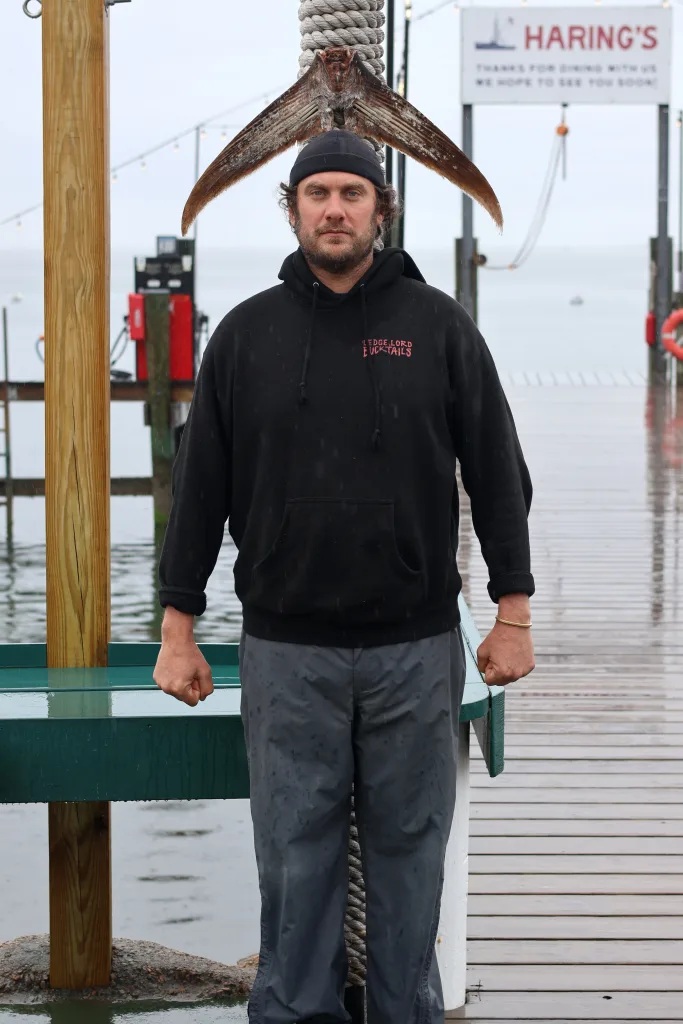
Once it became apparent that the fish were not biting, Leone and the author head in to do some eating of their own at Haring’s Noank.
We decide to get lunch in Noank, a coastal town wreathed by piers and fishing cottages on a hill between Stonington and Groton. Shrouded in mist, it rises against the horizon like a giant dollop of cream, and waiting on the nearest dock for us is Chris Vanasse, head chef and partner at Haring’s Noank.
“You boys picked a good day for it,” Chris calls out as we pulled into a slip. “How’d you do?”
“Nothing,” Brad replies with a smile. “Got any chowder?”
“Let’s go look,” Chris laughs.
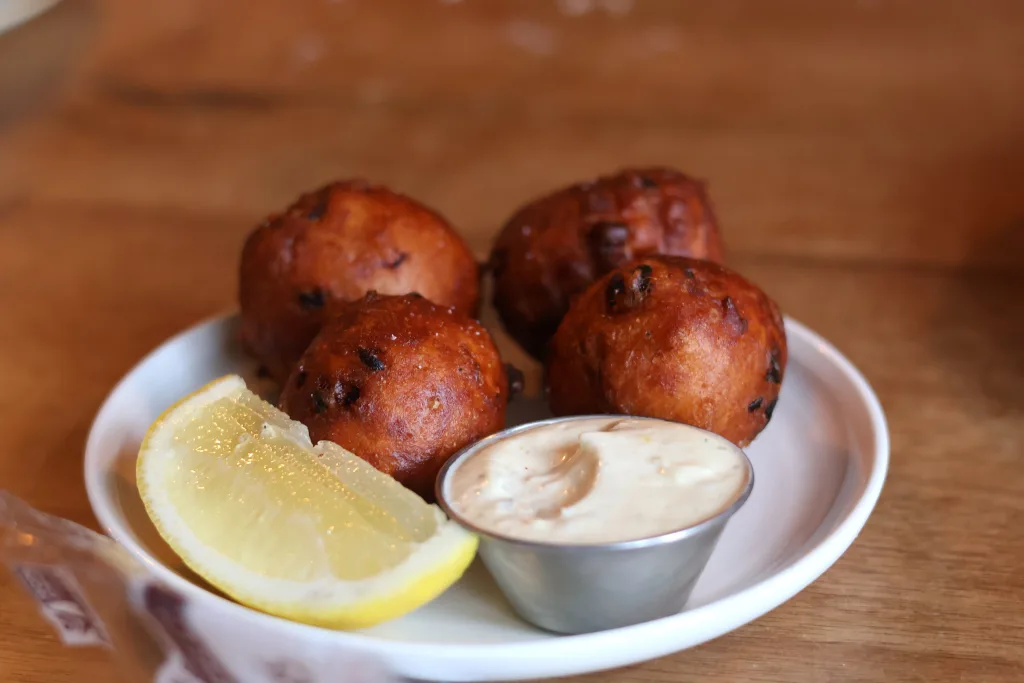
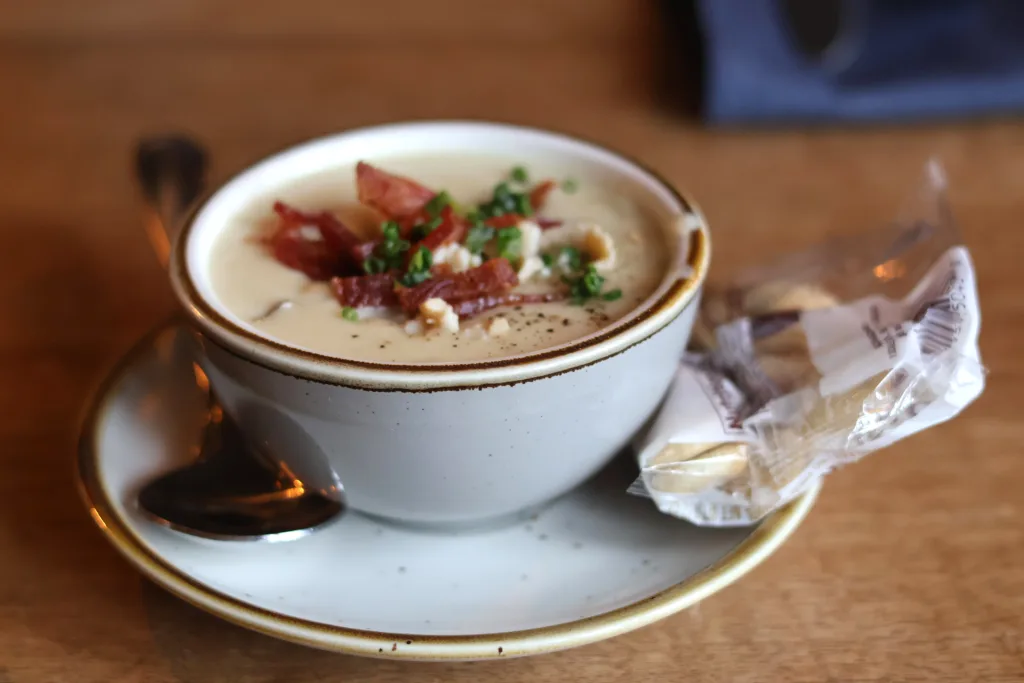
Entering the dining room, we’re greeted by the scent of butter and cornmeal. Our first course comes without ordering: two heaping bowls of New England clam chowder and a plate of hush puppies. A tray of crab legs follows shortly after.
Delicious hush puppies served with spring onion-lemon butter.
As we eat, I learn that Brad is proudly pro-cheese on squid, thinks there is no such thing as bad fish—only bad preparation—and is convinced of exactly two things: he sucks at fishing and big striped bass have souls. “But I’m starting to see that in a mackerel,” Brad says. When the crab legs are sucked clean, Brad promptly orders another bowl of chowder. This time, Rhode Island style. “You always order a second chowder.”
The second chowder in all its glory.
Eventually, we can’t eat another bite, and reluctantly return to the Grady-White. The rain has let up, and the sky is now a flat gray mass above the harbor. Chris sees us off at the dock, offering us a final wave as we slide back out to sea. With our interview completed, we drop the professional facade and regress into a more natural state: two guys on a fishing trip.
“I think I know one more spot we can try,” Brad says. “They’ve gotta be out there.”
Once again, Brad punches it, and we roar across the glassy Sound.
Watch & Listen
Subscribe to Brad’s YouTube channel to binge-watch shows like Makin’ It! or Local Legends, and to listen to his podcast Lay It On with Brad Leone.