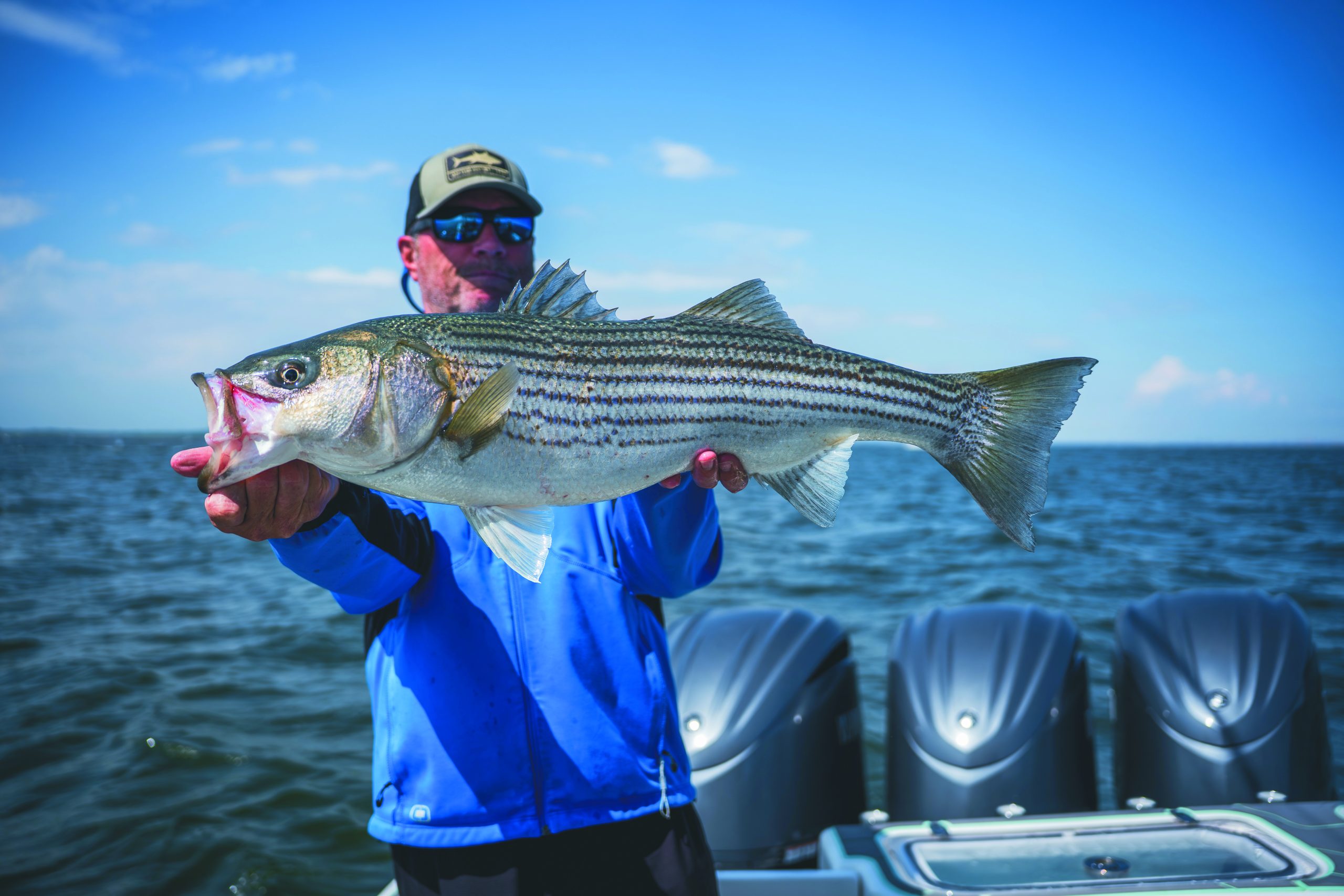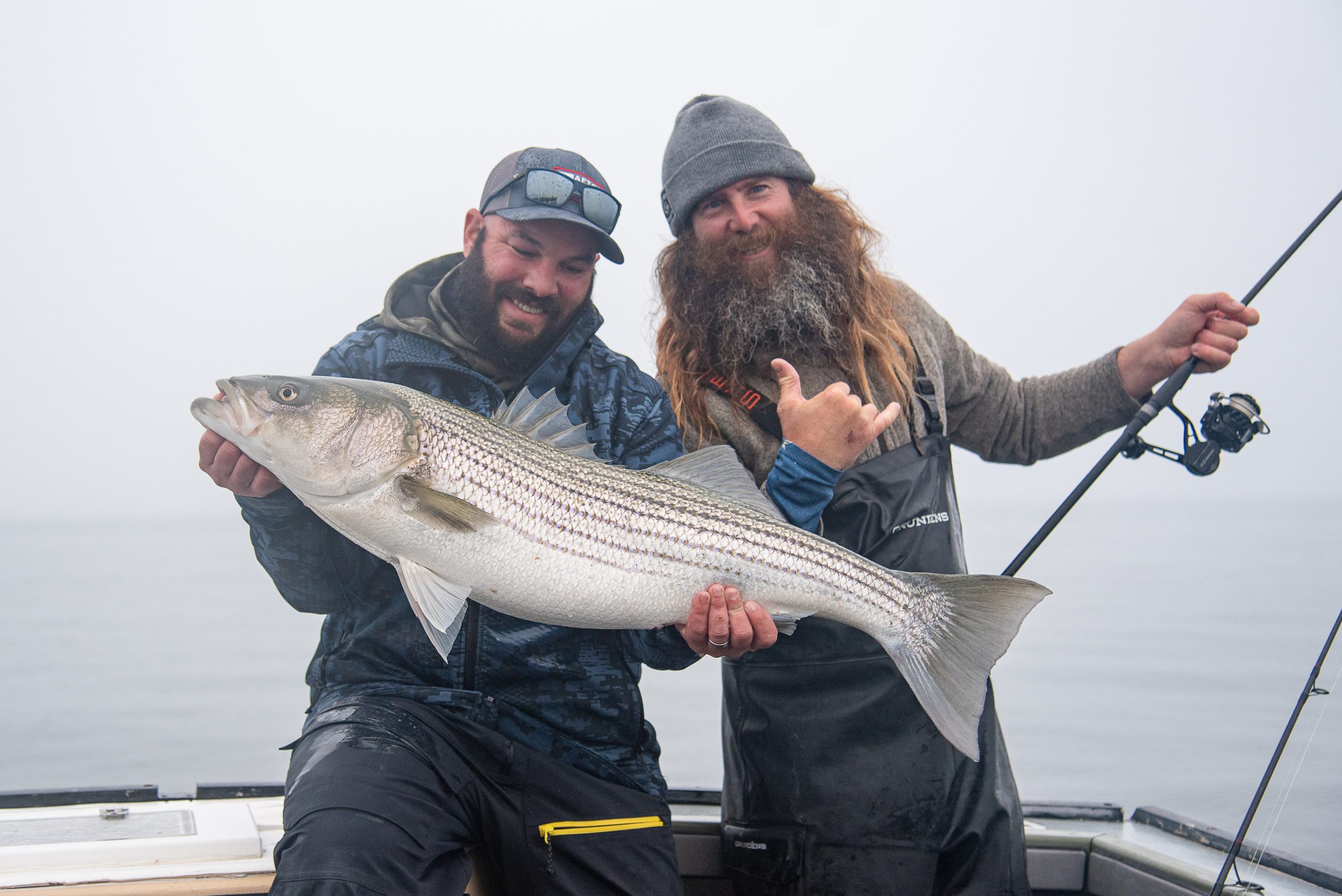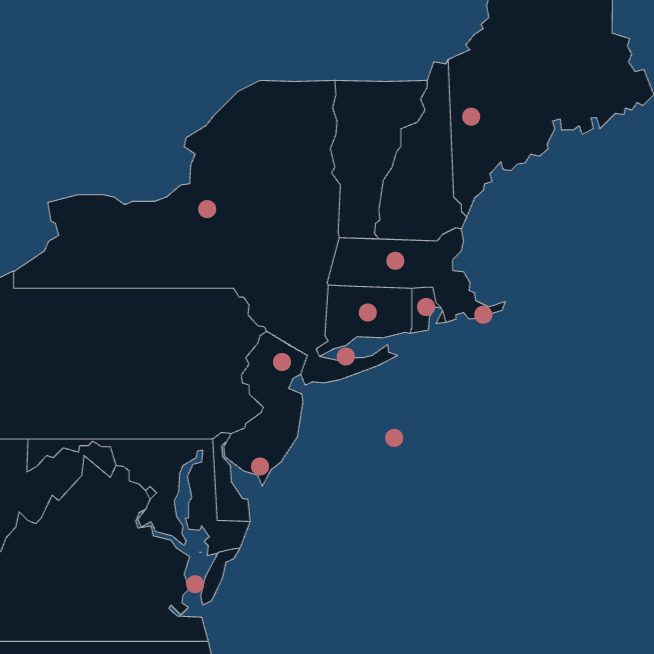

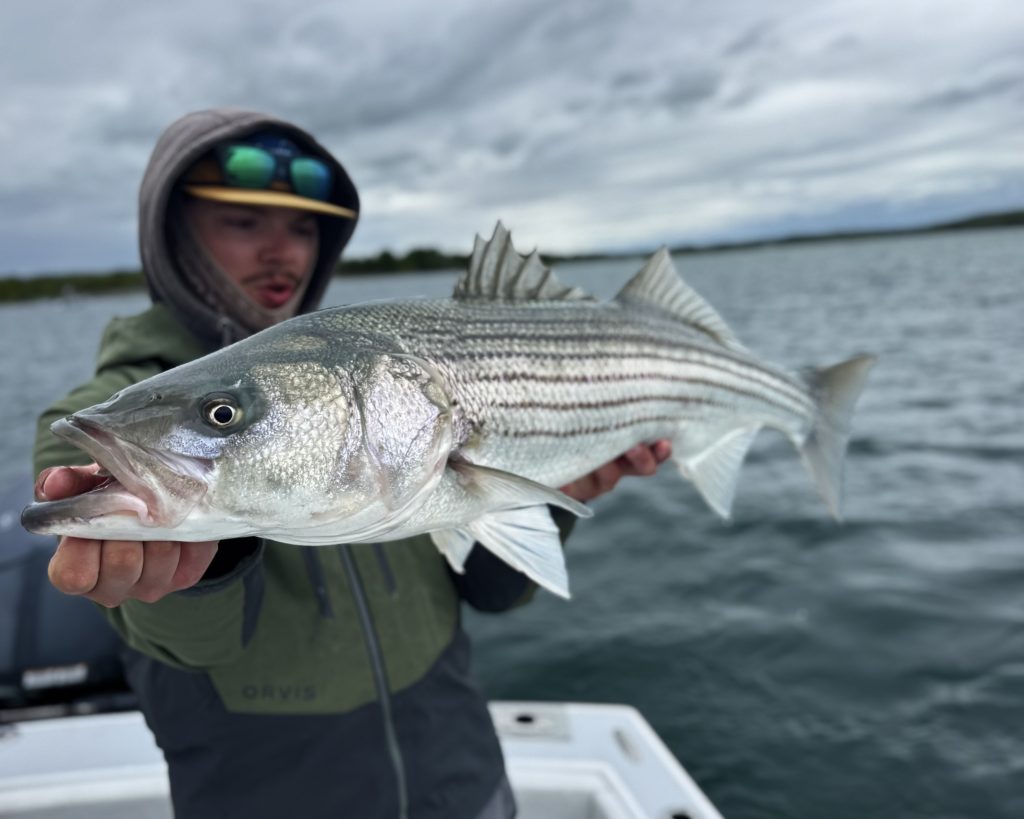
Buzzards Bay is a wide, open embayment stretching from the Cape Cod Canal to the Buzzards Bay entrance tower past Cuttyhunk Island. The bay’s name comes from early European settlers who mistook the abundant ospreys for buzzards, and the nickname stuck. Long before that, the Wampanoag people fished its waters and harvested shellfish along its shores.
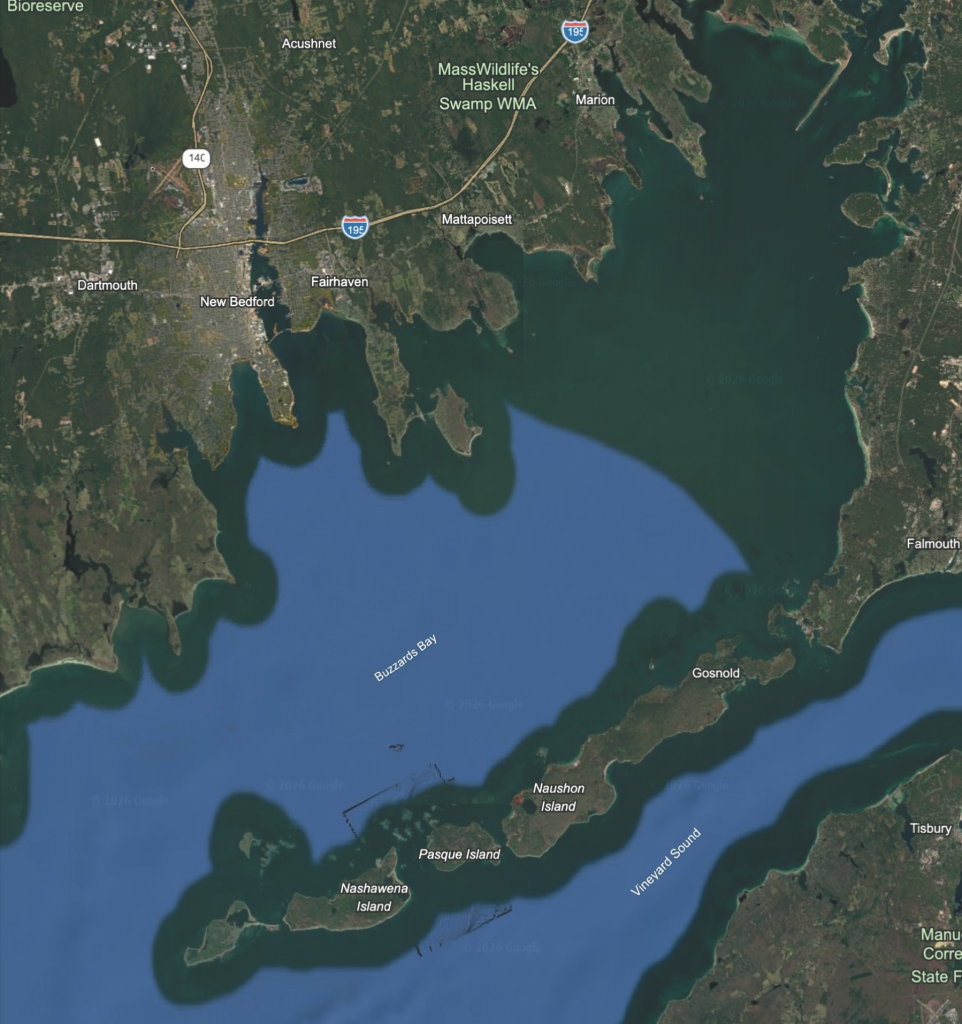
Buzzards Bay features broad shoals, gently sloping bottoms, and deep central channels shaped by strong tidal exchange and persistent southwest winds. Average depths range from 30 to 50 feet, with deeper holes exceeding 100 feet in the mid-bay and along shipping routes. Rocky shorelines and boulder fields line much of the western and northern edges, while expansive flats dominate the eastern side near Cape Cod. During the spring, the bay, along with its structure and current, acts as a funnel for baitfish species, making it an important staging and feeding area for spring-run stripers.
Timing of the Spring Bite
Late April to June
On the mainland side, better known as the South Coast of Massachusetts, Buzzards Bay is fed by the Westport, Acushnet, Weweantic, and Wareham rivers. These are the waters that Captain Ray Jarvis of Salt of the Earth Sportfishing calls home, and where he finds his first migratory fish of the year.
“The migration kicks into gear by late April when fresh fish move into the rivers,” said Jarvis. “A really cold winter might delay our start a little but, generally, after April 20, there are migratory stripers showing up in my area.” His turf ranges from Mount Hope Bay—which skirts the border of Massachusetts and Rhode Island—to the upper reaches of Buzzards Bay. “Mount Hope Bay is not as big as Buzzards, but it sets up similarly and the bass show up around the same time,” he said. “I often lean toward fishing that way before pushing east into Buzzards and hitting the rivers.”
As the calendar turns from May to June, warming water and the migration of squid into the rips cause fish to slowly move out. By early to mid-June, the bay slows down, the rips heat up, and Jarvis moves on to fish the Sound and the backside of the islands.
Early Bait
The bay’s tributaries are characterized by skinny, meandering salt marshes which, come the ebb tides of spring, are flushed of silversides, mummichogs, killifish, crabs, and marine worms—all are easy pickings. Alewives, despite their abundance, play only a minor role. These early-arriving bass are on the smaller side and have just traversed hundreds of miles of ocean, so rather than empty the tank by chasing big baitfish, they are more apt to set up in comfortable zones where they can conserve energy and allow food to come to them.
The Approach
The first wave of fish to hit the South Coast mix in with the resident bass that wintered over in the rivers. The holdovers seek the same warmth and early season forage as their migratory counterparts. Jarvis, recognizing these patterns, begins his search by focusing on places where water temperatures rise quickly under sunny skies.
“Shallow back bays and mud flats adjacent to channels are prime territory for early arrivals. Water temperatures are still under 55 degrees, but a daytime warmup can turn on the fish, so I target those areas in the afternoon and evening when the temperature spikes,” he said. While temperature is an important factor in locating his quarry, tide equally influences where he focuses his time and effort. “I’m looking for features that create current, but not an excessive amount. If we have a higher tide during the late afternoon, I’ll get up on the mud flats or tight to the sod banks to cast flies or weightless soft plastics.”
Jarvis reaches for the same all-white presentations year in and year out, regardless of whether he’s employing spin or fly tackle. “I’m not too concerned with matching the hatch in the spring. I pay more attention to profile and baits that will elicit a reaction strike.” White 7- to 10-inch Hogy Originals, 4- to 6-inch Game Changers and Deceivers and, at times, red-and-white Clouser Minnows, are mainstays on his boat. “If I’m marking fish deeper but they won’t chew, I’ll try slow-rolling small white paddletails on light jigheads, which works very well.” Pink and chartreuse paddletails have their moments, too, but Jarvis strays from plain white only when dirty water calls for a more vibrant presentation.
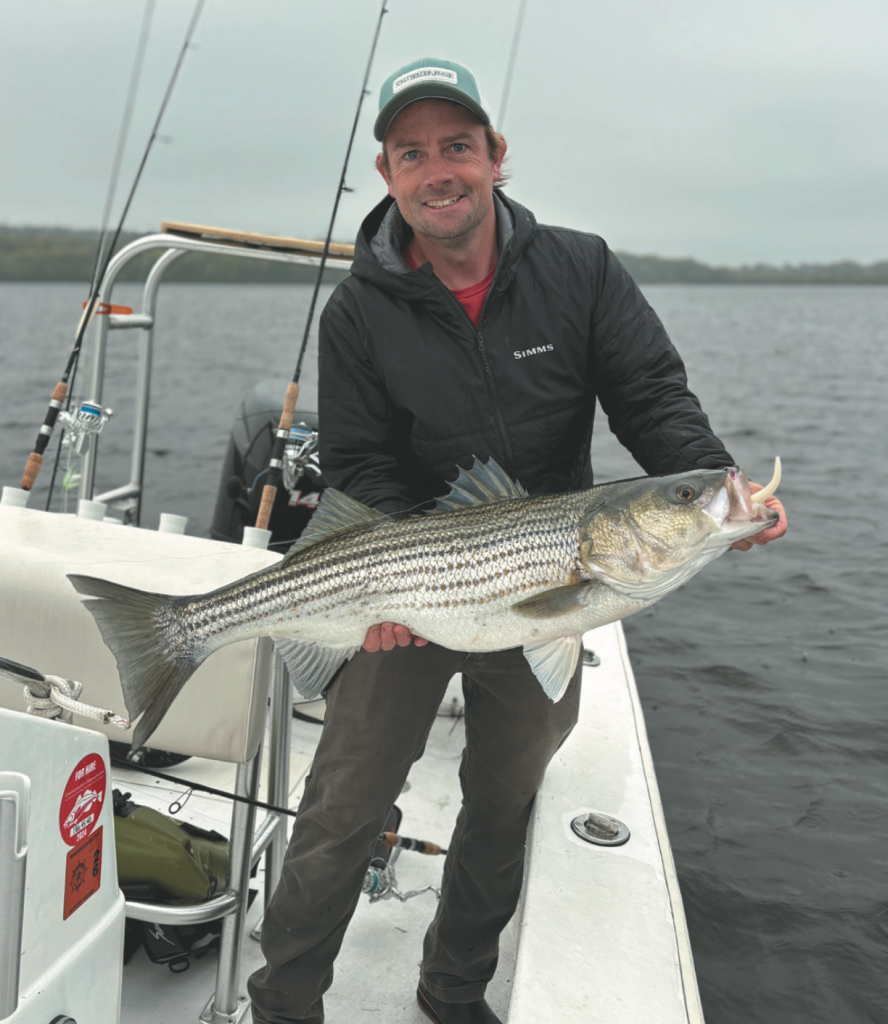
As bass slowly begin to venture beyond the estuaries into Buzzards Bay proper, Jarvis searches for full-blown feeds in open water that are driven by spearing and sand eels. “Silversides get pushed out of the rivers by falling tides and sand eels come into the back bays to spawn even before migratory bass show up, but many fishermen aren’t on the water early enough to see that.” Due to this influx of small baitfish from early May into June, especially in the middle and upper bay, striper fishing can be a light-tackle game that requires finesse. Matching the hatch becomes more important than it was in the marshes, but not in terms of color selection. Jarvis maintains that lure profile and action are far more worthy considerations. Small epoxy jigs and paddletails, and Hogy Surface Erasers are his go-to offerings. “The Surface Eraser is versatile in a sense because I can let it sink in the water column and vertically jig fish, but it also casts further than an average epoxy jig. I can fish it fast or slow, and if I swap the hook to the opposite end, it produces a totally different action.” Most of the time, regardless of the lure, he finds that a slow, straight retrieve gets the job done when the bass are on silversides and sand eels. “Even if I’m using small Hogy Pro Tails, I’m not really jigging them or doing anything fancy.”
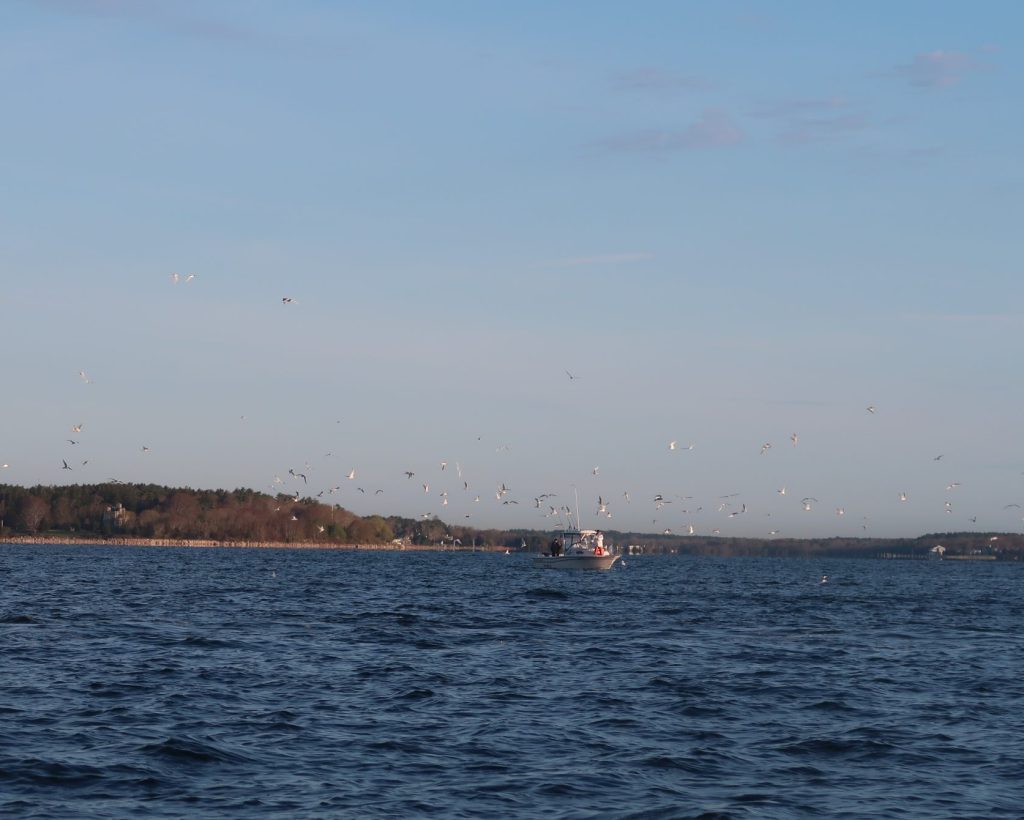
After the initial wave of schoolies and slots, there’s a major shift in the average size-class of fish. “In early May, we’ll start to see menhaden in the bay,” Jarvis said. Some of those bunker come out of local rivers and others come up the coast with cow bass hot on their tails. The timing of their arrival changes yearly depending on how cold it was in the winter and early spring. By mid-May, the big fish are usually in.
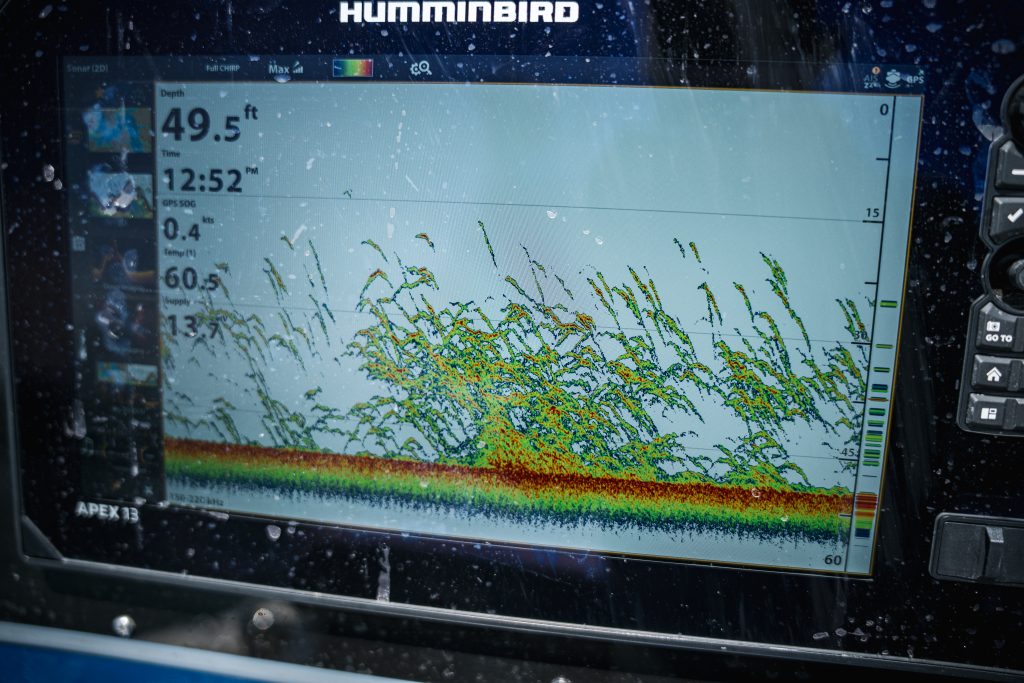
“The harbors start to hold bunker, but they can also hold mid-bay or way down south along the Elizabeth Islands.” He most frequently finds bass on bunker in areas with pronounced current, like pinch points, rips, or holes. “When they’re in open water, I’m throwing walk-the-dog-style topwater plugs and weightless ten-inch soft plastics. If the fish are deep, I’ll rig a plastic on a jighead. Flutter spoons are excellent tools in that scenario, too, because I can easily get down beneath a school where the biggest fish tend to hang.”
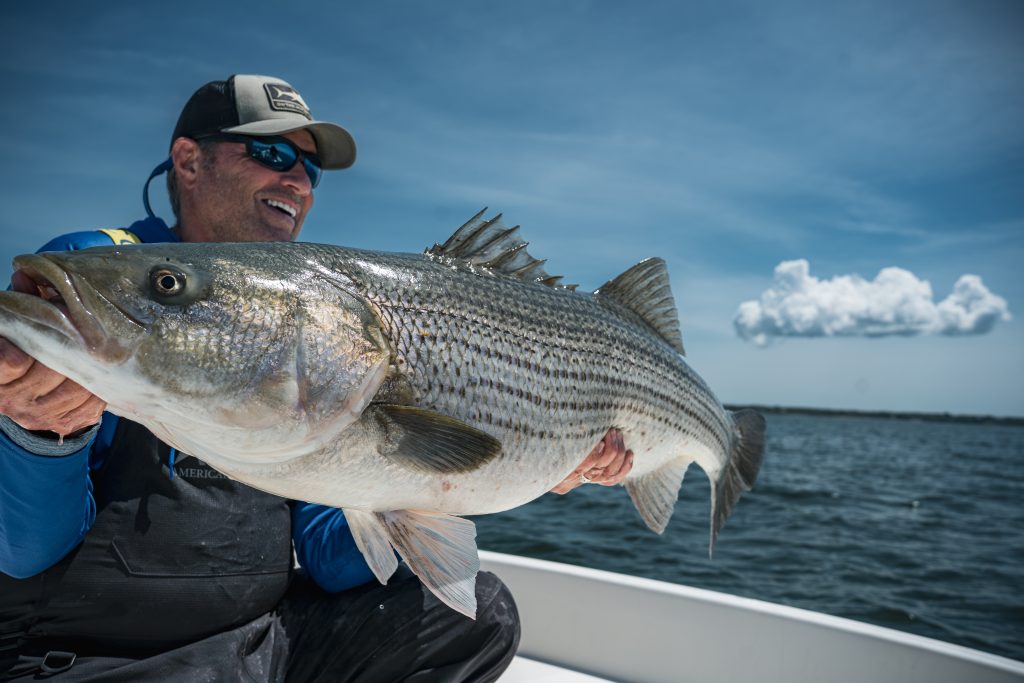
His approach doesn’t waver much when it comes to chucking flies. “I stick with white Game Changers and Deceivers, but I boost the profile to match that of the bunker. The only thing that changes is my choice of fly line. I’ll fish a full-sink line to get those patterns in the strike zone when the fish are deep, and floating or intermediate lines when they’re up top.” There is one exception to his color rule, though. “If it’s a darker day with lots of cloud cover, or just before sundown, I may switch to an olive or amber fly to help it get noticed.”
Amber patterns are killer when squid appear in mid-May, and although they spend time in Buzzards Bay, their arrival signals another impending shift. “Before big bass pile into the rips of Vineyard and Nantucket sounds in June, they lay up on our mud flats in 3 to 5 feet of water during the day to look for squid. Gator bluefish will also be there,” Jarvis said. “If I can’t see the fish, I focus on transition areas like steep drop-offs next to the flats or changes in bottom composition, like mud to eel grass. Both are dependable producers.”
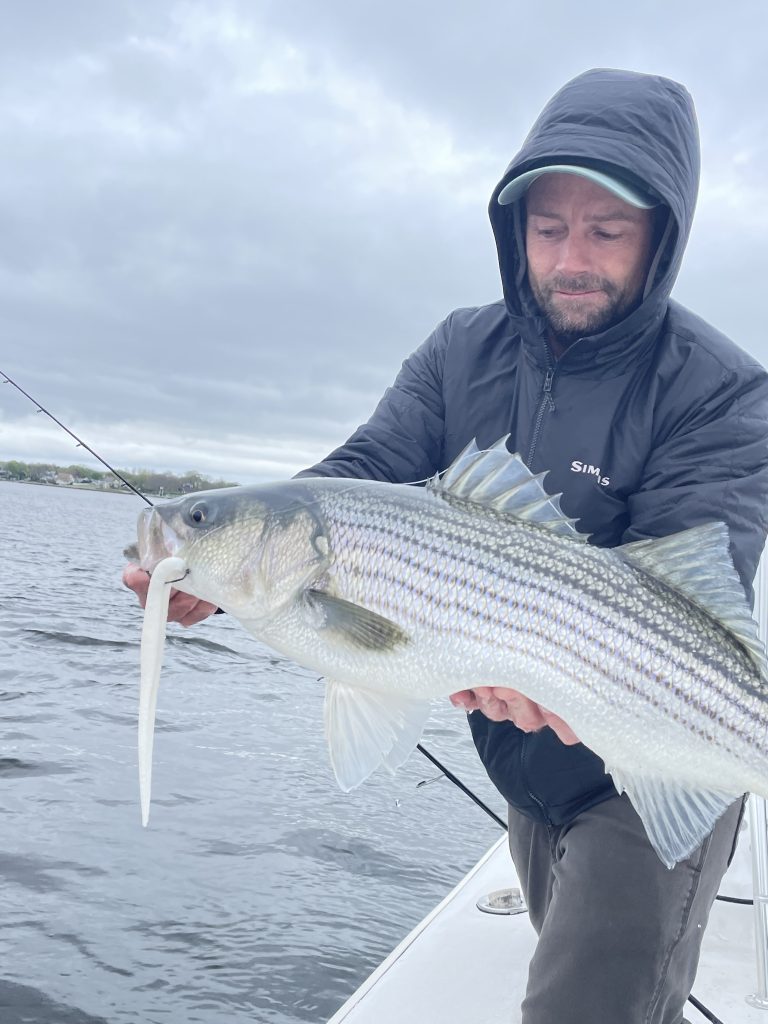
Over mud flats, whether the fish have been eating bunker or squid, he favors big, weightless soft plastics that swim on or just below the surface. “A lot of the time, the bass are not even actively feeding, so I’m just showing them something that will draw a reaction strike. If they are not visible, a walk-the-dog plug can reveal them, but I still prefer to tease them in with plastics,” he said. “Sometimes, all I need to know that the fish are there is a swirl or a tail fin breaking the surface. Then, when one fish notices the bait and turns on it, they get competitive and that’s all it takes to connect.”
» Book a spring striper trip on the bay with Captain Ray Jarvis of Salt of the Earth Sportfishing
READ MORE