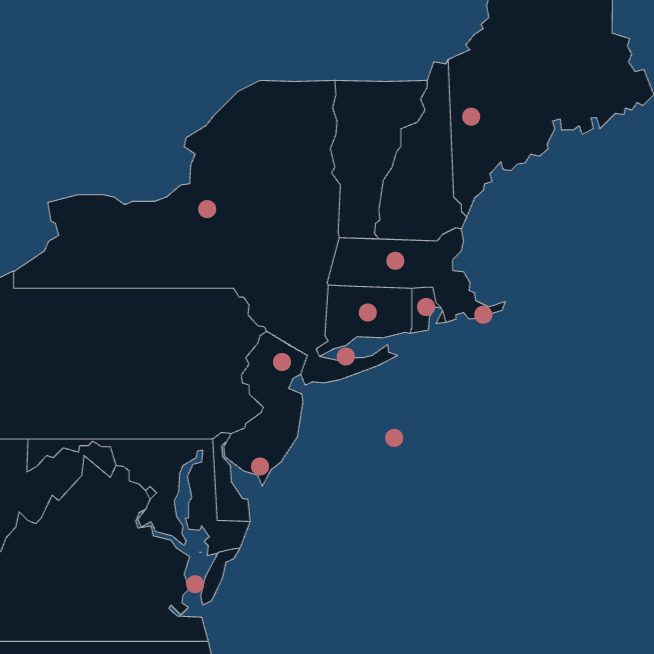


If you grew up bass fishing in the Northeast, you already know winter isn’t just a season. It’s a test. Our lakes lock up with skim ice overnight, the wind cuts through every layer of clothing you own, and water temperatures drop into the 30s faster than you can blink. Most anglers pack it in after Thanksgiving and don’t think about touching their boat again until April. But, for those of us stubborn (or passionate) enough to stick it out, winter bass fishing in the Northeast is not only doable—it’s one of the most rewarding, consistent, and peaceful bites you’ll experience all year. Winter weather doesn’t just thin out boat traffic; it eliminates it. And when you figure out how largemouth and smallmouth behave once Old Man Winter clamps down on our region, you’ll realize the Northeast offers some phenomenal coldwater bass fishing.
The winter bite is, arguably, my favorite of the year. When I lived on Long Island and eventually, in Connecticut, I’d find myself chomping at the bit to fish Candlewood Lake to chase those big bass hanging out deep. It was the most fun I had all season. Now, where I reside in the Finger Lakes region, the winter bite is more intense and worth the effort.
(Note: On The Water is reader-supported. When you buy through links on our site, we may earn an affiliate commission.)
Understanding Winter Bass Habits and Patterns
Everything about the Northeast during the winter months is extreme. Water temps, weather swings, barometric pressure, wind direction, you name it—the bass respond accordingly to these extreme changes. Once our lakes drop below the 50-degree mark, both largemouth and smallmouth bass start transitioning toward their wintering grounds—and it happens fast. In the Northeast, the fish have to move with far less haste than bass in southern locales because true winter hits hard and sticks around for a long time.
Smallmouth, especially in the Great Lakes region, glacial lakes, and deep reservoirs, settle into predictable wintering zones: steep drops, bluff walls, main-lake humps, deep rock piles, and anywhere with access to 25 to 50 feet of water. They often group tight, so when you catch one, it’s rarely a lone wolf. Smallies love stability in cold water, and that means they typically park in the same wintering areas year after year.

Largemouth, on the other hand, are less predictable. Their winter movements depend more on the type of lake and its features. In shallow, natural lakes, they might hold in 8 to 15 feet of water around remaining weeds, deep timber, or channel edges. In deeper waterbodies, like reservoirs and kettle ponds, they can be just as deep as smallmouth. But unlike smallmouth, winter largemouth don’t roam much. Instead, they conserve energy and feed only when the opportunity is right in front of them.
Most importantly, both species become incredibly efficient. Minimal movement means minimal energy exertion during a long stretch in which the fish don’t feed as voraciously as they do in the warmer months.
Winter Structure: Steep, Deep, and Consistent
One thing that separates the Northeast from winter bass fishing in other regions is how crucial vertical structure becomes. Winter bass want places where they can shift depth with ease, which is why the following areas are cold-water magnets:
- Steep main-lake points
- Channel swings against a shoreline
- Rocky bluff walls
- Deep edges of remaining healthy weeds/grasses
- Man-made structure (bridge pilings, submerged roadbeds)
- Isolated rock piles in 20–40 feet
In larger Northeast waters, like Champlain, Candlewood, Cayuga, Oneida, Erie or Ontario, these deep, defined structural elements are textbook wintering spots. In smaller reservoirs or farm ponds, you can shrink the principle down: look for the single steepest section or the deepest depression the lake offers.

One universal rule comes into play in all of these locations. Find the bait, and you’ll find the bass. In alewife lakes, shad lakes, and smelt lakes, the bass behave slightly differently based on what their forage is doing, but rarely stray far from food.
Electronics: Not Optional, Almost Necessity
Winter bass fishing is where modern electronics become borderline essential. Our lakes are cold, clear, and deep, which makes encountering suspended baitfish and smallmouth more common than you’d think.
Whether you use forward-facing sonar, traditional 2D, down imaging, or side imaging, winter is when each of these tools shines. You’re not just looking for fish, you’re looking for signs of life, which can come in the form of:
- Bait clouds in deep water
- Small clusters of arcs (bass) glued to the bottom
- Suspended smallmouth stacked at the same depth
- Single big largemouth pinned against isolated structure
If your screen looks dead, move. Winter bass aren’t spread out. They’re concentrated. When you see life on the graph, that’s where you stop and work.
Northeast Winter Baits: Less Flash, More Finesse
Cold-water bait selection in the Northeast revolves around three bass-enticing characteristics: slow, natural, and subtle. Power fishing isn’t completely dead—you can still catch fish on a blade bait or A-rig—but 70% of the time, success comes from finesse.
Hair & Football Jigs

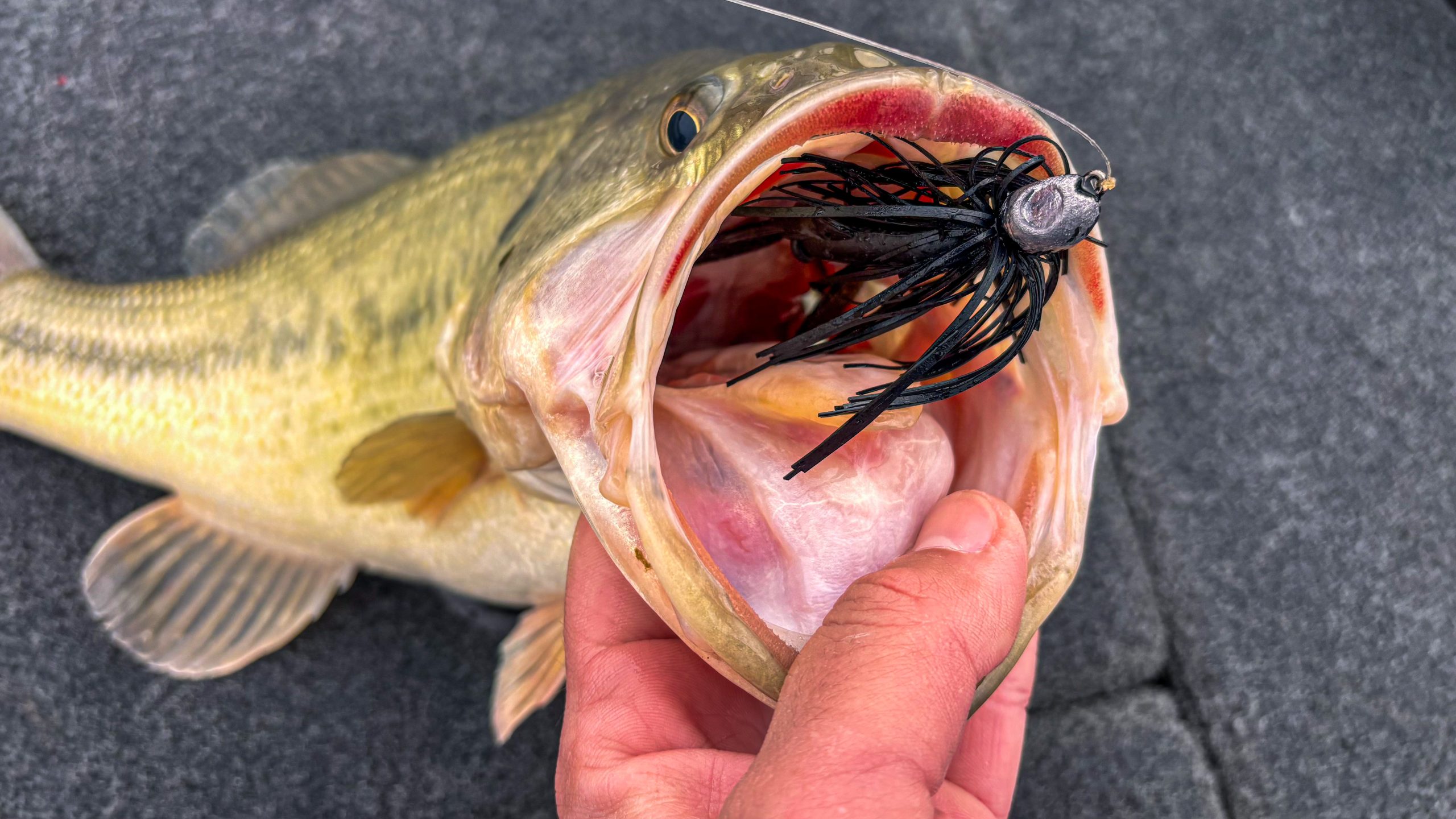
A hair jig or a football jig, dragged ever so slowly across rock, is a winter staple. In rocky lakes, this imitates sluggish craws and round gobies. These are baits that you can leave almost motionless on the bottom and they will still give off enough action to entice even the laziest bass. There are some great options on the market, but finding someone who custom ties hair jigs for these finesse applications is even better. I order all of my jigs from my good buddy Tristen Bauer, owner of T’s Tackle in Theresa, NY, who makes perfect jigs for our Northeast smallmouth.
Blade Baits
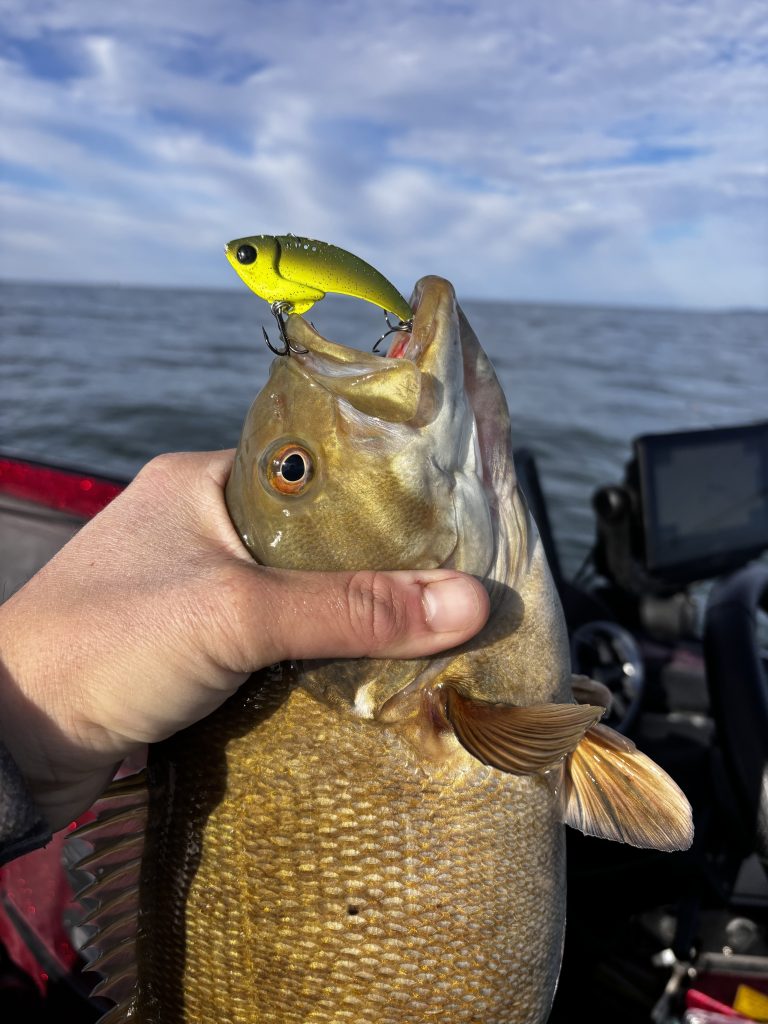
The colder the lake, the better a blade bait works. These lures are heavy, easy to control in deep water, and closely mimic dying baitfish. Northeast smallmouth absolutely crush blade baits yo-yo’d off the bottom. The key is to avoid overworking the bait. Don’t lift it too much; it’s crucial to lift it just enough to vibrate, then let it sink to the bottom. A blade bait excels within six inches from the bottom. My go-to blades are a Fish Sense Binsky and a Molix Trago Vib. Both lures have great action and come in a wide variety of colors to match the hatch.
Ned Rigs, Tubes, and Small Plastics

Tubes might be the most underrated Northeast winter bass bait ever created. Nothing better imitates a goby or perch fry in cold conditions. Ned rigs and small swimbaits on light jigheads are close runners up, and catch both largemouth and smallmouth when the bite is subtle and tight to bottom. Great Lakes Finesse makes a variety of plastics and terminal tackle to meet those needs. Whether it’s the Juvy Craw, Ned Bug, Flat Cat, or Dropkick Shad, they have you covered.
Ice Jigs

These might be the last baits you think of for wintertime bassin’, but man, do they work well. Lures like the Acme Hyper Glide and Rapala Jigging Rap are killer vertical jigging presentations for bass in deep water. Their slow but erratic darting action when fished directly under the boat makes smallmouth go nuts. Generally, these jigs work best when the water temperature dips below 40 degrees, so even though they are categorized as ice fishing baits, they are extremely underrated for open-water applications in the winter.
Winter Retrieve: Slow is Still Too Fast
No matter which of the aforementioned baits you’re throwing, slow your retrieve. Then, slow it down some more.
Coldwater bass fishing is all about the fish deciding when to eat, not you forcing the issue. Employ long pauses, keep rod movement to a minimum, and always maintain bottom contact. It might feel like dragging a cinder block across gravel, but the bass respond to these lethargic retrieve tactics.
Weather Patterns
Winter weather can get wild on the water. You may have sub-freezing temps one day, rain the next, and blue skies with 30-knot winds the day after that. Bass react to this volatility, so here are some things to consider regarding winter weather and bass fishing.
- Stable weather, even if it’s brutally cold, is the best.
- Warming trends are golden. They pull bass slightly shallower and make them more active.
- Bluebird high-pressure days can be tough, but they often concentrate fish tighter to structure.
- Wind, especially on bigger lakes, stack bait and position smallmouth on exposed points or humps.
If you’re a winter bass fisherman in the Northeast, you learn to love the calm, gray, miserable days, because they often produce the best fishing.

Safety: The Most Important Winter Tactic
Winter fishing demands that anglers respect Mother Nature. Cold water kills quickly. Wear a life jacket at all times, carry spare dry clothes, keep your phone in a waterproof bag, and avoid solo trips on big water during the coldest months of the year.
Always let a few people know where you’re heading and when you expect to get there and return. Creating a plan and sharing it with others will provide an idea of where you are and the conditions you are up against. Additionally, have an emergency plan in place in the event something goes wrong on the water.
Winter bassin’ isn’t for the weak, but being safe on the water is what matters the most.
For the Love of the Game
Winter can bring some of the most rewarding bass fishing trips of the year. It’s a time to focus on precision, puzzle-solving, and enjoying the pure quiet that settles over a nearly frozen landscape. It’s about grinding through the cold because you know the next bite might be a five-pound smallmouth built like a bowling ball. It’s about learning your lakes so well that, year after year, you can predict exactly where those wintering pods are located. I’ve had some of my best days of fishing when temps are in the high 20s and my guides are freezing over. There’s something about fishing in the cold, when most people are comfy at home while the bass are chewing hard, that gets me fired up!
When you crack the code—when the rod loads up in icy water and a bronze tank shakes her head 35 feet below—you realize winter isn’t a season to get through. It’s a season to embrace.

READ MORE



Another great article by Nick Petrou. Very informative and usefull.