
At beginning of the 2023 surf fishing season, I would have never guessed that mid-June would find me rifling through long-forgotten tackle trays searching for my Lunker City Slug-Gos. Decades of obsessive fishing coupled with careless tackle organization have created a sort of archeological dig site in my basement, with each layer revealing the most popular lure of that era. Finding the Slug-Gos would require digging back to around 2011—if I reached the Storm Wildeyes, I’d know I’d gone too far.
Truth be told, I never fully adopted Slug-Go into my surfcasting rotation, at least not in the way it was intended. I used to take the 9-inch model, lop off the top 2 inches, and fix it to a 4- or 5-ounce jighead. I made some fine catches with that rig in the Cape Cod Canal before the Savage Sand Eel and other heavy paddle-tailed plastics pushed them out of my plug bag.
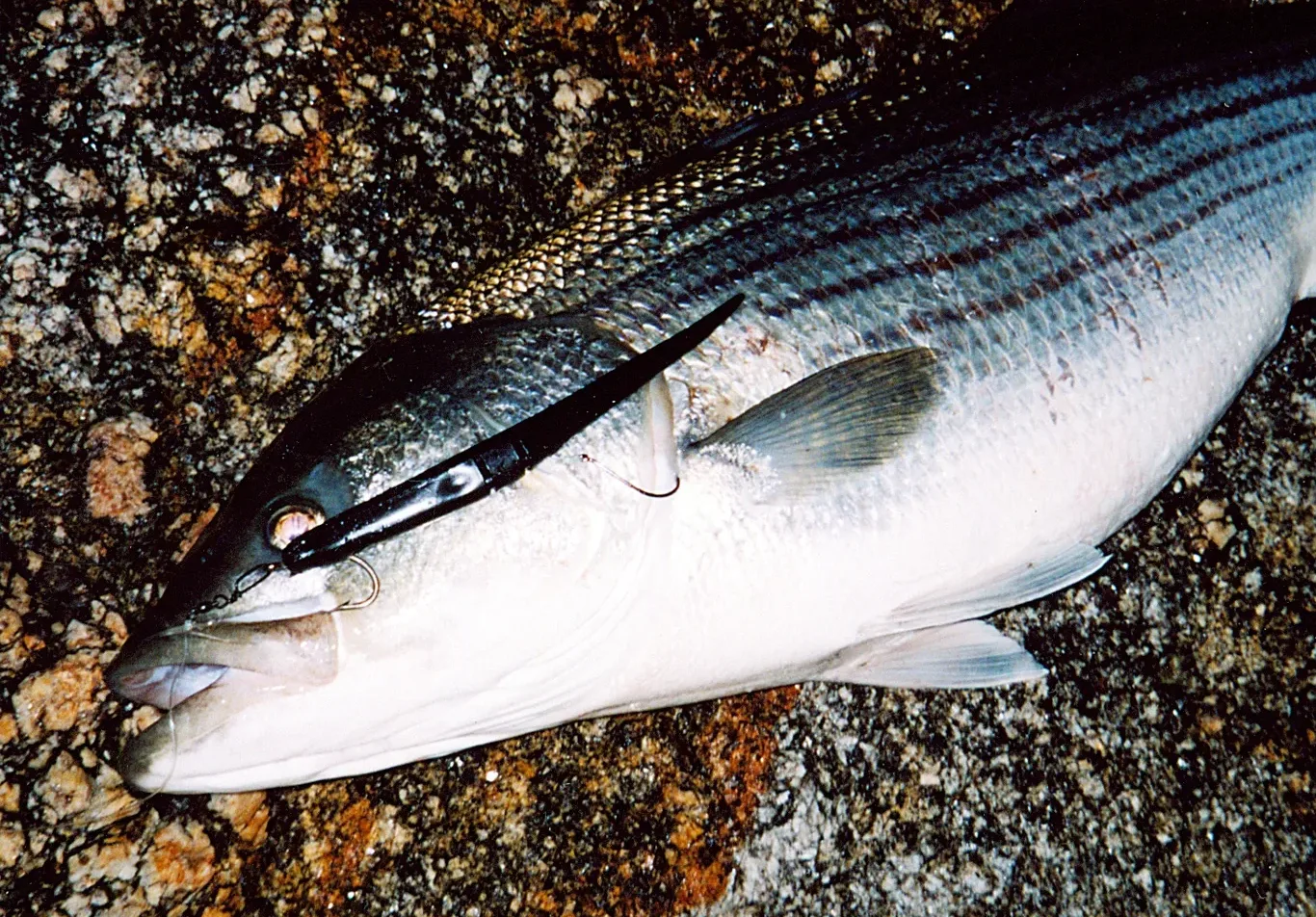
The more savvy surfcasters of that time had found a wider range of applications for the lure that involved rigging it with two hooks in tandem, adding a few nail weights, and casting and retrieving as with a rigged eel.
This technique was developed and popularized by legendary surfcaster Steve McKenna, whose Slug-Go sermons go as far back as the article “Live Eel Alternatives: Big Slug-Gos for Stripers” in the September 2005 issue of On The Water.
In the article, Steve says he’d been a devout follower of the eel since his introduction to striper fishing in the late 1970s. In 2003, when fellow surf-fishing masters Tim Coleman and Pat Abate showed him that the Slug-Go could not only match the eel for catching big bass, but at times exceed it, Steve went all in on the big plastics, developing a rigging method that he said turned the soft bait into a “striper-catching machine.”
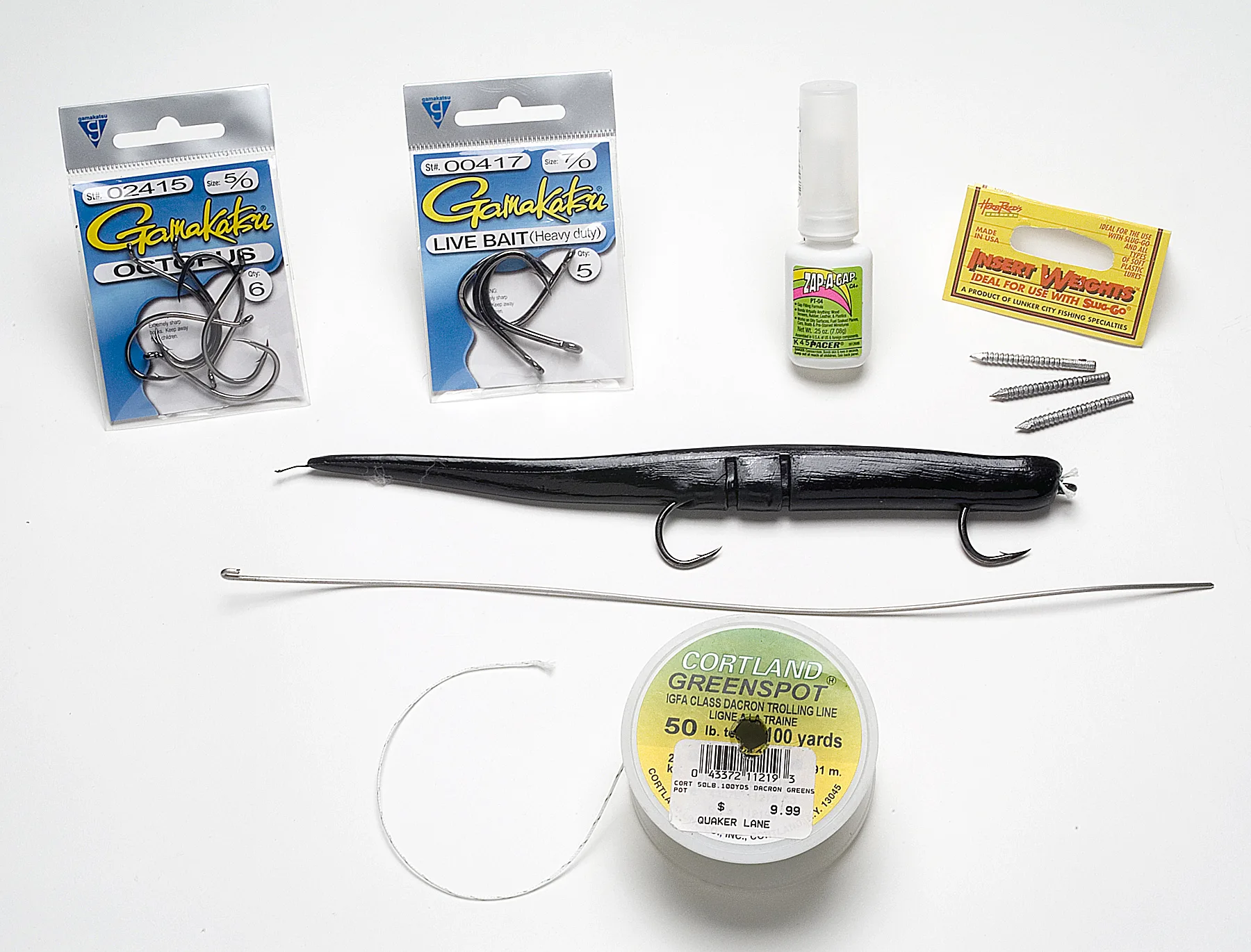
What You’ll Need to Rig a Slug-Go

Materials:
- 9-inch Lunker City Slug-Gos
- Rigging needle
- 7/0 and 5/0 Gamakatsu hooks, either live bait or octopus models
- 50-pound test Dacron
- Superglue
- 3/32-ounce Herb Reed/Lunker City Slug-Go insert weights
Editor’s Note
Steve’s rigging technique can be applied to the 12-inch Slug-Go by leaving out the nail weights, increasing the Dacron length to 30 inches, and increasing the hook size. When I found the 12-inch baits in my basement that June, the most suitable hook I had on hand was the 11/0 VMC 7264 that I’d been using to make assist hooks for tuna. I liked them so much that they’ve become my go-to. These large, heavy gauge hooks add enough extra weight to the already heavy 12-inch Slug-Go, that I haven’t found a need to add the nail weights that Steve recommended for the 9-inch baits. – Jimmy Fee
Steve recommended anglers fish the rigged Slug-Go like a Zara Spook:
“The surfcaster must use a moderate retrieve, twitching the rod quickly throughout and keeping the lure subsurface at all times, which is important. This can be achieved by holding the rod parallel to the water and to the side of your body while retrieving.”
Although I’ve never fished with Steve to see his Slug-Go prowess first hand, I have fished with several of his disciples. Among them was Kevin Blinkoff, who I used to call the mad scientist of soft plastics. He was constantly fiddling with the rigging of Slug-Gos and other stickbaits to find a perfect balance of castability, action, and sink rate to match his favorite locations at various stages of the tide. When we fished, he’d have dozens of soft-plastic tails sprouting out the sides of his plug bag like weeds coming up through the cracks of a sidewalk. Unlike Steve, Kevin fished the baits slow and steady, imparting only the slightest occasional action. Like Steve, he fished with the rod held horizontally, often hunched over with his back to the wind as he tried to find a more comfortable stance.
I think that’s why my rigged Slug-Go’s ended up as a mid-2000s surfcasting time capsule instead of becoming a perennial favorite like the pencil popper, darter, and Red Fin. I found it awkward to fish with a surf rod parallel to the water, and decided, after a season or two, that I didn’t need to jump on the “latest” trend.
One of the most jarring moments a fisherman can have is to realize a technique they remember as new and cutting edge has been around long enough to be considered a classic. Just this spring, one of our interns unironically called the Drifter Tackle Doc “old school,” and I had to resist calling his school to report him for insubordination.
Of course, the benefit of being “old school” is that when a lure or technique comes back around, you can tell the young guys about how you were fishing it way back when—if you can find it in your basement, that is.
The Slug-Go’s 2020s resurgence came as surfcasters from New York to Maine began to find schools of stripers staging along shallow beaches with little obvious structure or bait to hold them. To successfully catch the bass in these areas, fishermen needed a lure that would cast well, sink slowly, and move enticingly enough to draw bites from bass that, in many cases, weren’t actively feeding—a perfect recipe for a “striper-catching machine.”
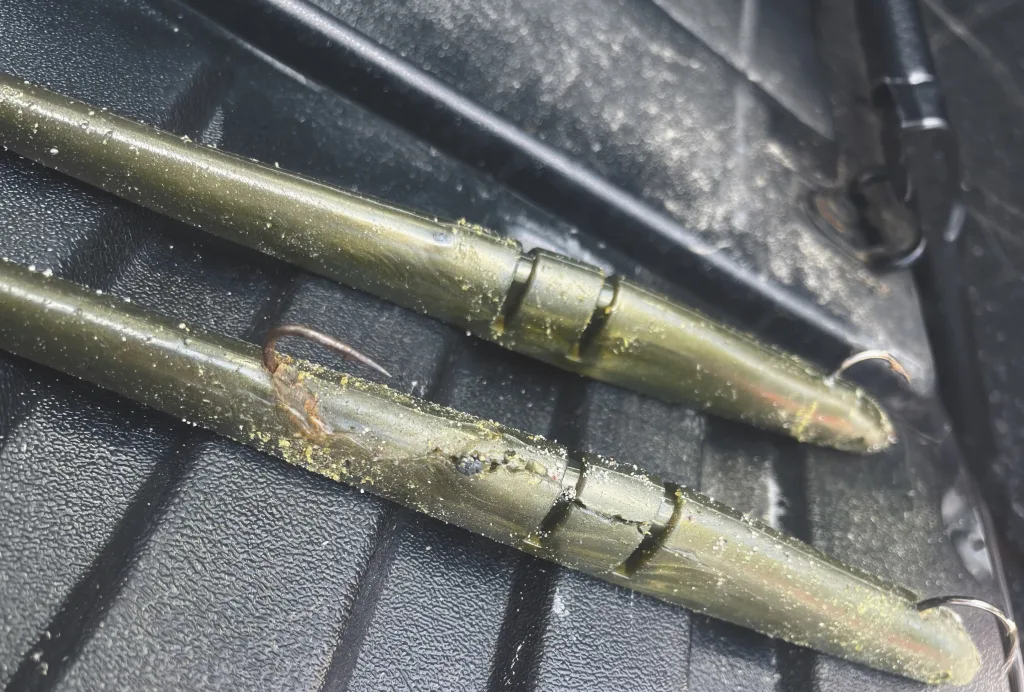
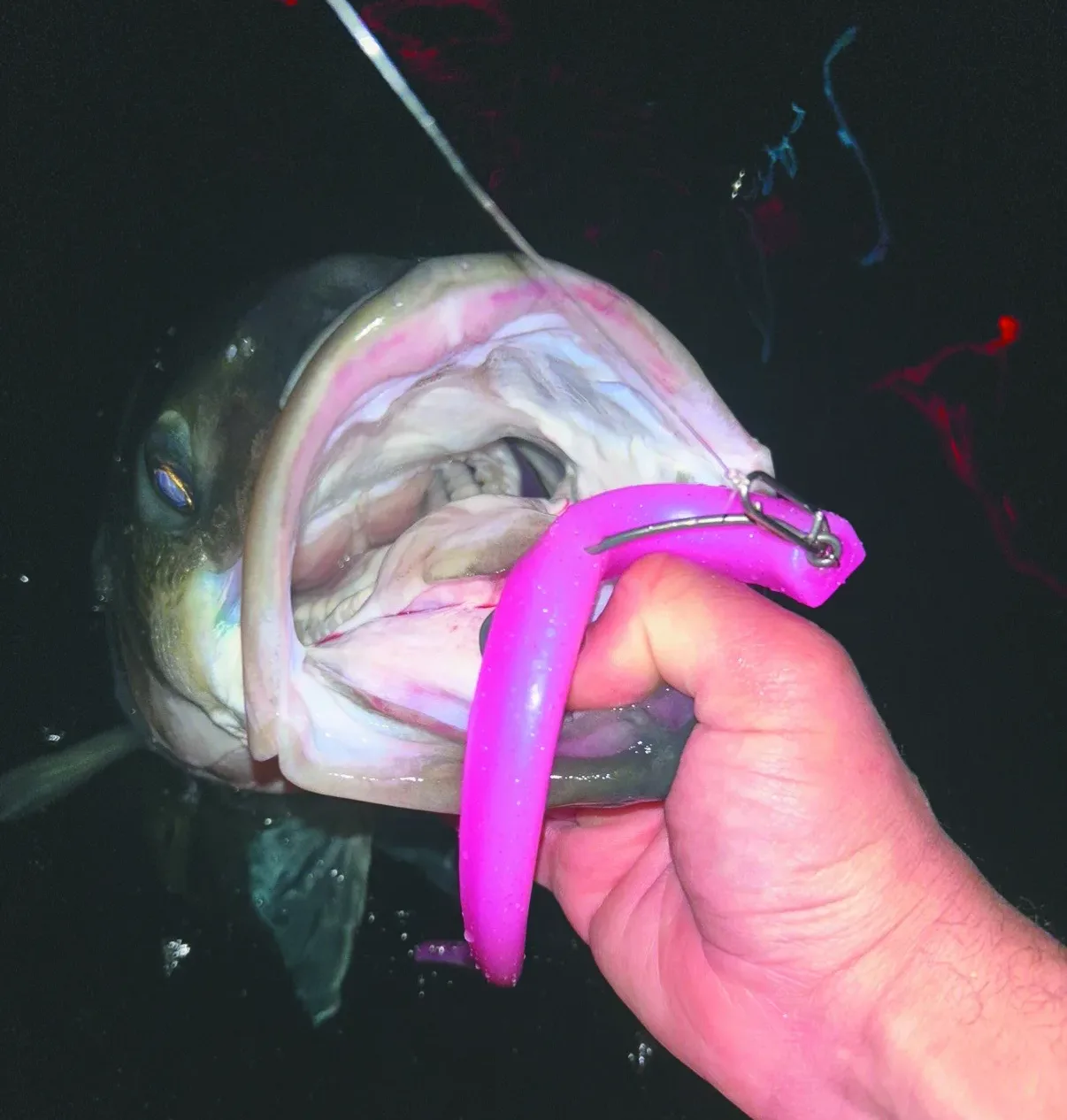
At 3 ounces unweighted, the 12-inch Slug-Go casts as well as some plugs, yet remains off the bottom in shallow water, even on slow retrieves. It creates a large profile, and has the subtle, undulating action of a soft bait. When I found my baits that June, rigged them, and brought them back out to the surf, it took only a few casts to catch my first Slug-Go striper in more than a decade. The fish pounced on the bait after a sharp twitch, and with that, the old school—both the lure and the surfcaster—felt like new again.
READ MORE