
A surfcaster needs to be versatile with what he throws. Each situation presents different circumstances to throw different lures. Everybody loves big wooden plugs, but the most experienced surfcasters know that these lures are effective only a small portion of the time. To consistently hook a big striper, you must have your bait right in front of its face. That’s why, during each season from February to December, when targeting big bass from Virginia to Massachusetts, I find myself throwing more soft plastics than plugs.
The most important aspect of catching large bass (or any size bass) is to stay in the strike zone as long as possible. Nothing does this like a jighead and plastic. Say you’re fishing an inlet 20 to 25 feet deep. It’s peak current and you’re throwing an SP Minnow or a Super Strike darter. You can cast until your arms fall off, but you’re not going to catch the cows. Big bass are lazy, but smart. They don’t want to stay in heavy current and have to chase food. Now, consider that same situation and you throw a 3-ounce jighead with a soft plastic. Your results will be much different. The plug fisherman will say there are no fish; the jig fisherman will go home with sore arms.
Match the Plastic to the Situation
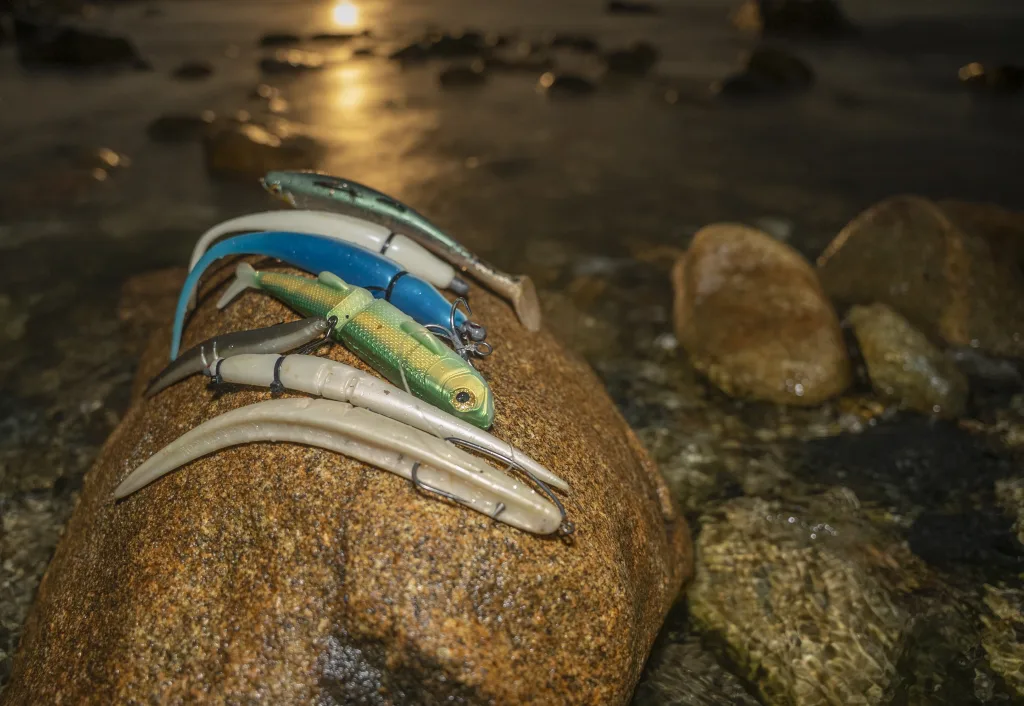
Just because you’re throwing a jig and plastic doesn’t mean you’re automatically going to catch, however. There are many different styles of soft plastics that work in various situations. In slower current, softer, more slender baits have more action. In heavy current, you can get away with stiffer baits and still catch fish. There are tons of plastic builders out there, and while their products all work, here are some of the ones I’ve had success with over the years.
Gravity Tackle GT Eel

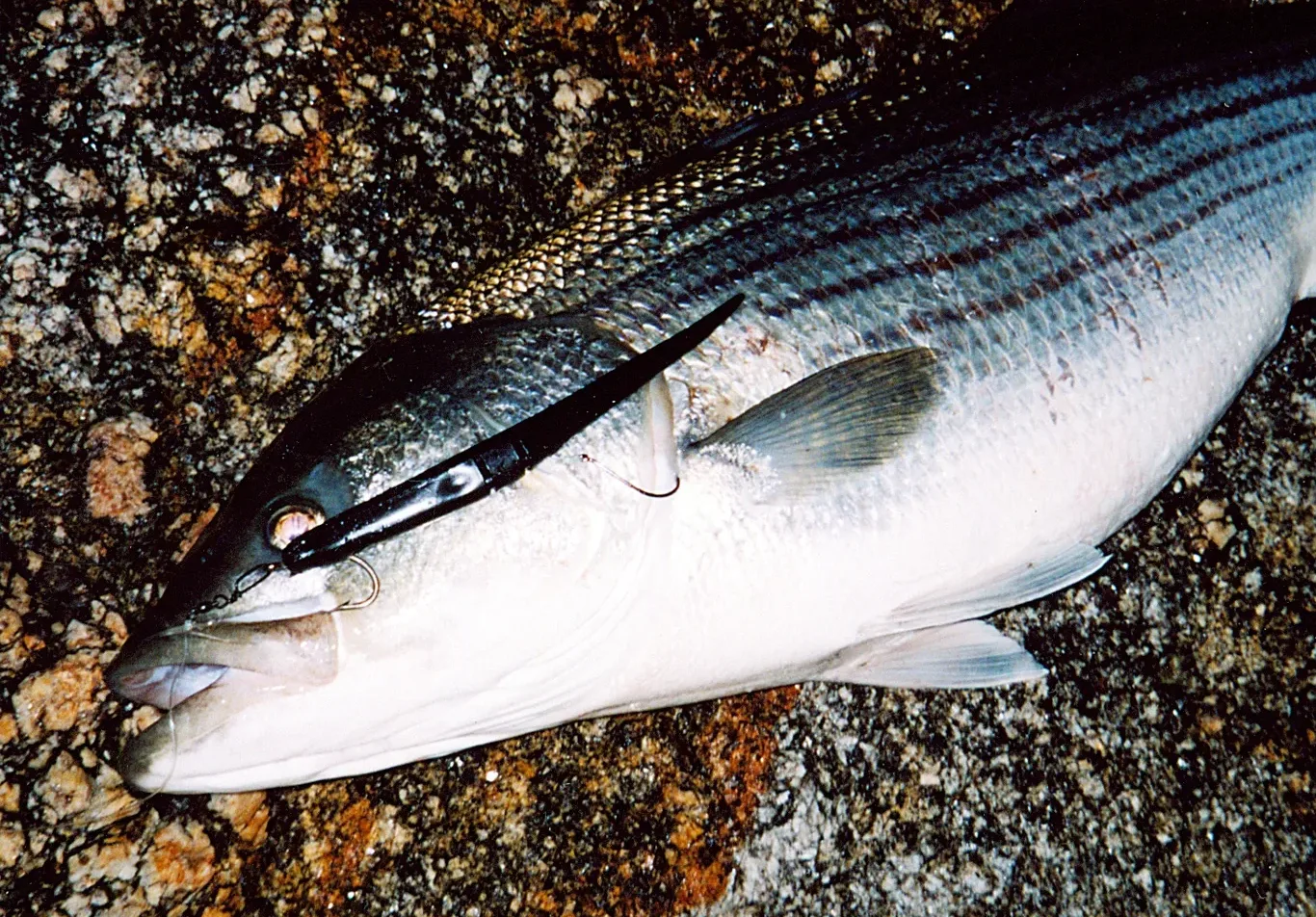
When fishing shallow waters with light current, a ½- to ¾-ounce jighead with a 13.5-inch Gravity Tackle Eel has produced some very large bass for me. I’ve been friends with Gabe Ravizza, the owner of Gravity Tackle, for years, and I’ve been astounded by the amount of research behind the development of this bait.
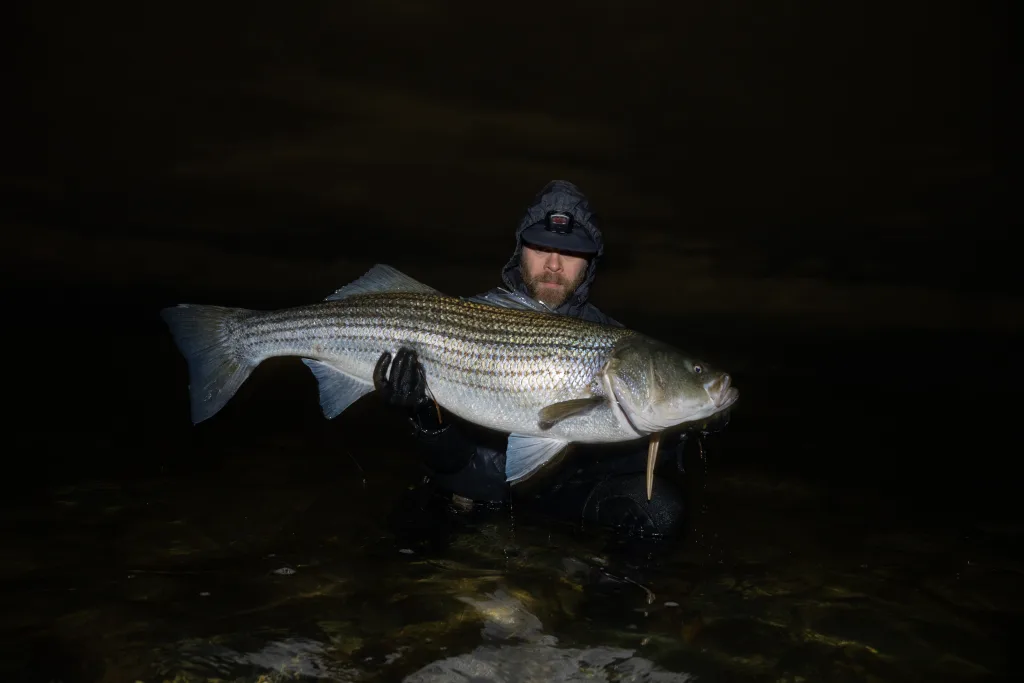
I can’t tell you why, but this long presentation culls out larger fish. I’ve had nights when fishing a 9-inch Mega Shad or a 9-inch Gravity Tackle Eel brought in 24- to 40-inch fish, followed by a switch to the 13.5-inch bait that consistently produced 45- to 50-inch fish.
The only downside I’ve found is that the bait’s thin profile prevents it from fishing effectively on jigheads heavier than a 1-ounce Kill Shot.
Mega/Tiki Shad (and Similar)

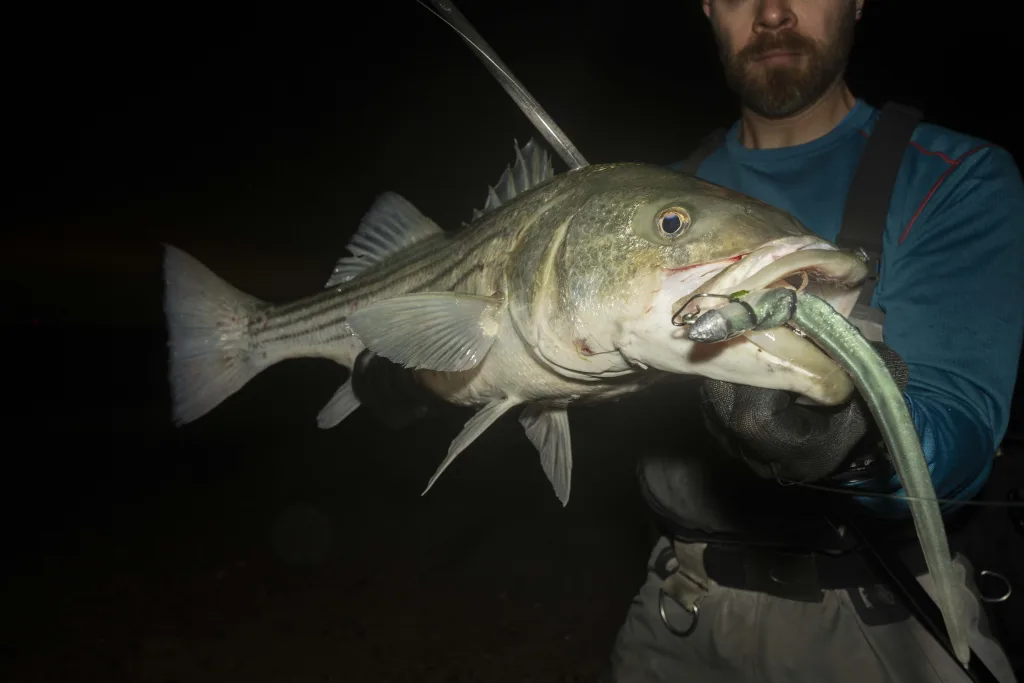
The original plastic that sold me on targeting large bass with plastics was the old Tiki or Mega Shad. This 9-inch bait has a thicker profile with ridges that taper to a thin tail. I’ve caught so many big bass over the years on this bait that it’s crazy. When fishing boulder fields and inlets of 10 to 25 feet deep, a 1.5- to 2.5-ounce jighead was always my go-to. Since the boom in striper-sized soft plastics over the past few years, I’ve gotten away from the Mega Shads and moved on to larger baits.
While Tiki Shads are no longer available, several lure builders offer this style soft plastic under different names, including Zinger and Tate’s Baits, who make 9-, 10-, and 11-inch versions of the Mega Shad. The 9-inch always seemed plenty big to me, but I’ve had the opportunity to show the fish an even larger profile. Over the past few seasons, the 10- and 11-inch Mega-Shad-style plastics on 2- to 3-ounce Kill Shot jigheads have been my choice on local waters.
Bomba Shad

Another large soft plastic that I’ve had great success with over the past few seasons is the Sniper or Bomba Shad. This plastic has a large round body with a rat tail that produces a strong kicking action. It is thicker and denser than other plastics, which seems to help it get down in heavy current better than a Mega Bait-style lure. The 12-inch is my favorite size, fished on a 3-ounce Kill Shot jighead with a heavy hook.
Bringing the Baits to Life
Fishing straight-tail soft plastics definitely takes finesse. It’s not as easy as fishing a paddletail that creates its own action on a steady retrieve. Straight-tail plastics require more angler input to catch, which is why I particularly love them.
If the current is running from left to right, for instance, make a long cast to about 11 o’clock and let the lure hit the bottom. By the time you’re at 12 o’clock, you should be on bottom, slowly working the lower column of the water. I reel super slowly, allowing the bait to glide down-current with a small pop every once in a while to entice the largest of bass.
These baits work well in fast current and really shine in slower current. Most of my bites on a swinging soft plastic come between 12 o’clock to just before 2 o’clock. When you get a good feel for working one of these baits and where bass hold in your location, you can almost “force feed” the fish by dropping it right in front of the fish’s face. I believe a properly fished straight tail is the best bait you can fish for large stripers, but it’s not automatic. You’ll need to hone your skills at retrieving the lure just along the bottom to get the most out of it.
Paddletail Shads
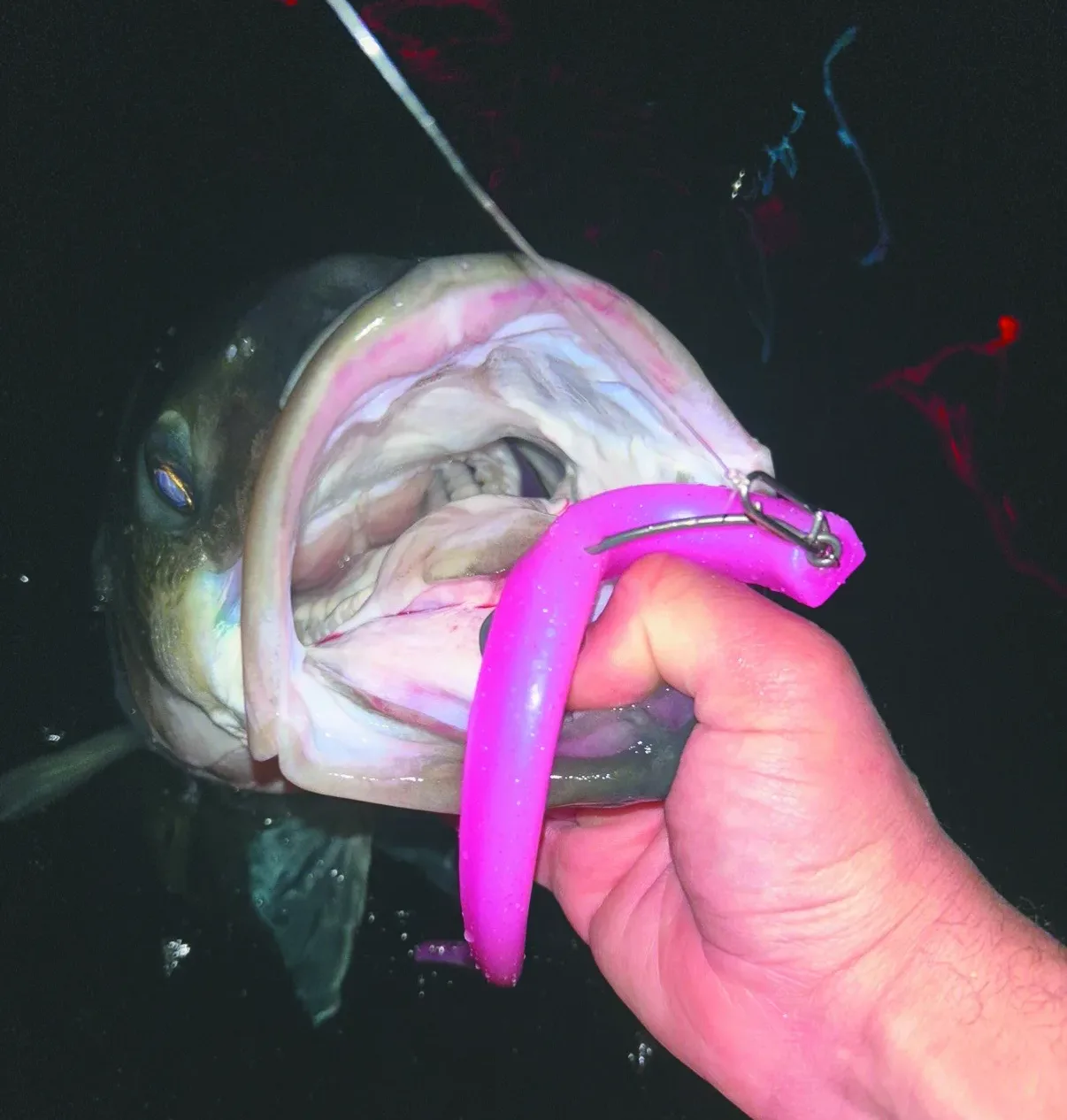
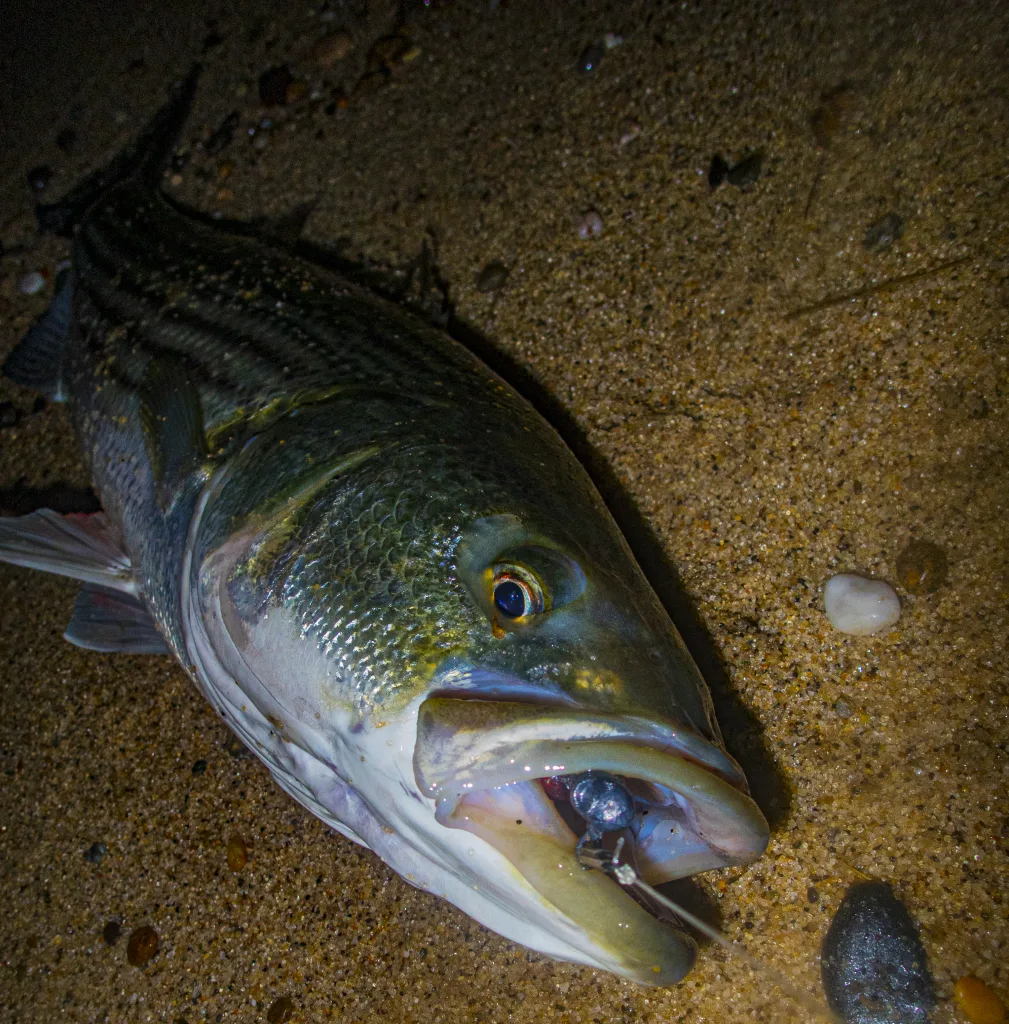
From the old Storm Wildeyes to the heavy Tsunami shad, swim shads all catch fish, but when fishing current, I like fishing my shads on leadheads. My go-to shad right now is the 8-inch NLBN in pink or pearl white. This bait really has its time and place when it comes to fishing heavy-current waters.
Unlike with a straight-tail bait, I get 99% of my bites on a paddletail from 2 o’clock to 3 o’clock, when the bait is just sweeping down-current. I never cast and reel; I let the current do most of the work. Many of the bites on this bait come when it’s almost even with the rocks down-current. The downside to fishing a shad in current is that the paddletail will always plane up in the water column. That’s why I like to use an ounce-heavier leadhead than I do with a straight tail.
Colors
I’m very simple when it comes to colors. My favorite color is pearl. I don’t care what bait is around—you can’t go wrong with pearl. My go-to nighttime color is pink/pearl, especially in late fall. I don’t know if it’s because of the squid that have been around the past few years or the constant dirty water. When daytime fishing, I always use pearl unless the water is really dirty, then a chartreuse seems to get the job done.
Rods for Soft Plastics
When throwing jigs in deeper water, use a faster-taper rod rather than a slower, more parabolic rod. It took me three years, but I finally designed a rod that I love for the type of fishing I do. The 10-foot MagicTail 3 to 6 rod throws ½-ounce jigheads with 13-inch Gravity tails as well as 4-ounce jigheads with 2- to 3-ounce plastics with ease. The tip is soft and sensitive for bringing the bait to life, but it has plenty of backbone to set the hook.
So, with all this in mind, don’t ever hit the surf without some reliable jigheads and soft plastics from 4 to 13 inches. No bait thrown can stay in the strike zone as long as a bucktail or jighead, and that’s the key to consistently hooking big striped bass.
READ MORE