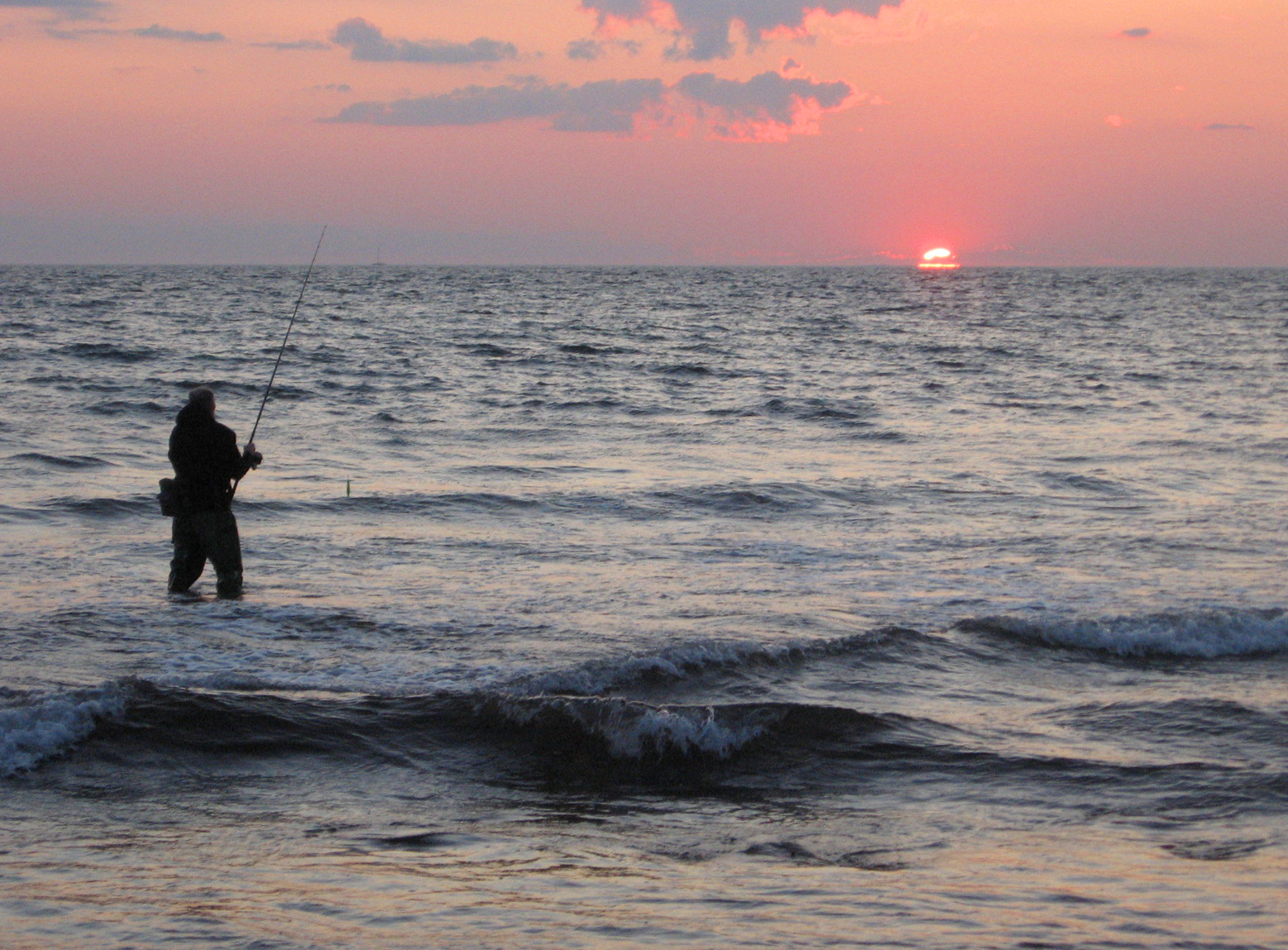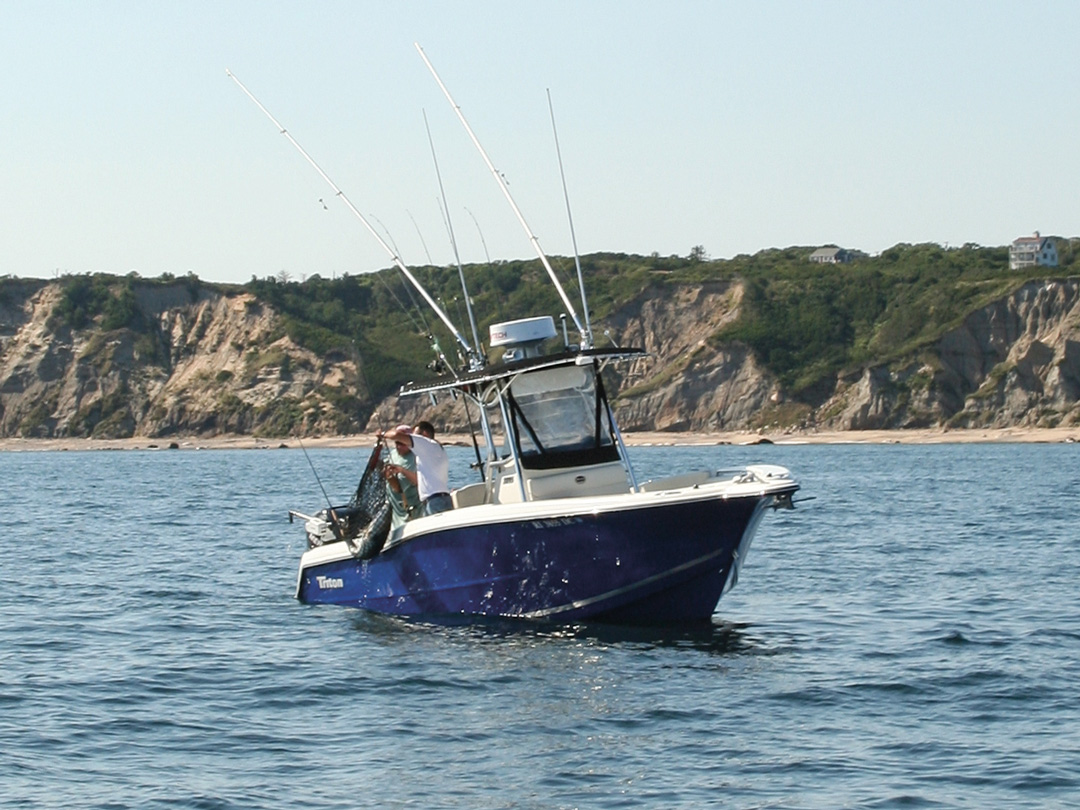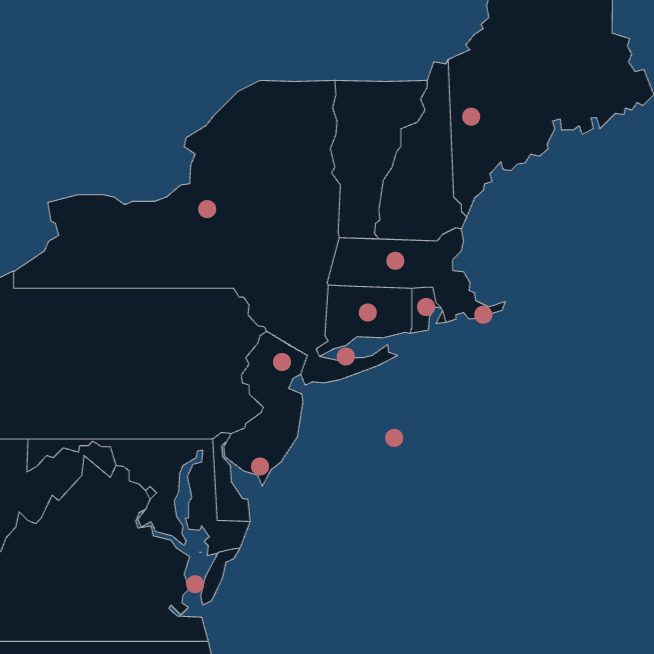

Every autumn since the mid-aughts, a group of friends and I gather on Block Island, off the Rhode Island coast, for a week of surf fishing. We rent a sturdy beach house that serves as basecamp and spend days and nights prowling Block’s rock-studded shorelines and sandy beaches, casting for striped bass.
Along with my tackle, extra clothes, and a good single malt, I always pack a dog-eared, out-of-print book called The Seaside Reader. Edited by the late Dery Bennett of the American Littoral Society, it’s a collection of essays about the ocean, coastlines, fish, and fishing. Authors range from giants like Jacques Cousteau and Rachel Carson to the obscure but essential Owen Hatteras.
But my favorite piece is an excerpted chapter from Henry Beston’s 1928 classic The Outermost House. Beston famously spent a year living in a two-room cabin perched on a Cape Cod dune, writing daily observations from his kitchen table. The excerpt, “Night on the Great Beach,” with its richly textured depictions of shoreline and sea, feels timeless and unbound by location. For me, it’s a kind of lullaby — one that eases me to sleep each time I’m on Block. More than that, Beston’s prose acts as my north star whenever I head into a Block Island night to chase a tide, surf rod in hand.
“Night is very beautiful on this great beach. It is the true other half of the day’s tremendous wheel; no lights without meaning stab or trouble it; it is beauty, it is fulfillment, it is rest.”

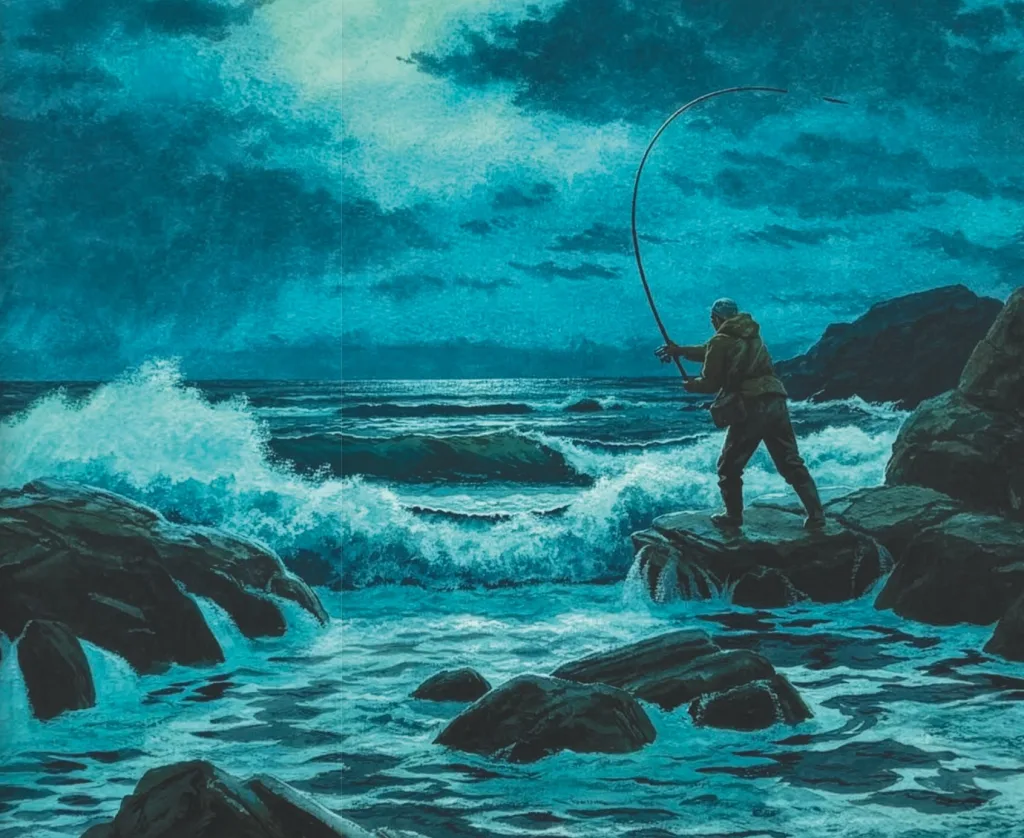
I park along a gravel turnoff and hear the onrush of a lively surf. The plumed tops of phragmites dance around me in a freshening northeast breeze. Methodically I pull on waders, then studded boots, then a pullover splash top. My headlamp stays off so my eyes can begin adjusting to the darkness. Then I shrug on my plug bag and pull the ten-and-a-half-foot rod from its holder. Beneath uncountable stars, I walk down a dirt road to the waiting ocean.
“The sea was only a sound, and when I reached the edge of the surf the dunes themselves had disappeared behind. I stood as isolate in that immensity of night as I might have stood in interplanetary space.”
A short beach trail winds through a passageway lined with bayberry shrubs. As I always do here, I pluck a few leaves, crumble them, and wave them beneath my nose, breathing in the spicy-sweet aroma. The trail ends abruptly at a black boulder field, just as the full brunt of the northeast wind hits me sideways. By necessity, I click on the headlamp to pick my way along the cobble, navigating around larger rocks and the occasional bleached log deposited by storm tides. Eventually I reach a point where crashing waves almost dare me to make a cast. I switch off the light.
“…The Milky Way bridges earth and ocean; the beach resolves itself into a unity of form…”
I attach a stubby black needlefish to my leader, then sidearm a quartering cast, trying to keep the wind from grabbing and bellying the braided line. When the plug touches down, I gobble up a few loose yards of braid with rapid turns of the reel. I slow the retrieve and swim the lure through waves and whitewater and over submerged boulders. By the third cast, I’ve found a cadence and rhythm and settle into fishing with confidence despite the rugged conditions. Around me, wind and waves dance and rage in the darkness.
“The beach at night has a voice all its own, a sound in fullest harmony with its spirit and mood – with its little dry noise of sand forever moving, with its solemn overspilling, rhythmic seas, with its eternity of stars that sometimes seem to hang down like lamps from the high heavens…”
Bump — then, THUMP. My rod bucks hard and I rear back reflexively, driving hooks home somewhere out there in the black surf. Heavy headshakes follow, then a spirited run just long enough to tell me that, while not one of Block’s legendary 60-pounders, a worthy striper has grabbed the plug. The bass surges and tacks between breakers, challenging me for every turn of line I gain on the reel. I find myself fighting not only the fish but the ocean itself, which seems determined to claw back one of its own with each receding wave. Using the rod for leverage, I steer the bass closer, then closer still. The next breaker sweeps it onto the cobble in front of me, where it comes to rest among dollops of sea foam and strings of bubble weed.
I click on the headlamp, and a thick 12-pound striper shines back at me. The front barbless hook of the needlefish hangs in the scissors of its jaw. How a fish can hunt in heavy surf — let alone find my plug — always leaves me a little awestruck.
“The sea was troubled and noisy, and when I opened the darkness with an outlined cone of light from my electric torch I saw that the waves were washing up green coils of sea grass, all coldly wet and bright in the motionless and unnatural radiance.”
When I grab its lower lip, the bass struggles and twists, flexing its strength. When it calms, I back out the hook, turn the fish around, and point it toward the sea. The next wave reclaims it. I continue casting.
Over the next hour or so, I release three more bass of similar size. Others swing and miss. Each time a fish crashes my plug, an elemental jolt races up the rod, through my hands, and into my core. The tide eventually ebbs, while the pull of a comfortable beach house reaches its flood. A celebratory dram awaits. So does a certain book. It sits on a nightstand next to an open window, where the sound of the surf will lull me into a dreamless sleep.
“There are stars, and to the south Scorpio hangs curving down the sky with ringed Saturn shining in his claw.”
READ MORE