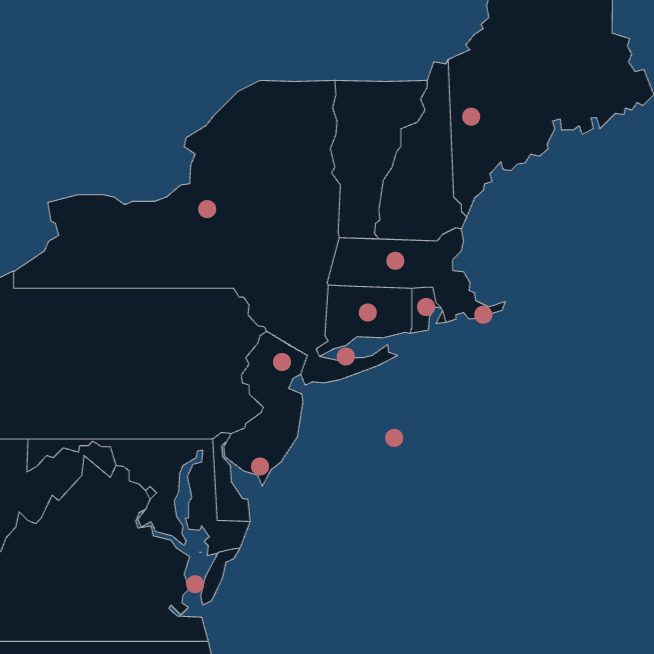

Upper Cape
By Captain Dave Peros
Summer Along the Islands
I’ve been thinking a great deal about this year’s high-summer fishing, mainly because I wonder if I’ve been getting in my own way in terms of enjoying consistent success around my favorite place to fish: the Elizabeth Islands.
There is no way I can explain with any certainty the factors beyond my control that resulted in my general lack of success with larger bass along our local archipelago the last several summers.
One of my beliefs is pretty simple: there just aren’t as many big fish in spots that have always produced for me. This is likely due to overfishing the resident stock that are genetically predisposed to return for the season in these waters.

On the other hand, I am even more concerned about the downturn in the population of schoolies that I could always count on. They blitzed on small bait in open water or tucked into the rocky shoreline where they eagerly assaulted soft plastics or small surface plugs—especially floating poppers or spooks that could be retrieved slowly enough to produce a nice wake or walk-the-dog dance. Smaller fish are more inclined to react to surface presentations around first light and again at dusk. That’s why I have regularly opted to use floating lines and poppers, Gurglers, or deer-hair sliders on my fly rods. I’m convinced that one fish caught on top is worth far more than a dozen—or any other number you want to put there—caught on sinking lines, especially fast-sink ones. Intermediate lines actually produce a neat dive-and-recover movement when used with the Crease fly, another effective surface pattern.
Early in the season, when we’re treated to decent numbers of bragging-size bass migrating in and through the islands, large poppers and spooks of all types will catch fish. They typically feed on larger squid that they push to the surface. Plugs that float are especially effective and fun to fish because I can swing them with the current and target specific pieces of structure.
During the summer, the waters sometimes erupt with bass feeding on small squid, some so tiny that it looks like they just hatched. My favorite trips are with flyrodders who can throw a decent amount of line and control it after the fly lands. Small white bunny flies and white/light pink Alan Caolo Magic Squids will actually flow with the current toward a rip and then swim parallel to the line of turbulence. In other spots where there are rocks, if you get the drift just right, you are almost guaranteed to have a fish jump all over it. You might not hook it, but you’ll get the visuals, from watching the fly move through the water and the flash of the bass or bluefish.
When fly fishing heavy current, it is critical to keep in contact with your fly. For this reason, a key is to use different lines if you are fly fishing based on the stage of the current. I love my floaters, but if things are cranking in any of the holes along the Elizabeths—whether in the rips that form in open water or along the shoreline flow—the wise decision is to go with an intermediate or even a fast-sink line. I know it might sound crazy, but even with a 350-grain line, you will actually be able to see the fly moving within a foot or so of the surface.
You can do the same thing with small white or lightly colored soft plastics, which are good substitutes for the small squid bugs I use while fly fishing. Again, the key is to use a sufficient amount of lead/weight—whether it’s a weighted swimbait hook or jighead—to keep the soft plastic from being overwhelmed by the current and white water. I use jigheads as light as 1/8 ounce or swimbait hooks down to 1/16 ounce so the soft plastic swims correctly with no spinning allowed. Presented with very light spinning outfits spooled with 8- to 12-pound test and long 15- to 20-pound fluorocarbon leaders, I get more than enough distance and catch surprisingly large stripers when the current is on the slower side.
As effective—and fun—as surface presentations can be during any stage of the season if you keep current strength in mind, I know I am limiting myself and most likely missing opportunities in our area because I don’t think deeply enough.
For example, during the summer as inshore water warms outside their preferred feeding-temperature range, bass seek cooler climes away from shallower water during the day. I am not skilled at interpreting what my sonar unit is telling me, and I can never see myself being one of those guys who always seems to have his head buried in his electronics, looking for marks of all types that indicate bait and gamefish. However, I do know where the holes, drop-offs and sections of deepwater structure are, so if I become bend away from my overly rigid topwater mindset and opt for bouncing weighted paddletails, it might help me catch fish that just won’t feed during the day close to shore.
There’s also the very real possibility that the amount of larger forage bigger bass feed on during daylight hours in skinny water is down. Some anglers are convinced that the numbers of inshore schools of bunker and other big baitfish have shrunk. Even if the small stuff like sand eels and silversides, as well as hatches of krill and even some species of crabs, is thick, large fish have a substantial protein requirement that these food sources can’t provide.
I used to catch lots of big daytime bass on live eels or supersized soft plastics cast into shore down the Elizabeths. No doubt there are times the sunlight action is good, but is a better option targeting structure in deeper water with big soft plastics on jigheads? Maybe I need the 13-inch Slappy Eel from Hogy Lures that has been made famous by kayak angler Eric “Slappy” Harrison? He’s proven that you can catch big bass any time of year if you use the proper lure and presentation on structure beyond the confines of shorelines and shallower water.
Years ago, I discovered the benefits of making up my own lead-core fly lines from the late Capt. Bob Luce. I plied deeper waters off Chatham with big sand eel flies while all around me the commercial fleet was dropping A17 or A27 diamond jigs on what seemed like unlimited numbers of bass. Could that be the key to pulling on some big fish during the summer in these hallowed grounds? Is there a place for dredging and sinking big flies that I haven’t yet discovered – along with an appetite for doing it?
I do have to stop and acknowledge that common sense suggests that if getting down to the fish is paramount, snapping the pig-and-jig on wire or streaming lead-core line and a tube-and-worm should be top options during the summer months. If you enjoy trolling, I say go for it, but my willingness to consider another approach only goes so far.
Once upon a time, I targeted nighttime tides that helped drop water temperatures, even by just a couple of degrees. Capt. John Christian, who is still fishing the Susan Jean out of Woods Hole, told me last winter that he still was producing some quality fish at night on eels. When I started guiding, John was one of my inspirations because of his reputation for turning live eels into cow bass and he did it by casting into rocky shorelines as he maneuvered among the boulder fields using only his memory.
John was always equally adept at wire-line jigging. Perhaps he’ll do more of it because daytime fishing certainly has its allure as we age, but it was still good to hear he’s still out there slinging Mr. Wiggly and putting fish on the boat.
On the other hand, it made me realize that some of my nerve has escaped me. It would be convenient to blame the purchase of a new boat that I never tested in places where I fearlessly drifted in the dark in the old Maritime Skiff, but that wouldn’t register too highly on the truth meter. When I fished the wee hours during my early years of guiding, I did it a lot and knew it like the back of my hand.
When the heat and humidity spiked, I made the move away from fishing my home waters and spent more time down by Chatham and the backside way, and something changed. I wanted the islands back the way they were. Yes, I was spoiled by my early successes, but it was so much fun.
Last fall, I acknowledged how much things have changed when I hardly saw anyone fishing the shoreline for bass. Instead, a fleet of boats either circled up to get a cast or two in some albies or they went racing back and forth, looking for them somewhere, anywhere. At times, they zeroed in on us as we cast plugs in tight for bass, hoping we had found funny fish running in tight to shore. I got in the habit of waving at them while yelling that we were fishing for bass, and they would be better served continuing their travels in pursuit of a cure for albie fever.
In the end, I guess it might be time for shifting gears and trying some new way of fishing light tackle and artificials around what was once considered the Mecca for striped bass anglers. Casting is in my blood, but perhaps vertical jigging is worth a shot; at least it beats wiring a big bass if size is the goal.
Then again, it still gets dark at night, and I can choose to feel that magic in my blood as I run to Cuttyhunk. Even if I know that the witching hours don’t produce the way they once did, at least there will be few boats to contend with and I will be renewed by the stillness and peace of this magic place. That, I am sure, will be true forever.
Outer Cape
By Captain Mike Rathgeber
July and August are the months when fishing cannot get much better here on the Outer Cape. Bluefish are in full force, both in the bay and along the backside ocean beaches, and striped bass are coming off their peak month but are still around in big numbers. Tuna fishing for both giants and school fish begins to heat up around Peaked Hill and on Stellwagen Bank.
The availability of sand eels, mackerel, pogies, and herring are at their acme as water temperatures warm up. The wild card in this time of oceanic change is how warm is too warm in terms of water temperature for the species of fish that inhabit our area? We don’t know, and there are unprecedented changes occurring.
Bluefish and bluefin tuna have a higher tolerance for warmer water than striped bass, which tend to go deep and become a little dormant when the water warms up. However, in 2023 we did not get the typical striped-bass lull in late July and August, even though I recorded surface temperatures as high as 82 degrees—which I had never seen before on the Outer Cape.
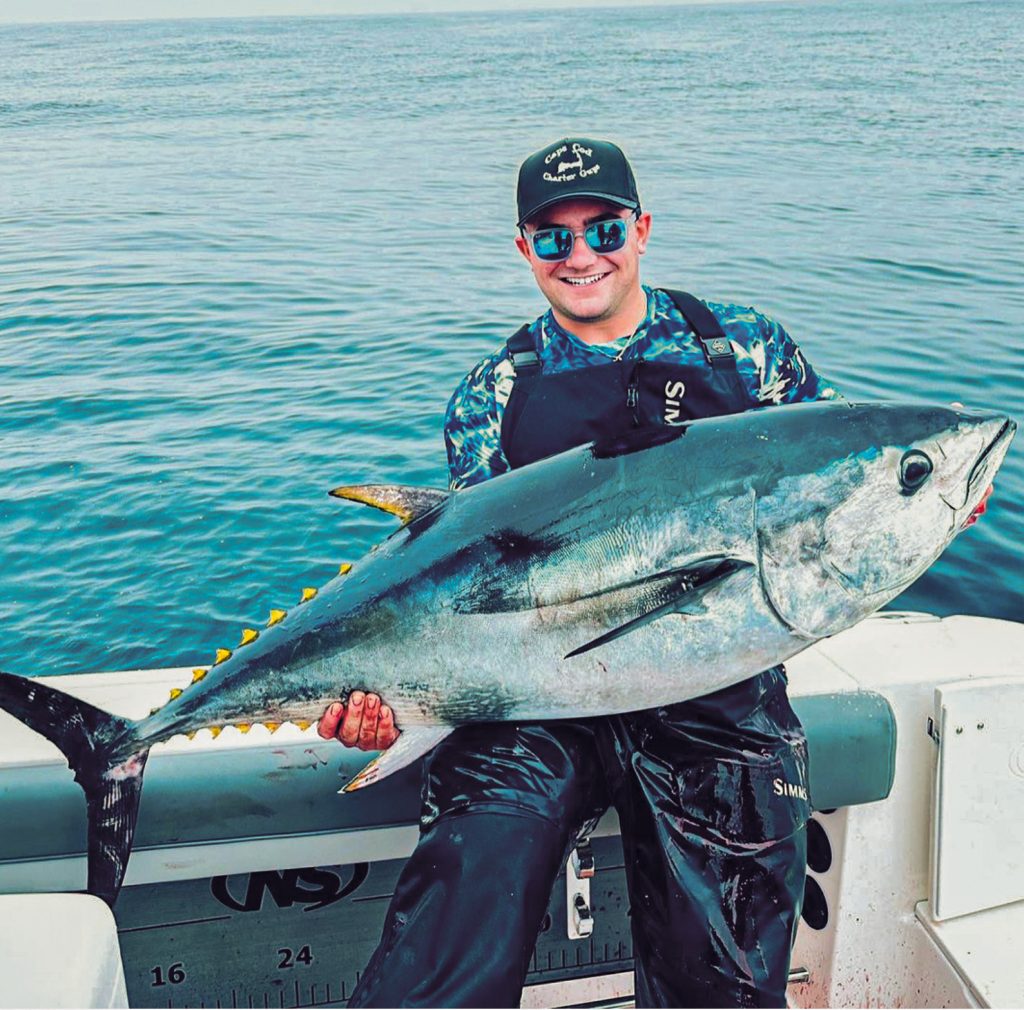
Last spring was also unusual. Stripers showed up a little early despite bone-chilling water temperatures in the high 40s to low 50s. It was quiet on the north end of the bay around Race Point, but the Canal had fish, as did Billingsgate Shoals to the Pamet at times. The fish were all big and over slot size; there were very few slot-sized or short fish. Also unexpected was the early arrival of bluefish in mid-May, a few weeks early for them. Catches were being reported in the Canal, and along the south-side Cape beaches. These were big fish with the classic “racer” look—long and thin.
In mid-summer, the strategy for catching fish changes from the spring. Trolling for stripers becomes more effective, particularly trolling umbrella rigs and Jig n Eels. Trolling along edges of shoals to deep water are great places to concentrate on. Stripers are typically deeper during the day in the heat of the summer, then come up to shoal water during cooler nights. That’s the time to drift with live eels. The shallow bar in front of the Herring Cove bathhouse is a good choice to try live eels as well as the Peaked Hill Bar on the ocean side.
Bluefish should be everywhere on the Outer Cape in July and August, although they have lately preferred backside ocean beaches to the bay. They seem to come into the bay for a day or two from Race Point to Wood End Light, but then head right back down the ocean side from the Race Station to Head of the Meadow Beach. One theory is that the enormous numbers of seals in the bay are keeping both bass and blues from settling in to any of their usual spots.
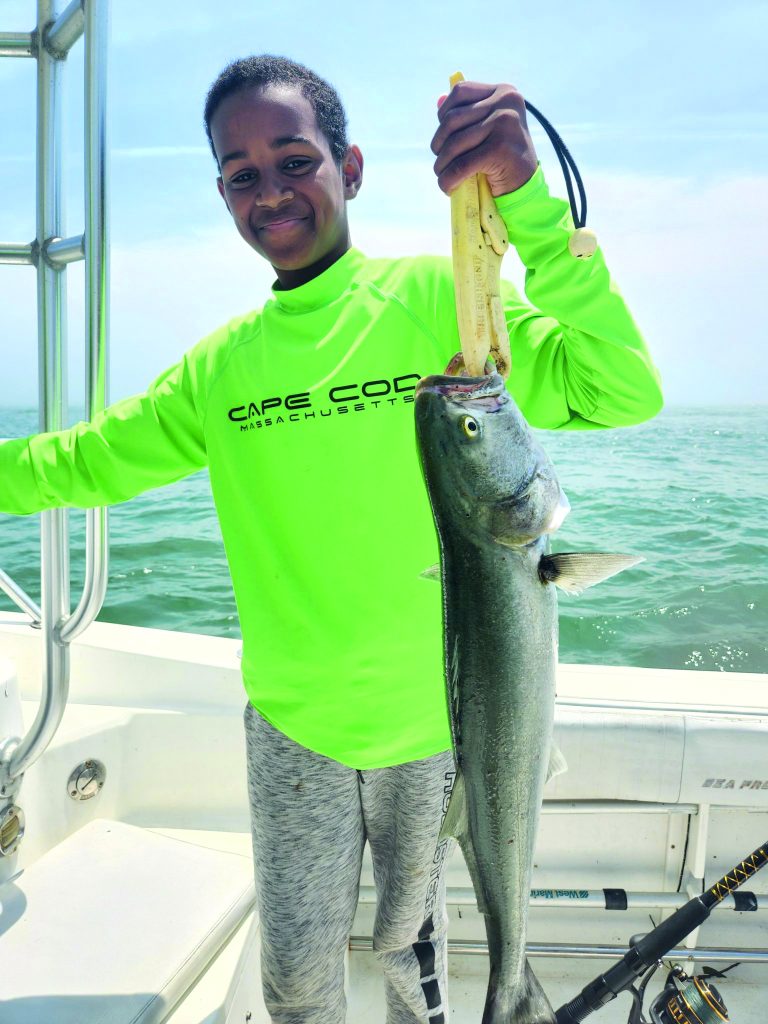
Trolling umbrella rigs is a surefire way to catch multiple fish at once. A swimming plug like an SP Minnow or Bomber Long A retrieved quickly also entice bluefish into biting. Don’t forget to have a steel leader in front of your plug because a bluefish’s razor-sharp teeth will easily bite through monofilament, fluorocarbon, or braided fishing line.
Look for birds working the water’s surface and lots of splashing as bluefish push baitfish upward. Terns and gulls often take advantage of this situation to grab easy meals. Ava diamond jigs dropped to the bottom and quickly retrieved is an effective way to catch both blues and bass in water deeper than 40 feet. Late afternoon to early evening is the time to look for bluefish on the Outer Cape; other late afternoon spots are Race Point, Herring Cove, Beach Point off North Truro, and between the Pamet River and the north side of Billingsgate Shoals. Good luck and catch ‘em up!
—
Captain Mike Rathgeber runs the CeeJay Party Boat out of Provincetown. He is on the water nearly every day during the season, and will be sharing his insights, observations, and forecasts for the Outer Cape fishing in this column.
Related Content
Studying the Sandbar Sharks of Nantucket