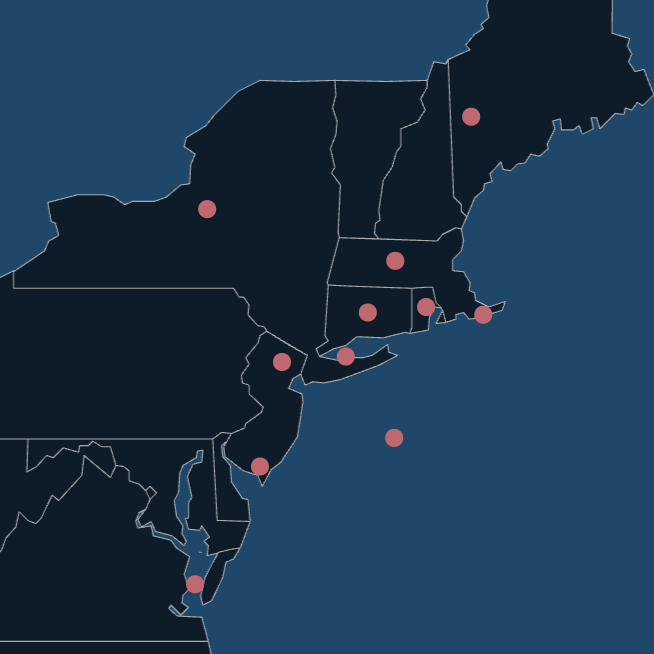

Maryland’s 2026 juvenile striped bass index came in at 5.5, the best result since 2018 but the eighth straight year below the long-term average of 10.8. Virginia’s survey of its Chesapeake Bay tributaries produced an average year class of 9.52 juveniles per seine haul. Results from both surveys feed into the coastwide striped bass stock assessment, which covers the population from Maine to North Carolina.
Maryland’s 2026 Striped Bass Spawning Survey Results
The Maryland Department of Natural Resources announced on October 19 that its 2026 juvenile striped bass survey produced a young-of-year index of 5.5. That is a step up from 4.0 in 2025 and 2.0 in 2024, and the highest number since 2018. It is still well short of the long-term average of 10.8, and it marks the eighth consecutive year of below-average reproduction in Maryland’s portion of the Bay. We covered last year’s result in 2025 Striped Bass Spawning Survey Delivers More Bad News.
Crews caught 723 juvenile striped bass this summer, with the upper Bay and the Choptank River producing the best numbers. Biologists also found juveniles spread more widely than in recent years, which points to suitable nursery habitat across the system even though overall numbers were low.
DNR Fishing and Boating Services Director Michael Luisi said ongoing low recruitment is “anticipated to impact rebuilding of the coastwide striped bass population.”
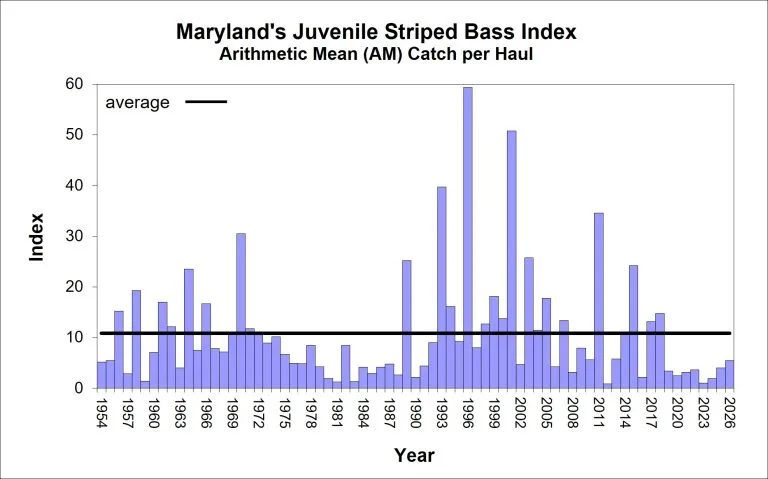
The Maryland juvenile striped bass index, 1954 to 2026. Graph: Maryland DNR
How the Maryland Juvenile Striped Bass Index Is Measured

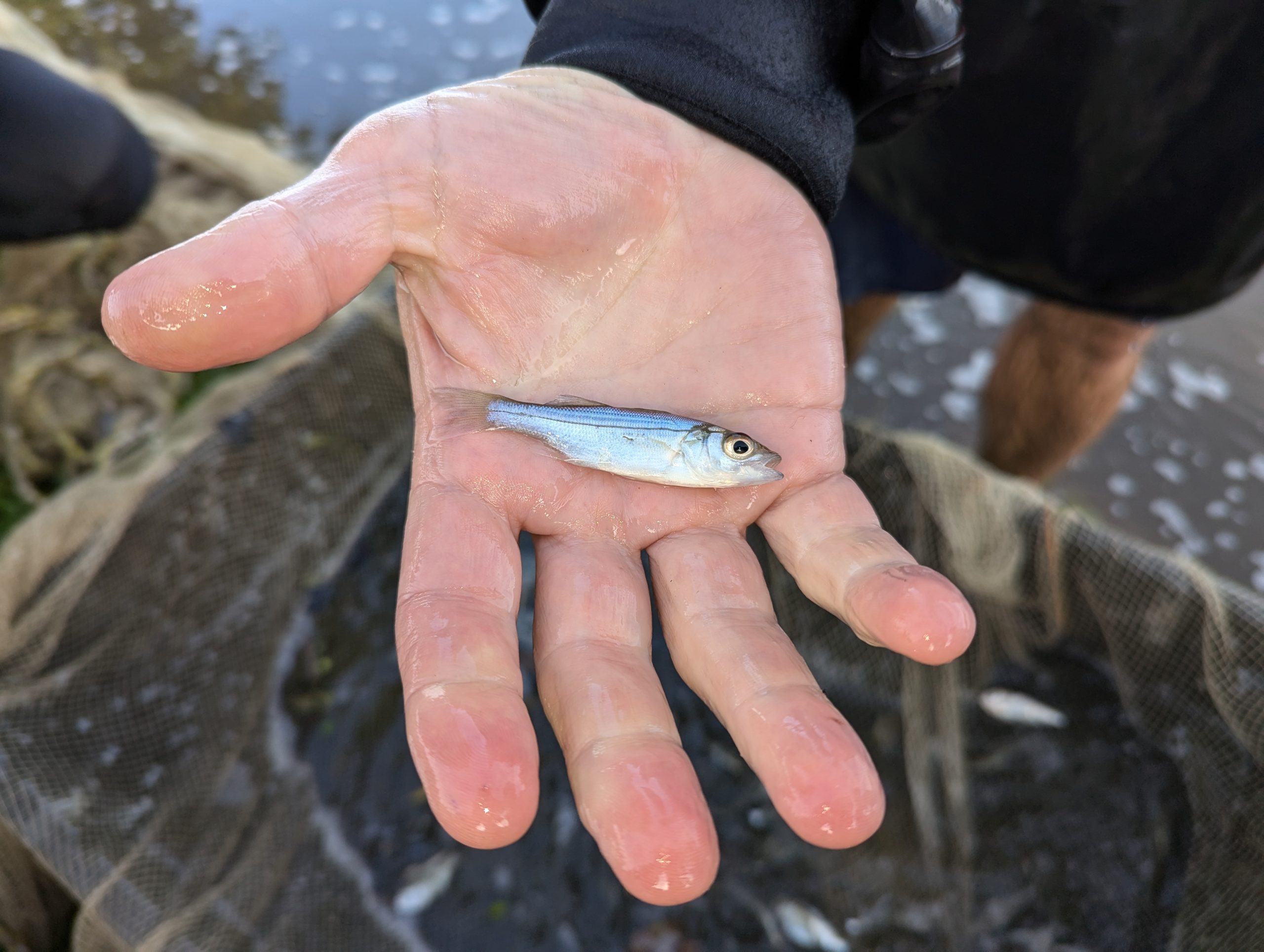
Striped bass fry in a net.
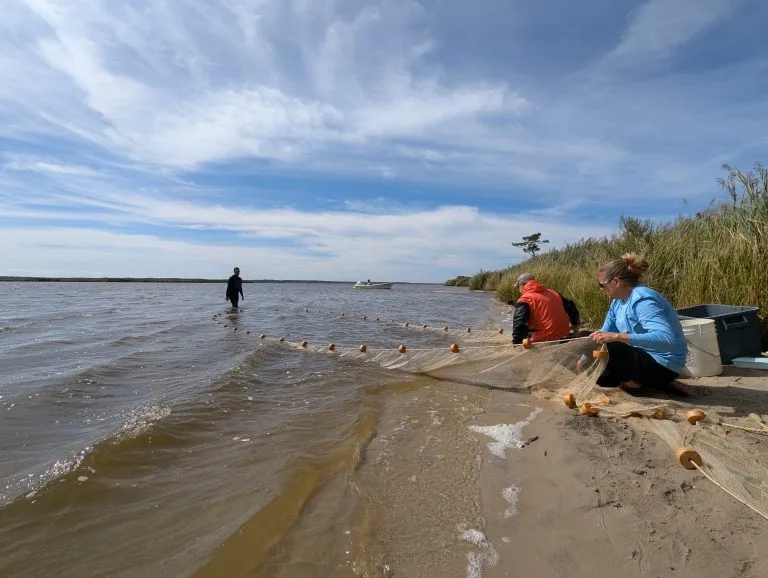
DNR biologists have run the survey every year since 1954, making it one of the longest-running continuous fish surveys in the United States. Crews sample 22 sites in the four major spawning areas: the Choptank, Nanticoke, and Potomac rivers, plus the upper Chesapeake Bay. Each site is visited three times over the summer, with two sweeps of a 100-foot beach seine on each visit. The index is the average number of juvenile striped bass 3 inches or smaller caught across those 132 sweeps.
Why the 2026 Striped Bass Spawn Fell Short
Cold winters and wet springs tend to favor a strong spawn, and the brutally cold winter of 2025-2026 raised cautious optimism for a better year. DNR pointed to the prolonged regional drought and resulting low river flows as the likely reason it didn’t pay off. High flows expand spawning habitat, keep eggs suspended in the water column, and carry larvae toward food. Low flows work against all three. A shortened spawning window may also have played a part.
Virginia Reported an Average Year Class
The same day, the Virginia Institute of Marine Science reported an average year class in Virginia’s tributaries. Its survey averaged 9.52 juveniles per seine haul, up from 5.12 in 2025. VIMS considers both years similar to its historical average of 7.77. Scientists sampled 18 index sites in the James, York, and Rappahannock river systems five times between mid-June and early September and measured 2,648 juveniles.
That’s welcome news for the lower Bay, but the Chesapeake is the primary spawning and nursery area for 70 to 90 percent of Atlantic coast striped bass, according to Maryland DNR, and Maryland’s portion of the Bay has now come up short eight years running.
What the 2026 Spawn Means for Striped Bass Fishing
Fish hatched this spring are going to reach fishable sizes in three to four years, according to VIMS. DNR expects the string of weak Maryland year classes to become more apparent in the adult population as those fish mature, even though recent estimates show a healthy adult stock.
Results from the coastwide juvenile surveys are being incorporated into the benchmark stock assessment now underway, which is expected to complete peer review in spring 2027. New York DEC says the results will inform Atlantic States Marine Fisheries Commission management decisions starting in 2028. Under the 2024 assessment update, the stock remains overfished but is no longer experiencing overfishing, with a rebuilding deadline of 2029.
Striped Bass Spawning Beyond the Chesapeake
The Chesapeake isn’t the only spawning ground struggling. In February, the New York State Department of Environmental Conservation reported that the Hudson River’s 2025 young-of-year index was 8.27 fish per haul, below the long-term average and below the 25th percentile for the third straight year. Read our full coverage in Hudson River Striper Spawn Fails Again.
DEC says the Hudson and Chesapeake together contribute about 90 percent of the coastal striped bass population, and that poor reproduction in both systems points to a significant decrease in catchable striped bass beginning in 2030. DEC also made the motion that formed a new ASMFC working group to prepare managers for a smaller striped bass population in the 2030s.
Why are Maryland’s and Virginia’s numbers so different?
The two surveys use different methods and baselines. Maryland’s index is the average catch per sweep across 132 sweeps at 22 sites, measured against a long-term average of 10.8. Virginia reports a scaled mean per seine haul from 18 sites sampled five times, measured against its 1980 to 2009 average of 7.77. Each result is judged against its own average.
If the adult stock is healthy, why are spawns still poor?
A healthy adult population still needs the right conditions. DNR says a rebuilt stock should reproduce successfully when river flow, temperature, and food availability favor eggs and larvae. In 2026, drought and low river flows worked against them.
Can one good year make up for a bad one?
Partially. VIMS chief scientist Jack Buchanan said a single year of poor recruitment can be partly offset by the year before or after. In Virginia, weak years such as 1999, 2002, 2012, and 2024 were followed by average or better years. Maryland hasn’t had that rebound, with eight below-average years in a row.
What’s Next for Striped Bass and How to Get Involved
Coastwide striped bass management decisions are made by the Atlantic States Marine Fisheries Commission, and anglers can follow and weigh in on the process at two meetings this November.
ASMFC Annual Meeting, November 9 to 12, Newport, RI. The Atlantic Striped Bass Management Board meets Wednesday, November 11, from 1:30 to 2:30 PM at the Hotel Viking (times are subject to change). The agenda includes an update from the work group on future striped bass management, revised recreational fishing effort estimates from the Marine Recreational Information Program, and a progress update on the 2027 benchmark assessment. The meeting is hybrid, so anglers can attend in person or follow remotely, and business meetings are open to the public free of charge. ASMFC asks attendees to fill out its registration form ahead of time. The board chair takes public comment on issues not on the agenda at the start of the meeting, and written comments received by 5 PM on Tuesday, November 3, will be included in the meeting’s supplemental materials. See the meeting details and agenda.
Striped Bass Stock Assessment Subcommittee check-in, Monday, November 16, 1 to 3 PM (webinar). The subcommittee working on the 2027 benchmark assessment will review its progress. The public can listen in, though there will be limited opportunity to comment. Get the webinar link.
To keep up with future meetings, check ASMFC’s striped bass page, which lists upcoming meetings, or sign up for ASMFC’s newsletter for meeting agendas and management news.
More on Striped Bass Spawning
Agency Resources
Maryland DNR Juvenile Striped Bass Index
Survey methods and downloadable juvenile abundance data going back to 1954.
ASMFC: Atlantic Striped Bass
Coastwide striped bass management from the Atlantic States Marine Fisheries Commission.